
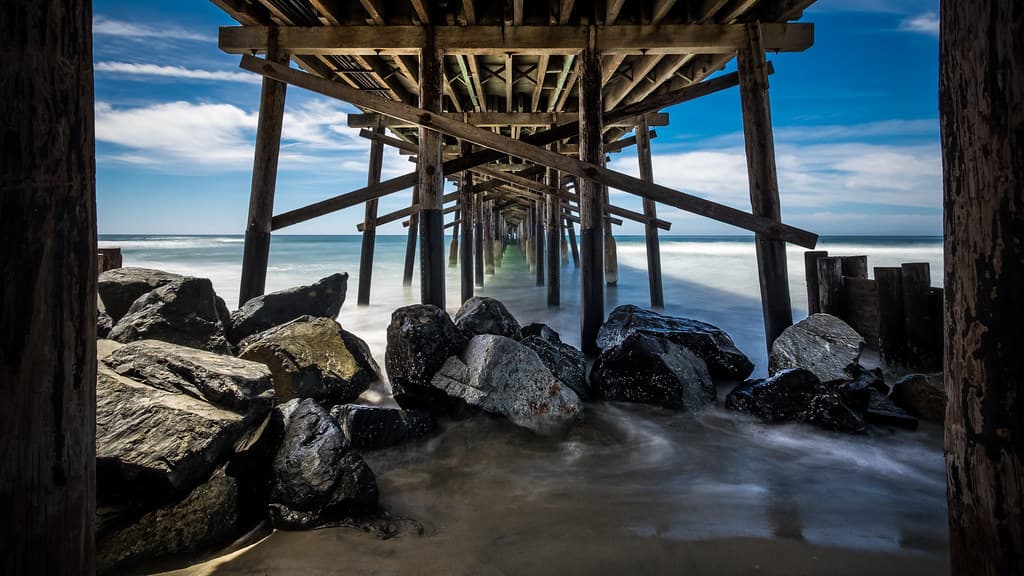
The sand at Venice Beach stretches wide and tan, but most visitors spend their first hour on the concrete boardwalk, a 1.5-mile ribbon where palm readers set up folding tables next to vendors selling sunglasses and tie-dye. Street drummers establish rhythm sections near the skate plaza, where skaters carve figure-eights in graffitied bowls. You'll pass Muscle Beach—the original outdoor weight pit—where biceps glisten under the California sun and tourists press against the chain-link to photograph the spectacle.
“Nowhere else do bodybuilders, skaters, muralists, and Pacific waves share the same two-mile stage with such unapologetic energy.”
 Credit: Flickr
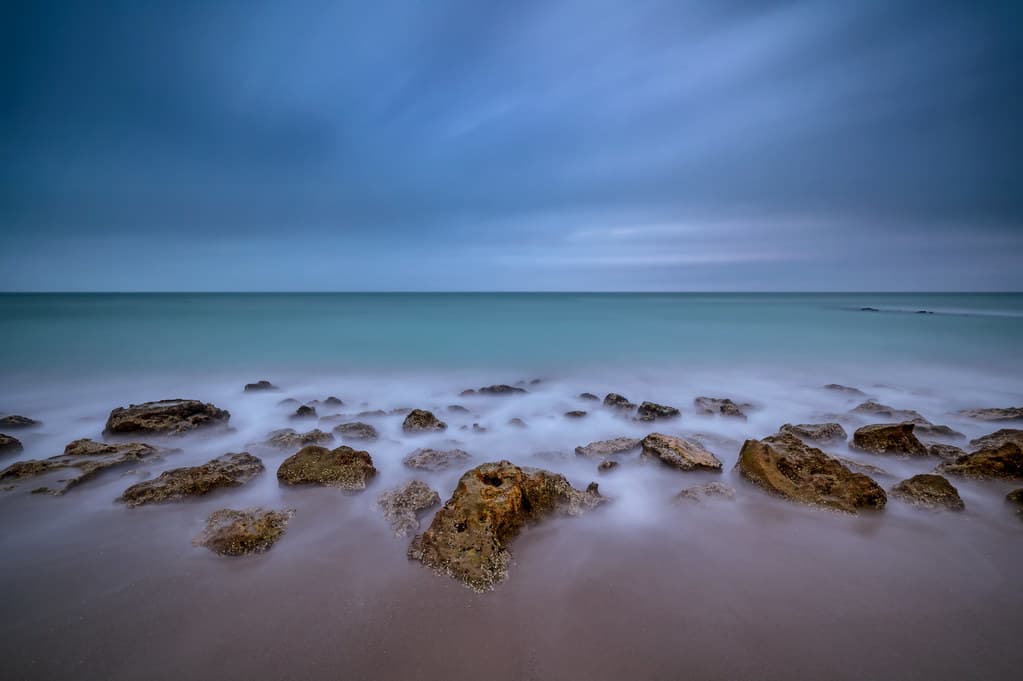
Long exposure of waves over rocks on Caspersen Beach near South Venice, Florida
When you finally cross onto the sand, the Pacific rolls in with modest shore-break waves that draw beginners on soft-top boards. Volleyball nets punctuate the beach every hundred yards, and pickup games run from mid-morning until the marine layer burns off. The pier at Washington Boulevard marks the southern boundary; to the north, the strand blends into Santa Monica, but Venice claims the grittier, more electric energy.
By late afternoon, the light turns golden and the boardwalk vendors start packing up their wares. Joggers and cyclists still loop the path as the drum circles grow louder and someone inevitably juggles flaming batons. You'll leave with sand in your shoes and the distinct sense that you've witnessed a daily carnival that never fully strikes its tents.


