
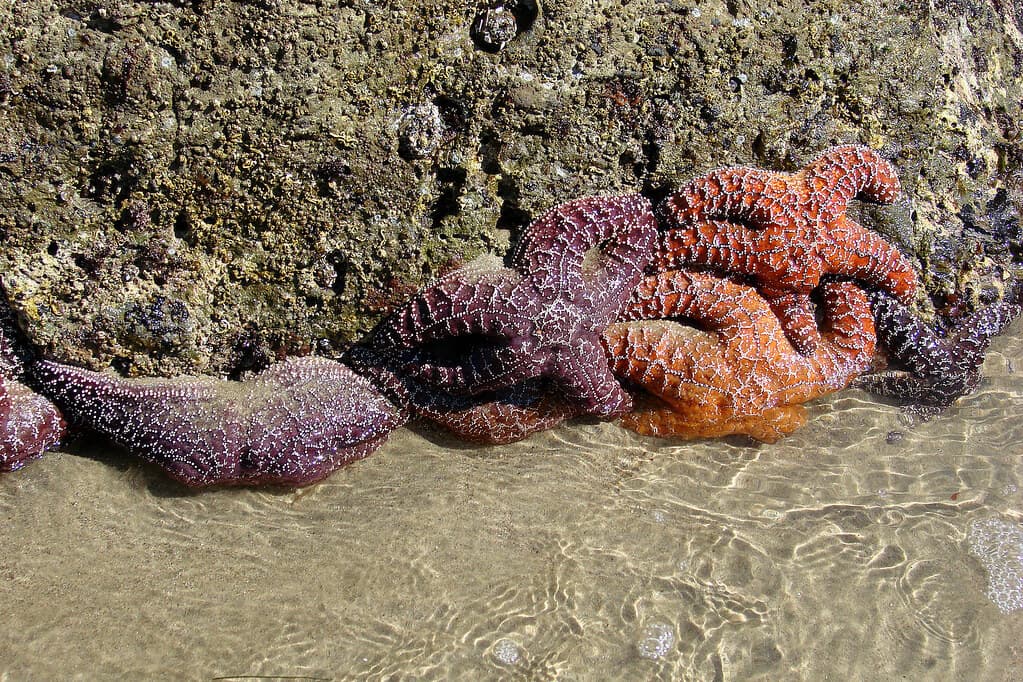
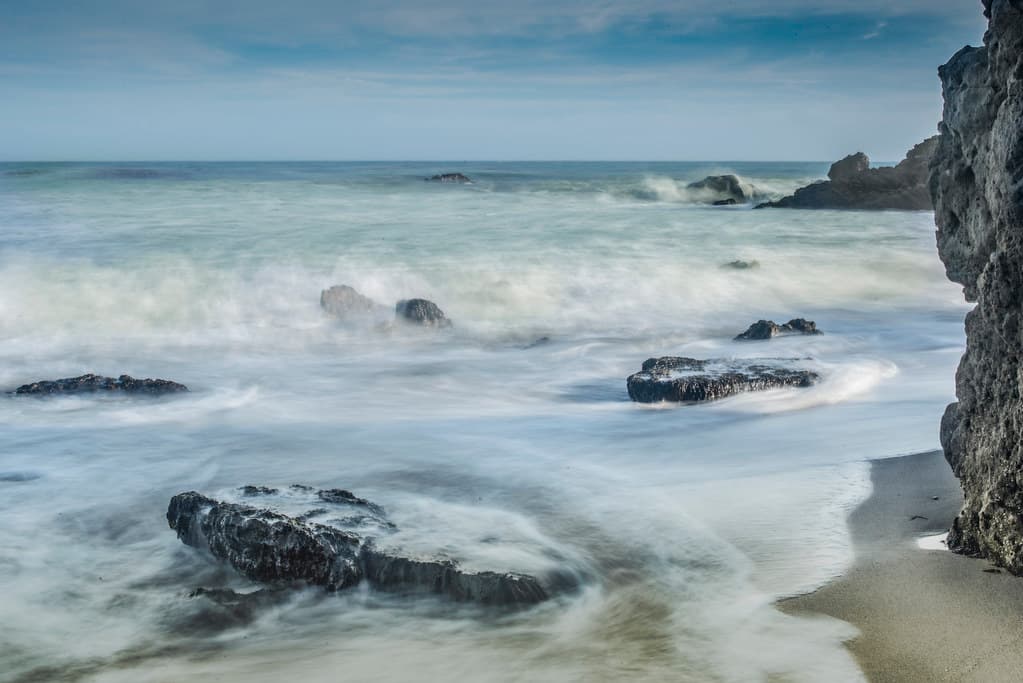
Leo Carrillo stretches across 1.5 miles of coastline where sandstone bluffs cast afternoon shadows over tide pools teeming with ochre sea stars and clustering mussels. The beach divides naturally into coves separated by dark reef outcrops—slick with kelp at high tide, transformed into exploration zones when the ocean pulls back. Families spread blankets near the lifeguard tower while surfers paddle out to the consistent reef break that delivers hollow rights on a northwest swell.
“Sea caves large enough to walk through at low tide distinguish this beach from Malibu's more manicured stretches.”
 Credit: Flickr
Slow Tide
North of the main strand, a series of sea caves tunnel into the headland. You can walk through the largest at minus tides, your footsteps echoing off algae-streaked walls as shafts of daylight pierce the gloom. Bring waterproof shoes; the cave floors stay wet, and barnacles coat every surface. The campground perches on the bluff above, close enough that you hear waves from your tent.
Pelicans skim the surf line at dawn, and by mid-morning the parking lot fills with beachgoers hauling coolers and bodyboards down the paved path. The reef protects the southern coves from wind chop, creating lagoon-like conditions that draw waders and snorkelers. Stay until the light turns amber and watch the cliffs glow rust-orange, the color deepening as the sun drops toward the Channel Islands on the horizon.


