
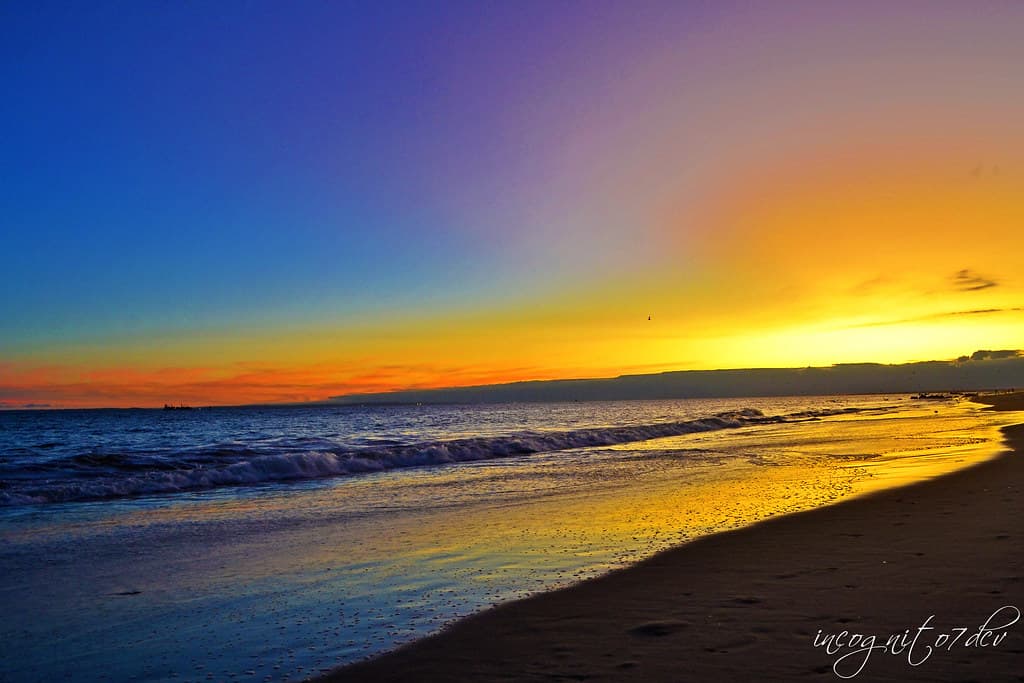
The pier stretches 928 feet into the Pacific, its concrete pilings thick enough to lean against while you watch the morning patrol of dolphins stitching through the kelp beds. Below, in the Roundhouse Marine Studies Lab perched at the end, schoolkids press noses to aquarium glass while their parents scan the horizon for the telltale spouts. The beach itself unfolds in both directions—two miles of blonde sand kept immaculate by a city that treats its shoreline like a groomed garden.
“Manhattan Beach perfected the formula of urban beach town where world-class surf breaks within walking distance of farmer's market coffee and venture capital handshakes.”
 Credit: Flickr
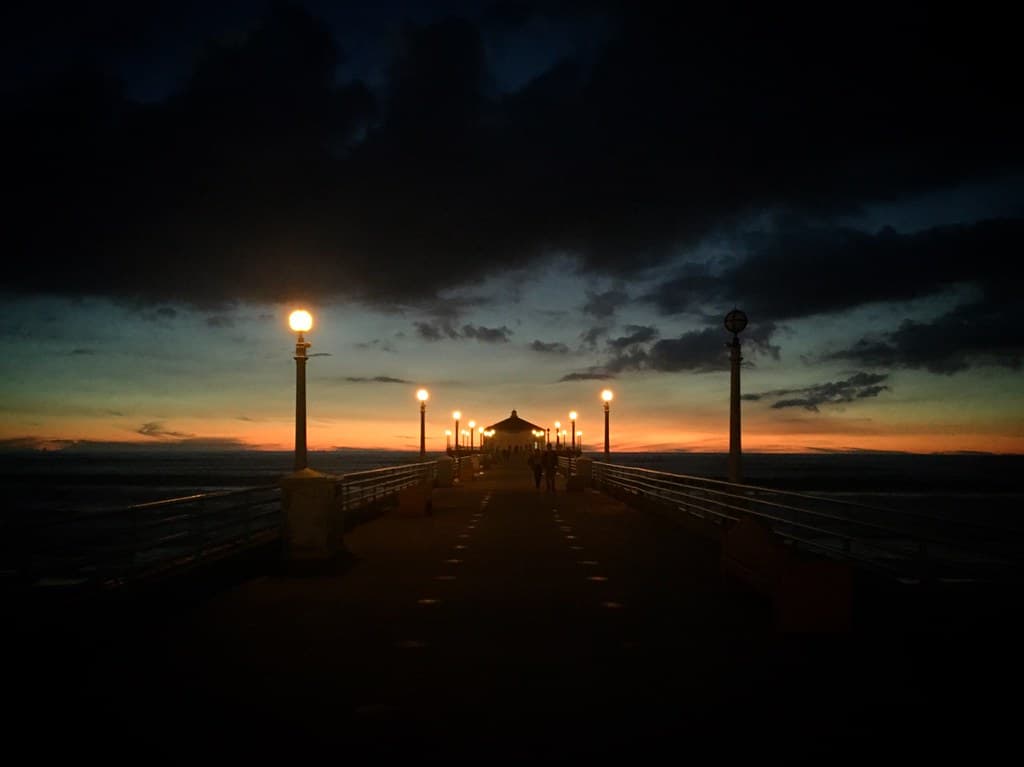
Stormy day sunset over the Manhattan Beach Pier on the coast of the Pacific Ocean, California, USA, January 2019
Downtown Manhattan Beach begins exactly where the sand ends, a six-block grid of surf shops, wine bars, and boutiques that manages to feel neighborhood-authentic despite the seven-figure home prices climbing the hillside behind it. You'll see mortgage brokers in board shorts, teenagers comparing fins outside ET Surf, families wheeling beach carts loaded with umbrellas and coolers past the old Kettle restaurant where locals have been ordering the same scrambled eggs since 1979.
The volleyball courts flanking the pier host a rotating theater of talent—college players training for nationals, weekend warriors diving for saves, pro beach legends running clinics at sunset. The offshore breeze kicks up most afternoons, flattening the sand and carrying the sound of classic rock from beachfront patios. By evening, the strand fills with runners, the lights of Palos Verdes glowing to the south, the air softening into that particular golden hour that keeps people rooted here despite the cost.


