
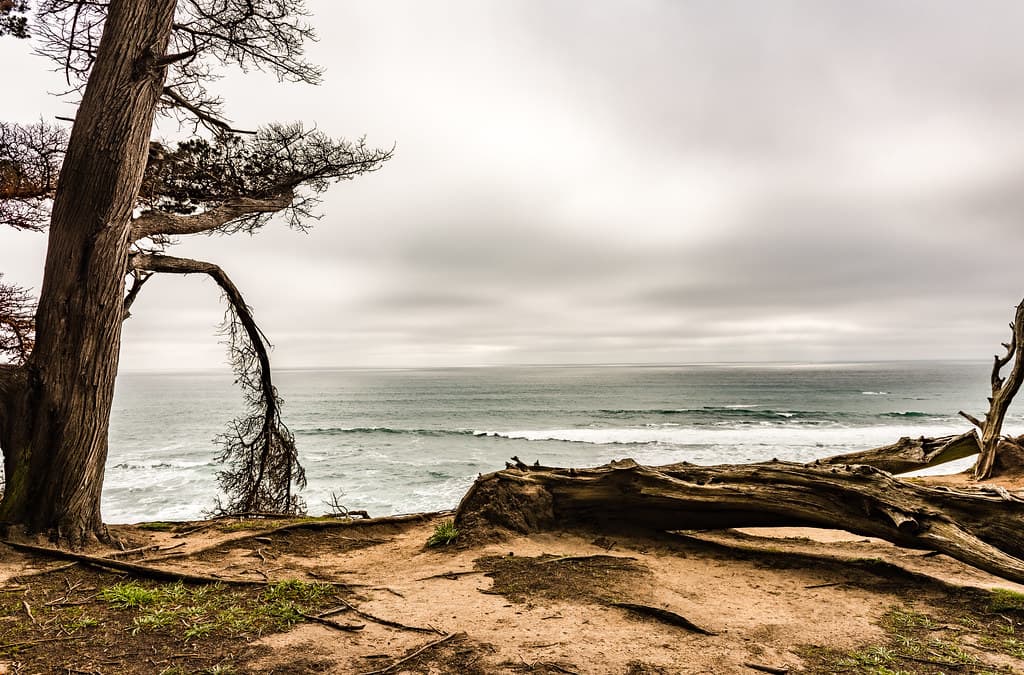
Fitzgerald Marine Reserve draws tide-watchers, not wave-riders. You descend wooden stairs past Monterey cypress and eucalyptus, stepping onto sand that gives way to a maze of volcanic reef shelves exposed twice daily. The shoreline stretches narrow and pebbly in places, backed by eroded bluffs streaked ochre and gray, but it's the reef—a living ledger of starfish, chitons, sculpins, and moon snails—that holds your attention. Rangers patrol during minus tides, gentle guardians reminding visitors to look but not touch.
“One of the most biodiverse intertidal zones on the Pacific coast, protected since 1969 and patrolled by naturalist rangers who enforce touch-free observation.”
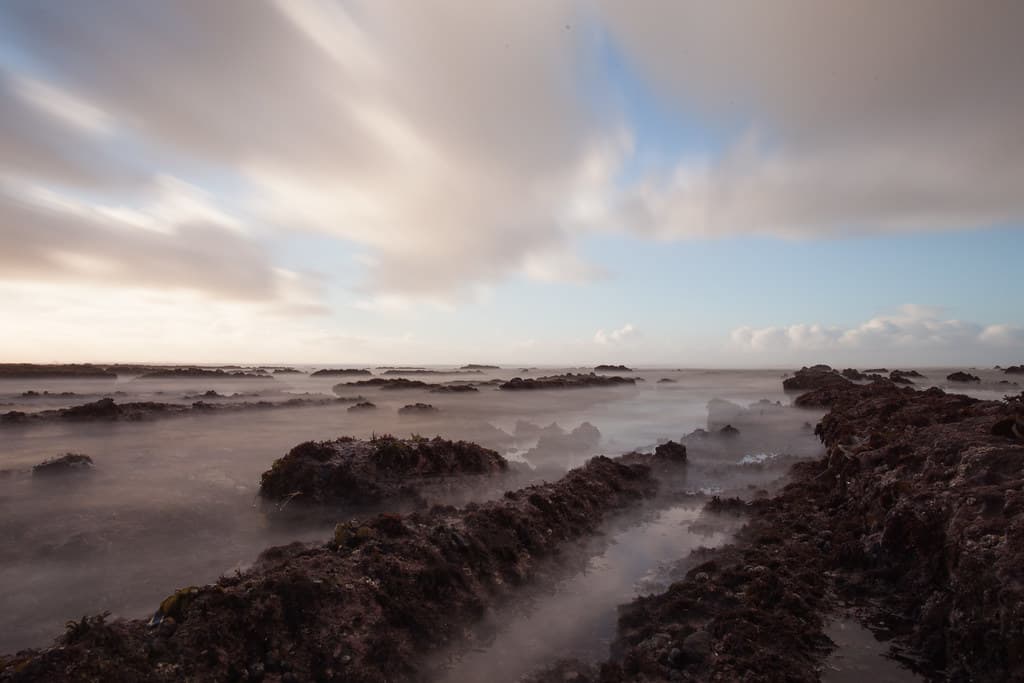 Credit: Flickr
Wave in ... wave out...
Beyond the tidepools, the beach offers solitude. Fog often clings to the coast year-round, muting the horizon into soft gradients of steel and silver. You walk westward along the sand, passing driftwood logs smoothed by salt and time, listening to harbor seals bark from offshore rocks. Surfers rarely bother with the weak, mushy waves here; this is a place for slowness, for kneeling on wet stone and watching a nudibranch inch along kelp.
Come prepared for cold. The water hovers in the low fifties, even in summer. Wear layers, pack a windbreaker, and check tide charts before you arrive—low tides below +1.0 feet reveal the reserve's full spectacle. Moss Beach remains deliberately uncommercialized: no snack shacks, no umbrellas for rent, just you, the invertebrates, and the patient rhythm of the sea.


