
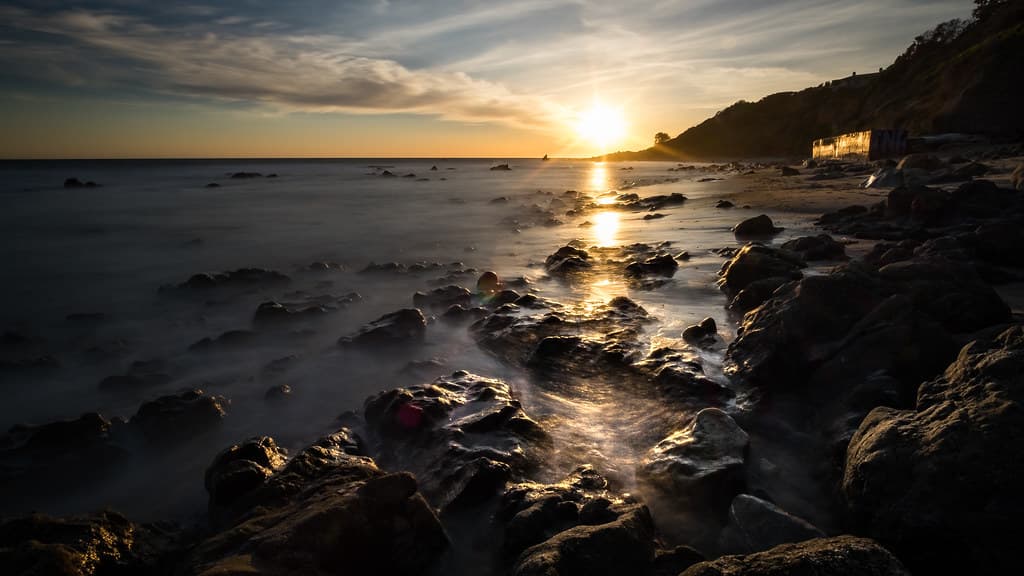
The cliffs begin where Sunset Cliffs Boulevard dead-ends into a string of dirt pull-offs, each one crowded by late afternoon with photographers angling tripods toward the horizon. Below, the shoreline is less beach than geological exhibition—layered sandstone shelves that tilt seaward, interrupted by natural arches and blowholes that hiss and spray when swells punch through. At negative tides, you can walk the exposed reef for half a mile, stepping over mussels and around tide pools thick with urchins.
“San Diego's only accessible mainland coastline where wave-carved sandstone formations rival Big Sur's drama without the crowds or entry fee.”
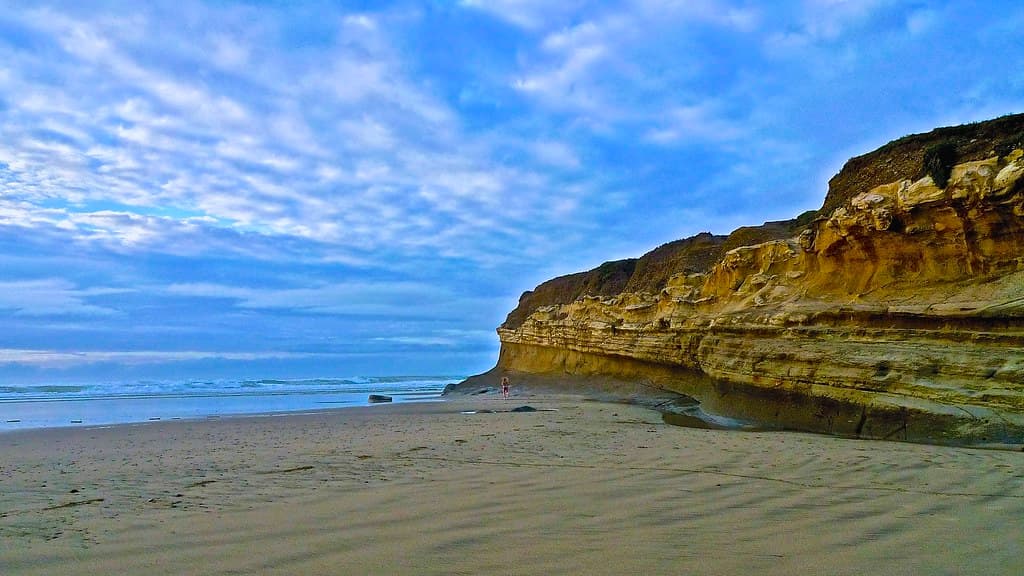 Credit: Flickr
Beach Runner, Cliffs, Approaching Sunset ...
The water here is cold year-round, mid-fifties to mid-sixties, and the entry is rocky enough that most visitors stay dry. Surfers paddle out at the named breaks—Abs, Garbage, New Break—where rights peel along the point and locals enforce an unspoken rotation. The real draw is the light: honey-colored in the hour before dusk, turning the cliffs amber and backlighting the pelicans that skim just above the swell lines.
You won't find restrooms or showers, and parking is a scramble along the boulevard's narrow shoulder. But that's the trade-off. Sunset Cliffs remains stubbornly uncommercialized, a stretch of coast where the city's sprawl halts at the bluff's edge and the only amenities are the ones the ocean provides.


