
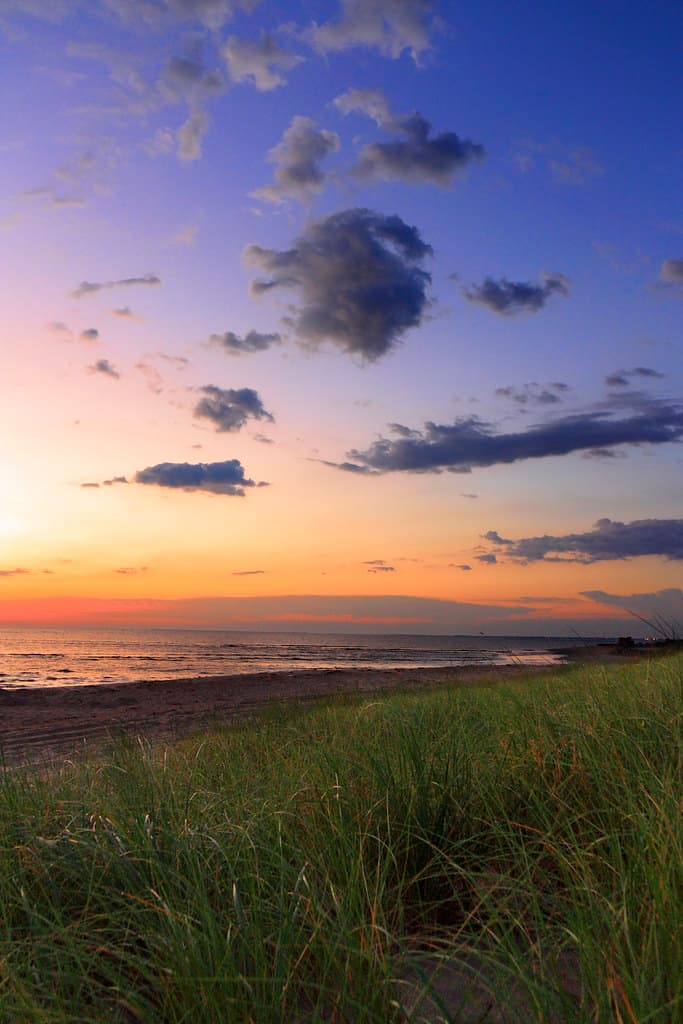
Pull off Prime Hook Road and you'll notice what's missing: no arcades blaring pop songs, no fry stands trailing grease into the wind. Broadkill Beach sits tucked along Delaware Bay's quieter shore, where the water arrives in gentle swells rather than Atlantic breakers. The sand here is coarser, flecked with shell fragments, and at low tide the exposed flats stretch so far you can walk a hundred yards before the bay reaches your knees. Families spread blankets near the dunes while herons stalk the shallows, unbothered.
“Broadkill's tidal flats and horseshoe crab spawning grounds offer a rare bay-side alternative to Delaware's ocean beaches, where shallow water and marshland ecology replace surf culture.”
 Credit: Flickr
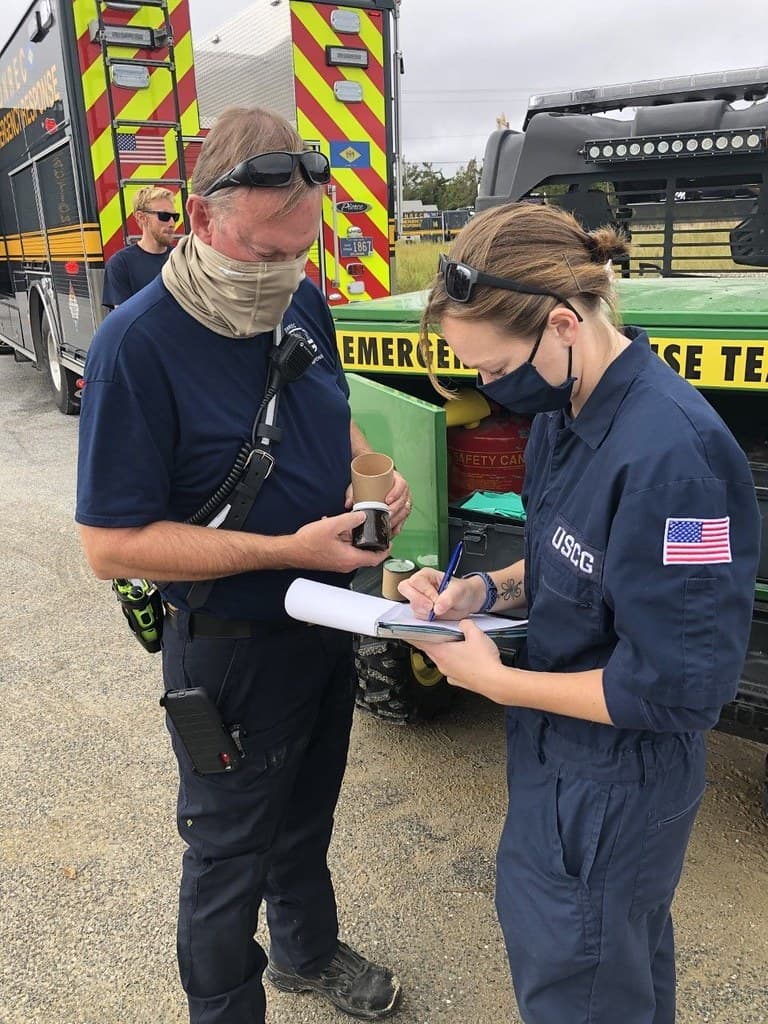
Coast Guard overseeing cleanup of oil patties on Broadkill Beach, Delaware
The beach earns its charm through subtraction. You won't find lifeguard towers or rental kiosks, just a narrow ribbon of sand flanked by cordgrass and bayberry. In spring, horseshoe crabs lumber ashore to spawn, their prehistoric forms drawing naturalists and curious toddlers alike. Come summer evenings, the western sky bleeds pink and orange over the water—no buildings to interrupt the horizon, only marsh and open bay.
This is where Delaware families return year after year, not because Broadkill dazzles, but because it doesn't try to. You bring your own chairs, your own cooler, your own sense of what a beach day should be. The bay stays shallow and warm through August. Your children collect periwinkle shells. The afternoon stretches long and unhurried, the way beach time used to feel before everything became an attraction.


