
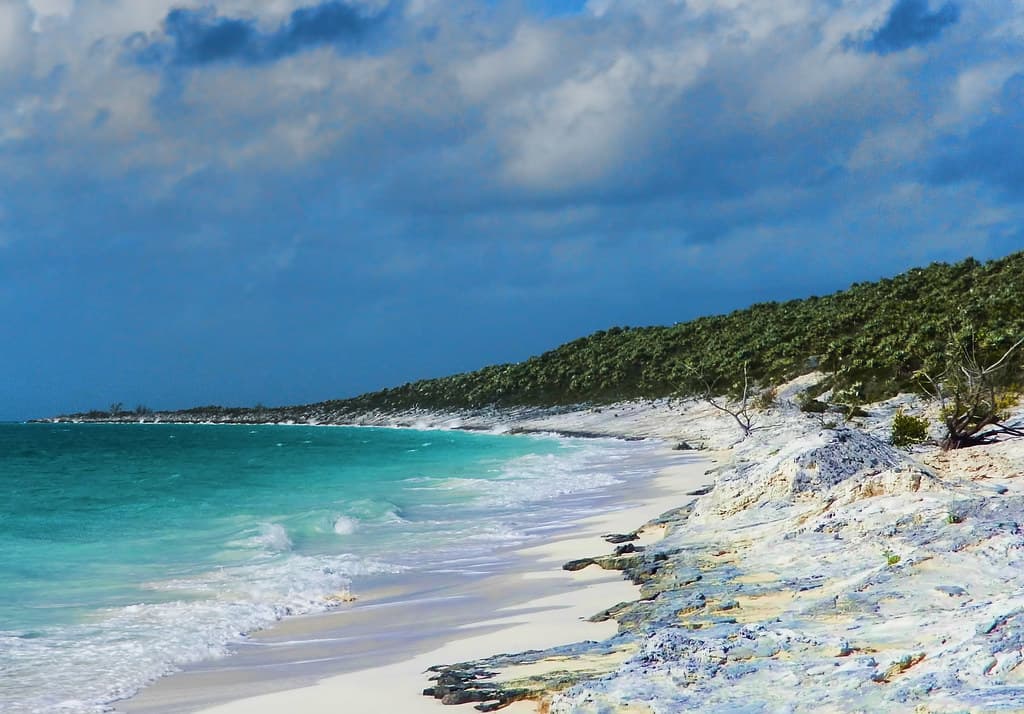
Alligator Point stretches along a slender peninsula where Franklin County meets the Gulf, a place the resort developers overlooked. You park beneath gnarled live oaks and step onto sand the color of raw turbinado sugar, littered with intact shells—coquinas, arks, scallops—that draw beachcombers at dawn with mesh bags and sun hats. The water stays shallow for what feels like a football field, warm and tea-tinted from the tannins upstream, perfect for wading toddlers and older dogs who've grown cautious of waves.
“It's one of the Gulf Coast's last undeveloped eight-mile stretches where you can still wade out fifty yards in knee-deep water.”
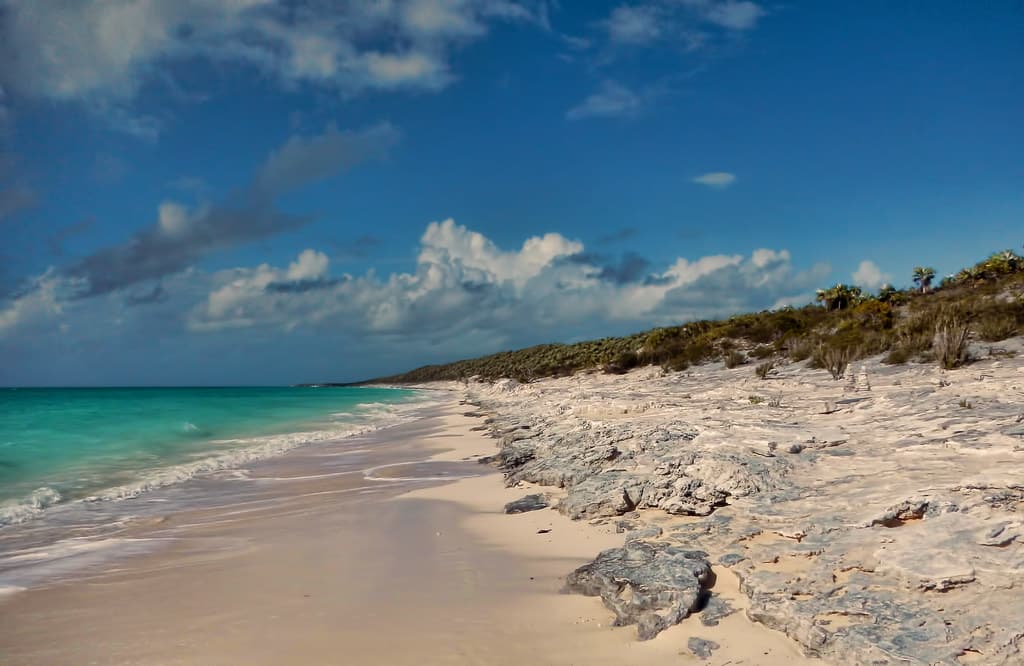 Credit: Flickr
Beach at Alligator Point on Cat Island
The eight-mile strand curves gently southwest, edged by dunes stitched together with sea oats and railroad vine. Most days you share the beach with brown pelicans skimming the surface and the occasional fisherman standing thigh-deep, casting for redfish. Wooden beach houses on pilings—painted turquoise or left to gray—punctuate the low skyline, their screened porches facing the water. No boardwalks, no tiki bars, no jet-ski rentals.
Sunset here is a quiet production: the sky goes tangerine, then violet, and the shrimpers' lights begin to glow offshore. You'll hear the wind in the pines and the rhythmic wash of low surf, and if you're lucky, the chatter of a dolphin pod working bait fish just beyond the sandbar. This is old Florida, the version that asks nothing of you but attention.


