
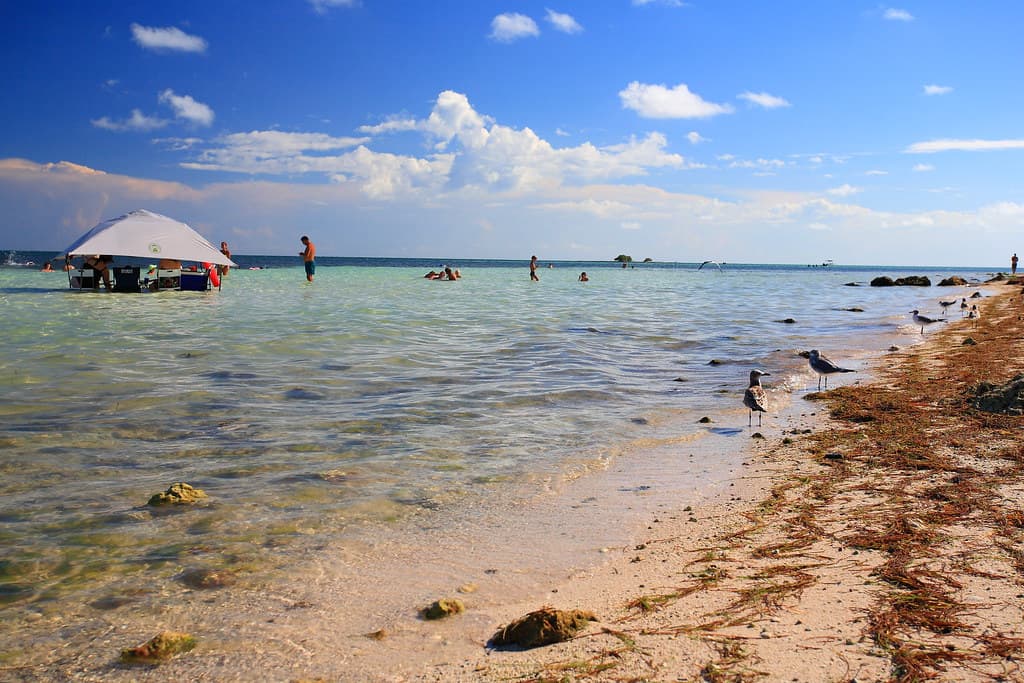
Step onto Sandspur Beach and you'll understand why Floridians drive three hours from Miami for this particular stretch of shore. The sand here is the real thing—powdery calcium carbonate that squeaks beneath your feet and stays cool even at noon, a rarity in the coral-rock Keys. Above you, the weathered steel trusses of Henry Flagler's abandoned railroad bridge arc across the channel, pelicans perched on rusted rails that once carried passengers to Key West.
“The largest naturally occurring white-sand beach in the entire Florida Keys island chain, bordered by an iconic Depression-era railroad bridge.”
 Credit: Flickr
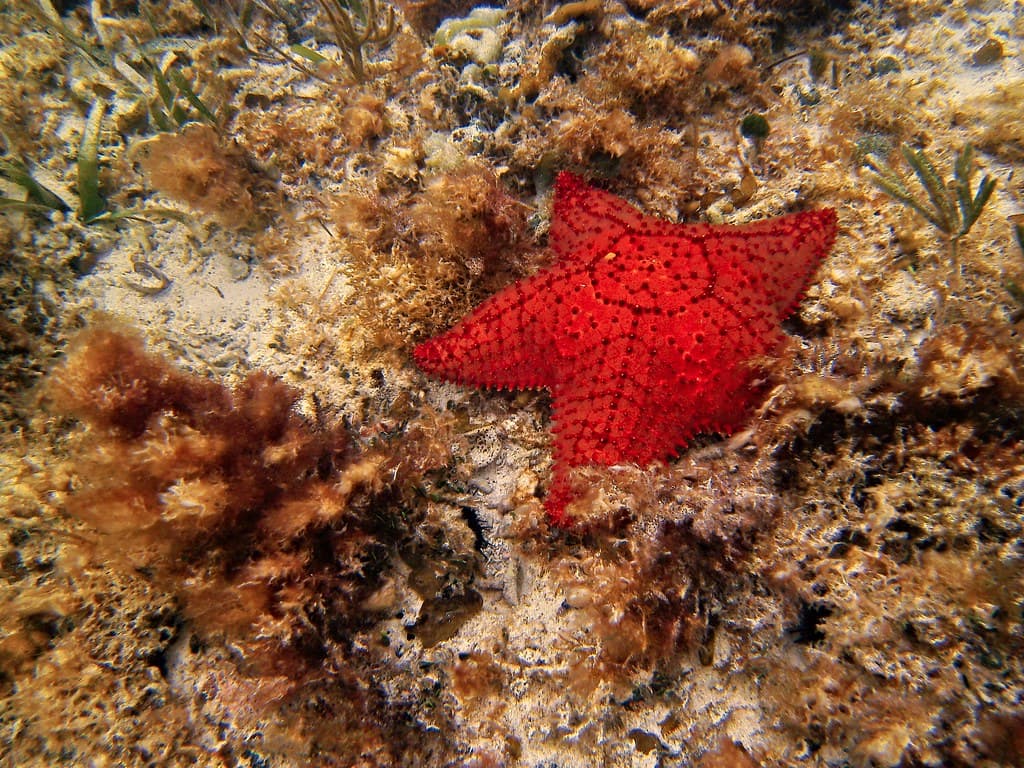
Sea Star Spotting at Bahia Honda
Wade into water so clear you'll count your toes at chest depth, the seafloor a gentle slope of rippled sand. Families cluster near the pavilions where Australian pines offer shade, while couples stake out the bridge-side stretch at Calusa Beach, accessible via boardwalk. The Atlantic side stays calmer than the Gulf, protected by the curve of the key itself, though winter cold fronts can stir up enough chop to make snorkeling the offshore patch reefs a challenge.
Stay through sunset and you'll watch the sky ignite orange and pink behind that skeletal bridge, the silhouette so perfectly composed it feels staged. Rangers lock the gates at sundown, so you'll time your departure by the sun's descent rather than your own reluctance to leave. Pack out everything you bring—this is state-park Florida, where the rules are enforced and the beaches stay pristine because of it.


