
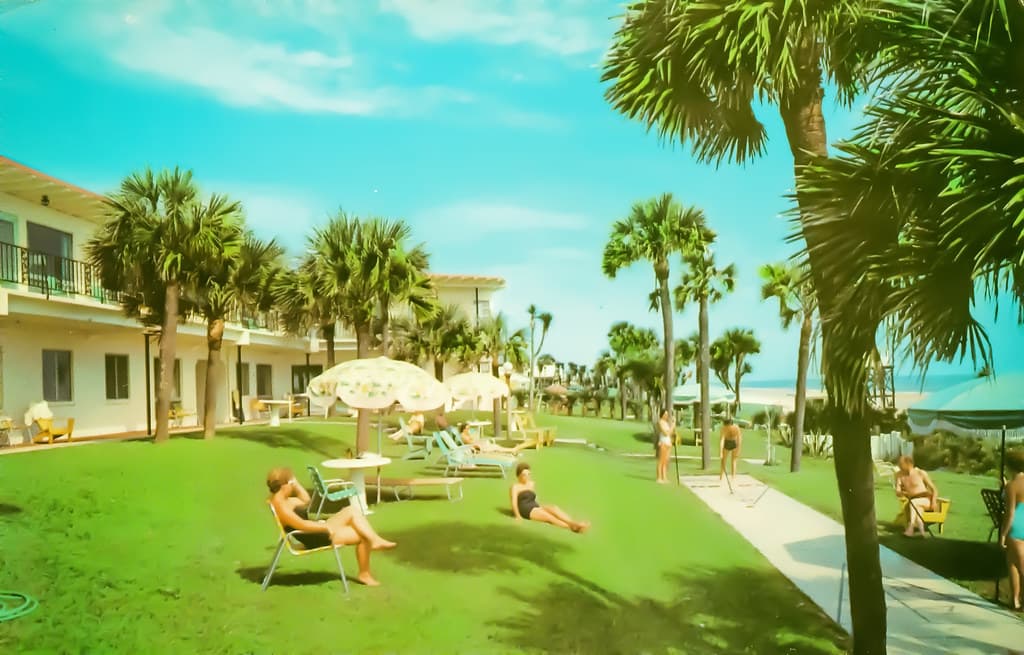
Your vehicle rolls off the asphalt and onto the beach itself, tires gripping the firm sand as if the shoreline were an extension of the road. This is Daytona Beach—a place where the car culture that made it famous during decades of racing meets the timeless pull of the Atlantic. Families stake out patches near wooden boardwalk pylons, coolers wedged into the sand, while joggers trace the waterline at sunrise, dodging the foam left by retreating waves.
“One of the last beaches in America where you can legally drive and park on the sand itself.”
 Credit: Flickr
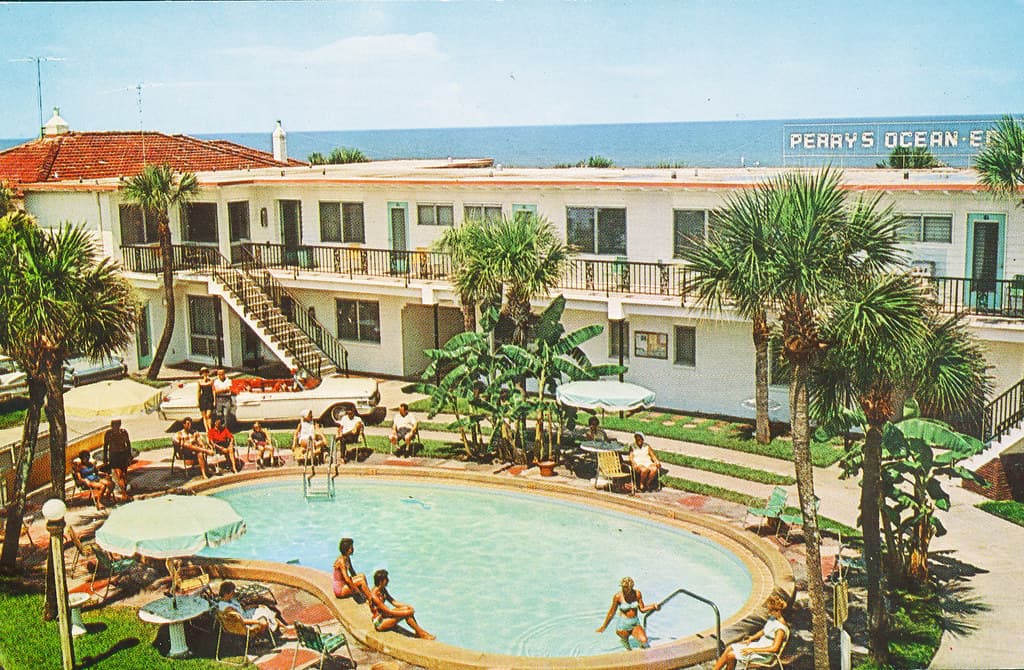
Perry's Ocean Edge Beach Motel, Daytona Beach Shores, Florida
The beach stretches wide and flat, the color of wet caramel when the tide pulls back, revealing a natural causeway that's been welcoming automobiles since the 1920s. Gulls wheel overhead, their cries punctuating the steady percussion of surf. By late afternoon, the angle of light turns the water a deeper blue-green, and the boardwalk's Ferris wheel begins to glow against the dimming sky.
You'll find surf breaks that draw locals year-round, pier fishermen casting lines into the current, and beach bars where sand floors meet cold taps. The vibe shifts with the calendar—spring break erupts in neon and noise, summer belongs to multigenerational reunions, winter offers quieter mornings when dolphins arc through the swells. But the constant remains: that hard sand underfoot and the Atlantic stretching endlessly east.


