
The beach at Amelia Island State Park stretches for more than a mile along the island's southern tip, where Cumberland Sound meets the ocean and tidal currents carve channels that shift with the moon. You'll arrive through tunnels of live oak draped in Spanish moss, emerging onto a strand that remains stubbornly undeveloped—no boardwalk, no vendors, just dunes anchored by sea oats that rattle in the offshore breeze. The sand here is firm underfoot, compacted by tides that retreat hundreds of yards twice daily, revealing sandbars dotted with ghost crabs and whelk shells the size of your fist.
“One of northeast Florida's last undeveloped barrier island beaches, bordered by tidal marshes teeming with wading birds and accessible only through maritime forest.”
 Credit: Flickr
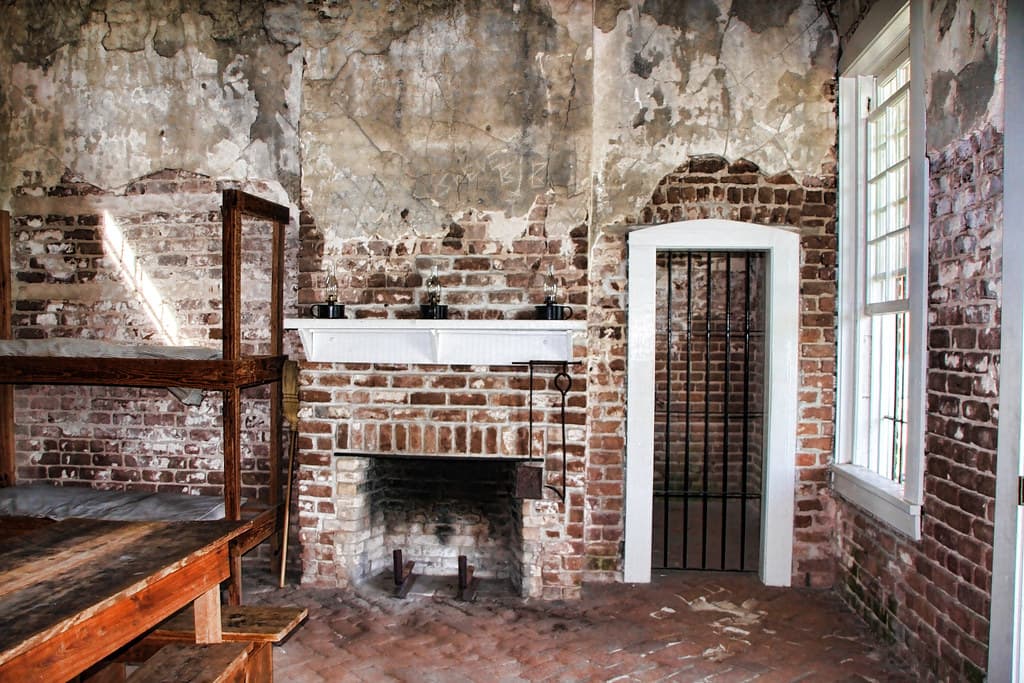
Ft. Clinch Jail, Amelia Island, Florida, USA.
The light changes by the hour: morning sun illuminates pods of dolphins feeding just beyond the surf line; afternoon heat shimmers off the sand flats; dusk paints the marsh grasses in shades of copper and gold. Horseback riders from nearby stables occasionally pass at the waterline, their hoofprints disappearing into the foam. You'll share this space with serious birders clutching field guides, scanning for endangered piping plovers and reddish egrets that stalk the shallows.
This is not a beach for umbrellas and cabanas. You carry in what you need, stake your claim near a driftwood log silvered by sun and salt, and watch the tides erase your footprints. The park closes at sundown, but that final hour before the gates shut is when the sky performs: horizontal bands of rose and violet stretching across the entire western horizon, silhouetting the distant smokestacks of the paper mill that's been part of this landscape for generations.


