
Main Beach spreads along the northern edge of Amelia Island, a generous crescent of khaki-colored sand that serves as the town's living room. You can walk from Centre Street's brick storefronts to the surf in under five minutes, passing families hauling coolers and couples carrying beach chairs rented from the shops along Atlantic Avenue. The town pier juts 1,600 feet into the water, its pilings darkened by barnacles and age, and from its weathered planks you'll watch shrimp boats cross the horizon while anglers haul up flounder and whiting.
“A municipal beach where small-town rituals unfold against an Atlantic backdrop still traced by working vessels and historic maritime trade routes.”
 Credit: Flickr
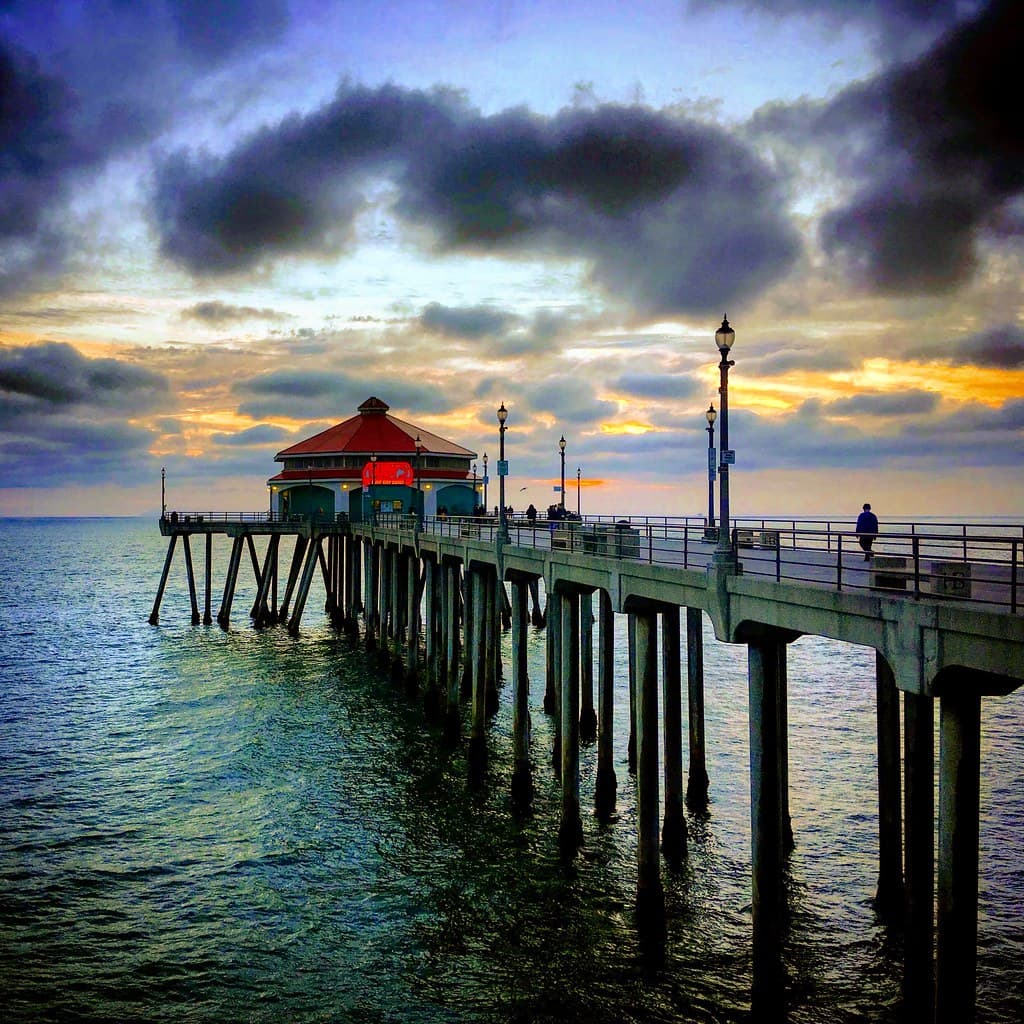
Huntington Beach pier over the Pacific Ocean at the dusk, Huntington Beach, California, USA, January 2019
The beach itself slopes gently, compacted firm at low tide so runners and cyclists carve tracks along the waterline. You'll share the sand with kite-flying children, metal-detector enthusiasts sweeping slow arcs, and locals who arrive with their dogs before the morning heat settles in. The waves here rarely exceed waist-high, breaking in lazy, foam-edged lines that appeal to bodyboarders and anyone seeking an uncomplicated swim.
As afternoon fades, you'll notice the westward shift of attention—blankets repositioned, cameras raised—as the sun descends behind the dunes and maritime forest. The palette shifts from blue to amber, silhouetting the pier against a sky striped with coral and lavender. This is when Main Beach earns its reputation, not through seclusion or untouched wilderness, but through its democratic embrace of everyone who comes to mark the day's end at the edge of the continent.


