
The beach earns its name from the exposed stretches of coquina rock and darker sedimentary formations that punctuate the sand, especially visible at low tide. You'll notice the difference immediately—this isn't the endless white powder of the resort beaches forty minutes south. Here, the shore feels elemental: salt-stiffened grasses lean landward, gulls pick through tide pools, and the smell of marsh mingles with brine as the St. Johns River current threads into the ocean.
“The only Jacksonville beach where volcanic-dark coquina formations shape the shoreline and dictate the tide's rhythm.”
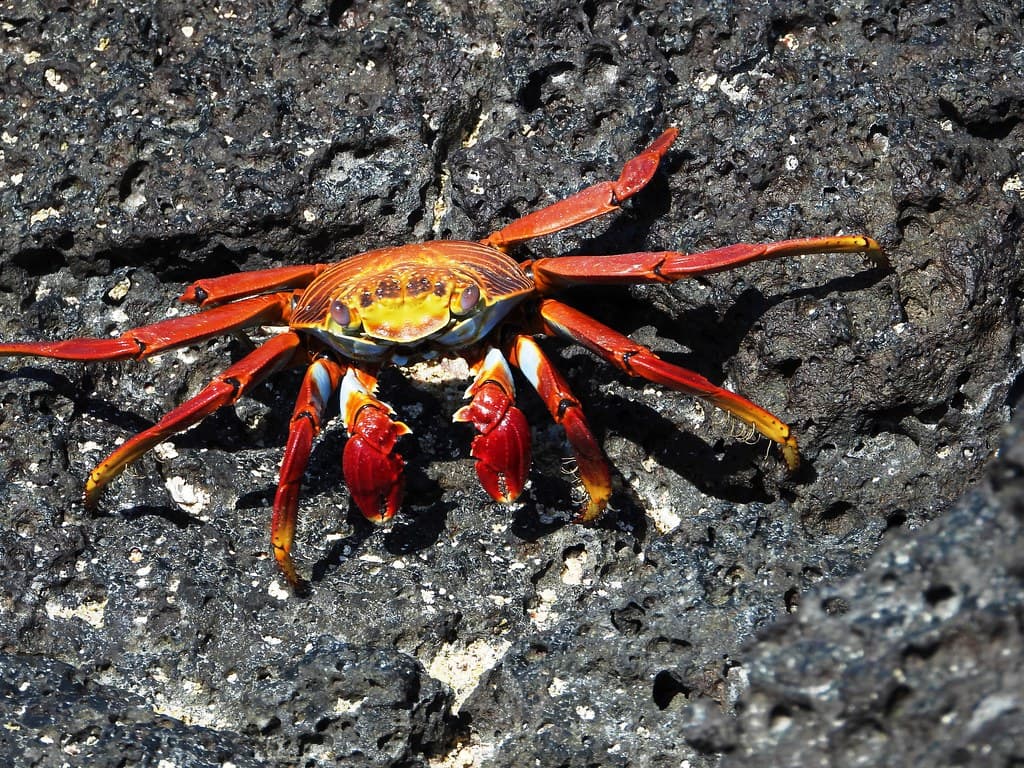 Credit: Flickr
5755ex Sally Lightfoot Crab on volcanic beach
Timing matters. Arrive two hours before low tide and you'll have room to wander the intertidal zone, where small crabs scuttle between barnacle-crusted stones and shorebirds work the wrack line. The beach faces east, so sunrise paints the rock formations in amber and rose, while afternoon light flattens into a pewter haze that suits the moody, unpolished character of the place.
You won't find beach bars or umbrella rentals. What you will find: solitude, even on weekends; enough space to hear your own thoughts; and a shoreline that rewards slow observation. Bring a cooler, a folding chair, and low expectations for Instagram-ready scenery. Blackrock delivers something quieter—a stretch of Northeast Florida coast that hasn't been smoothed into sameness.


