
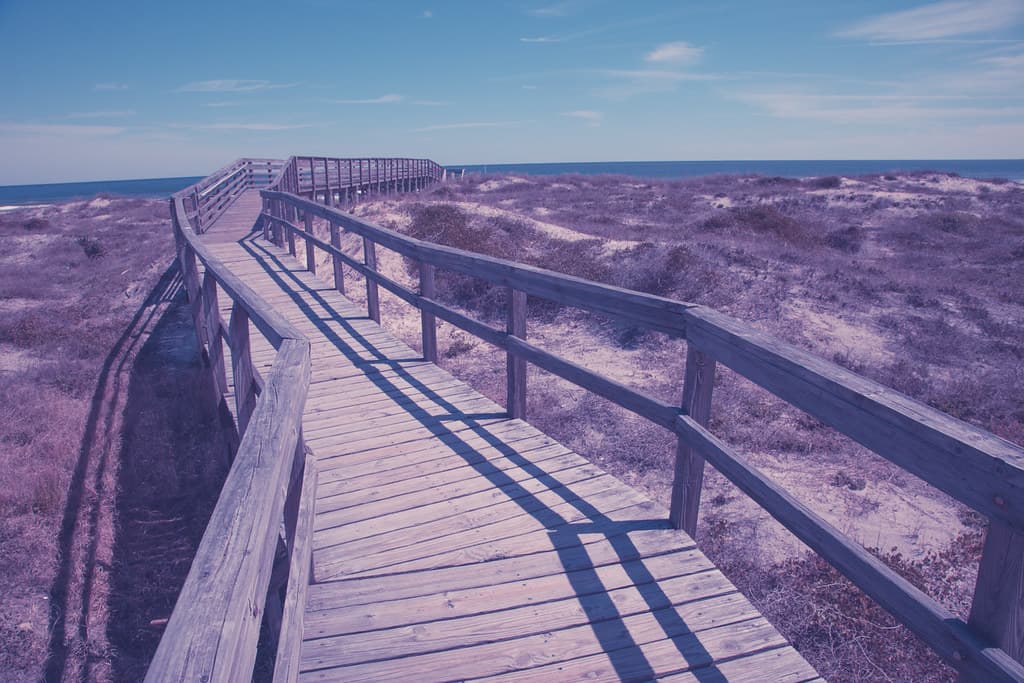
The moment you cross the bridge onto Little Talbot Island, asphalt gives way to something older. Salt marsh grass hisses in the breeze. Maritime hammock shadows the road. Then the dunes open up, and you're standing on a beach that looks less like Florida and more like the edge of a forgotten continent—all bone-white driftwood and amber sand stretching north toward Cumberland Sound.
“The last undeveloped barrier beach in Northeast Florida, where ancient driftwood creates a constantly changing sculpture garden against wild Atlantic surf.”
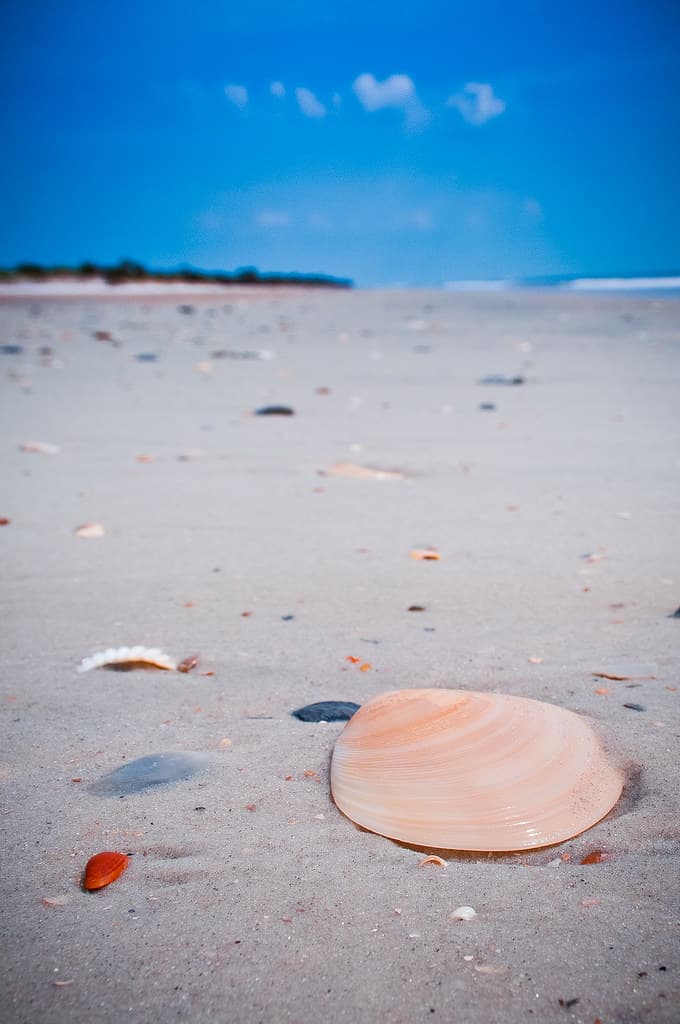 Credit: Flickr
Little Talbot Island, Jacksonville, FLA, USA --Shells
You'll walk among tree skeletons half-buried in the beach, their roots washed smooth by hurricanes and nor'easters. Some lean like temple columns; others sprawl in tangles where sanderlings probe for coquinas. The waves here roll in clean and steady, carving steep drop-offs at high tide, spreading wide flats when the water pulls back. In late afternoon, the sun sinks behind the island's live oak canopy, painting the driftwood sculptures in gold and violet.
This is what barrier islands looked like before development: wild, shifting, utterly indifferent to human schedules. The state park protects 5,000 acres of dune, forest, and marsh. You won't find beach bars or jet ski rentals. Just shorebirds, the occasional pod of dolphins beyond the breakers, and enough solitude to hear your own footsteps in the sand.


