
Longboat Key unfurls along a narrow strip of land where the Gulf of Mexico laps against twelve miles of coastline, and the beach never feels crowded—even in February when snowbirds fill the low-rise condominiums. You'll notice the absence of high-rises immediately; local ordinances keep development modest, so your sightline stays clean from sand to horizon. The shore slopes gently, making this one of the safest swimming beaches on Florida's southwest coast, and the water stays shallow for fifty yards out, turning from pale jade to deeper turquoise as you wade.
“This barrier island enforces strict low-rise zoning, keeping your beach view free of the towering condominium walls that define most Florida Gulf beaches.”
 Credit: Flickr
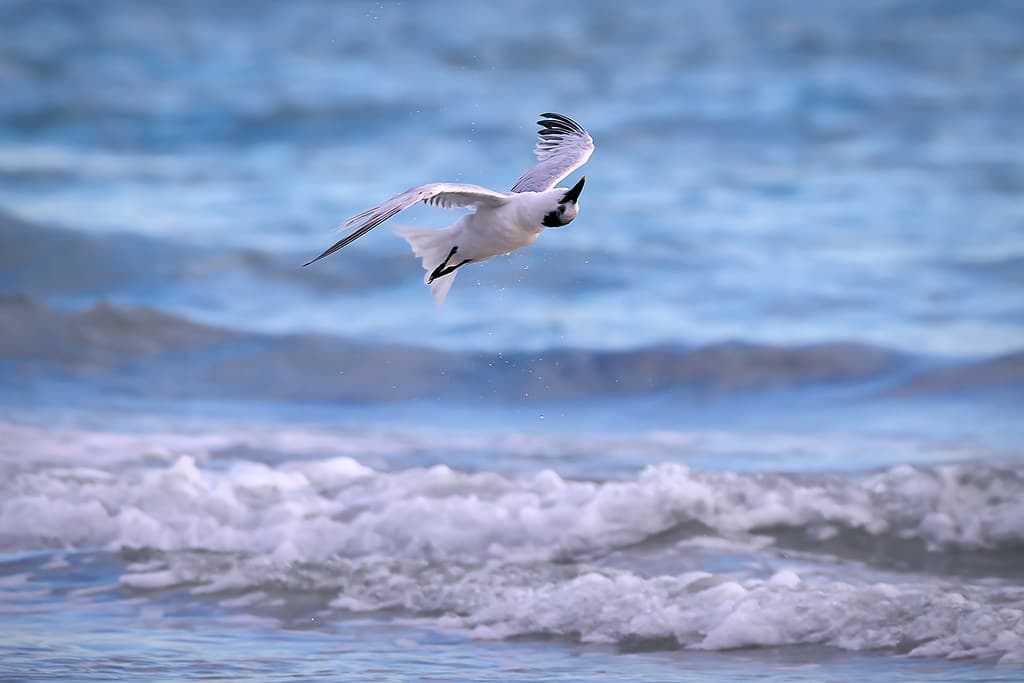
An upside down Sandwich tern shaking off water in flight after taking bath at sunset at Whitney beach on Longboat Key near Sarasota, Florida
Public beach access appears every few blocks, marked by small wooden signs and just enough parking for a dozen cars. Beer Can Island—the local nickname for the undeveloped northern tip—offers the wildest stretch, where Australian pines lean over dunes and shelling turns up lightning whelks and tulip shells after storms. The sand itself is almost entirely quartz, trucked down from Appalachian rivers over millennia, and it squeaks audibly when you walk after the tide recedes.
Sunset pulls everyone to the western shore. The Gulf horizon sits unobstructed, and as the sun drops, the sky cycles through salmon, then persimmon, finally deep violet. Dolphins surface in the offshore troughs around dusk, their dorsals cutting the glassy water as mullet jump in silver arcs.


