
Carillon Beach occupies a deliberate detour from the Panama City Beach carnival. Designed in the late 1990s as a New Urbanist resort community, it unfolds in pastel-shuttered beach houses, brick-paved streets, and a gatehouse that feels more Seaside than spring break. Once through, the public boardwalk spills you onto a wide, uncommonly quiet stretch where the sand compresses into a hard-packed promenade at low tide—ideal for barefoot strolls that span hundreds of yards without dodging jet-ski rental touts.
“New Urbanist design keeps buildings low and the shoreline refreshingly free of high-rise shadows and commercial clutter.”
 Credit: Flickr
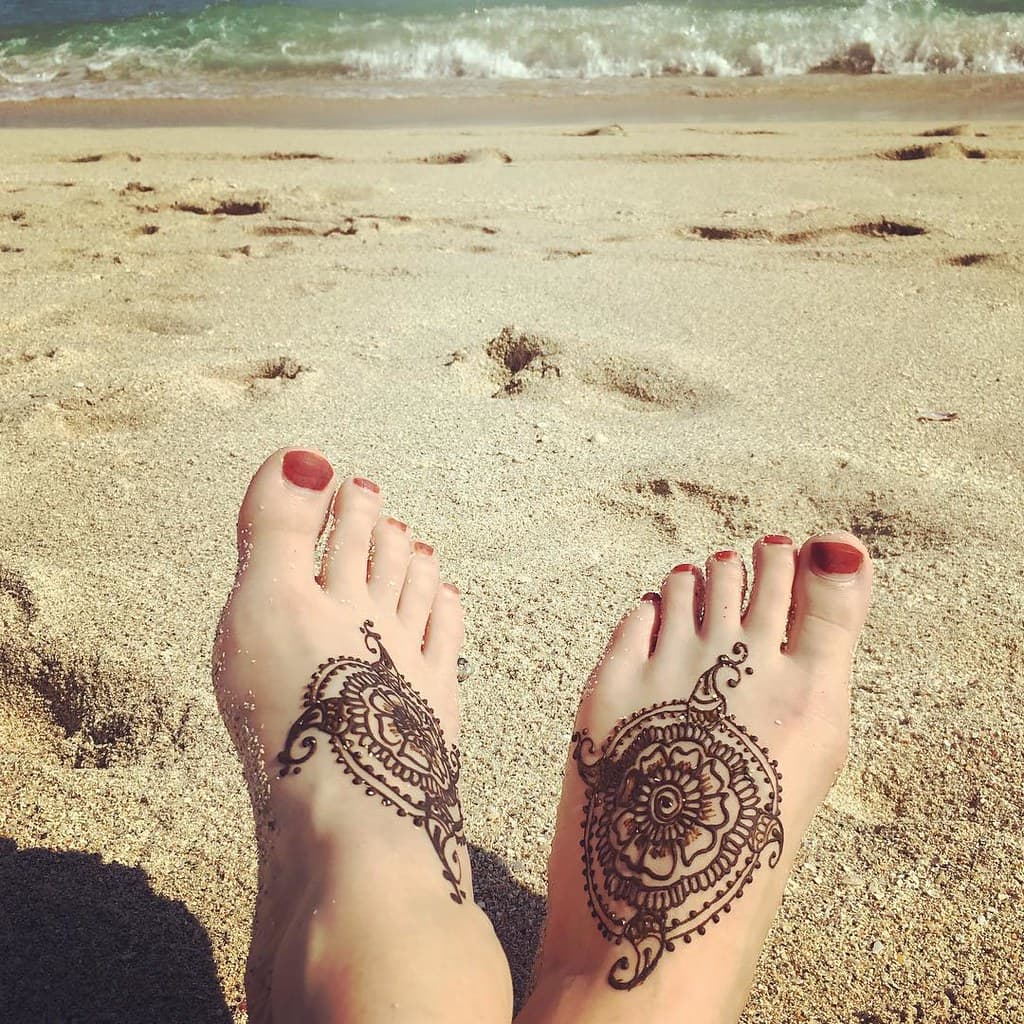
Ola Miami! Love the texture of your warm, sandy beach. Loving the beautiful blue-green water. All deserving of pretty henna feet. ❤️- Khadija #henna #hennasooq #hennapro #hennamiami #miamihenna #miamibeach #carillon #hennatattoo #teamhenna #teamna
The water slopes so gently that you'll wade thirty feet before it brushes your waist, and on most mornings the surface lies glassy enough to mirror the sky. Families stake umbrellas near the central boardwalk, but drift a few minutes east or west and you'll claim a pocket of sand bordered only by sea oats nodding in the offshore breeze. Late afternoon light washes the facade of The Pearl Hotel and neighboring cottages in amber, casting long shadows across the dunes.
Unlike the towering condos that define the main strip, Carillon caps building heights and bans chain signage, leaving the horizon low and uncluttered. It's a polished quiet—manicured but not artificial—where the Gulf's rhythmic hush replaces bass-thumping beach bars, and the only countdown you'll hear is the one inside your head, urging you to stay another hour.


