
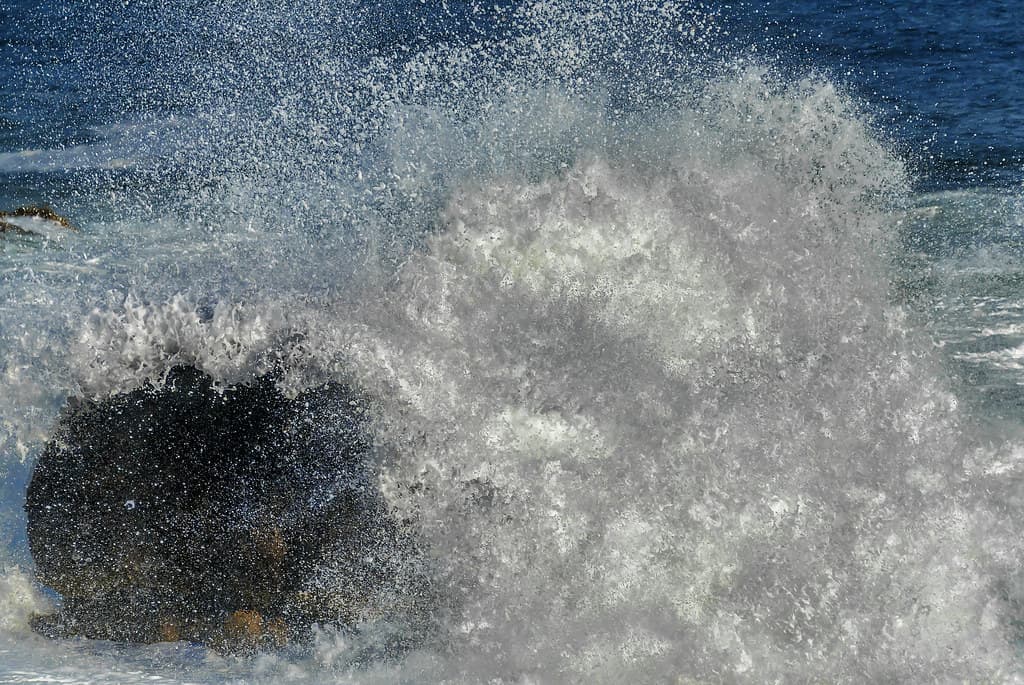
The ferry drops you at the western tip of Shell Island, and the contrast hits immediately: behind you, the high-rises of Panama City Beach glint in the sun; ahead, nothing but dunes, sea oats, and empty sand stretching toward the horizon. Because no roads reach this 700-acre barrier island, development never arrived. You walk east along the Gulf side, where the water glows that particular shade of green-blue that travel writers overuse but here actually earns its reputation. Sandbars emerge fifty feet offshore, creating knee-deep lagoons where stingrays glide past your ankles.
“It remains the longest stretch of undeveloped barrier-island coastline left on Florida's Panhandle, accessible only by water.”
 Credit: Flickr
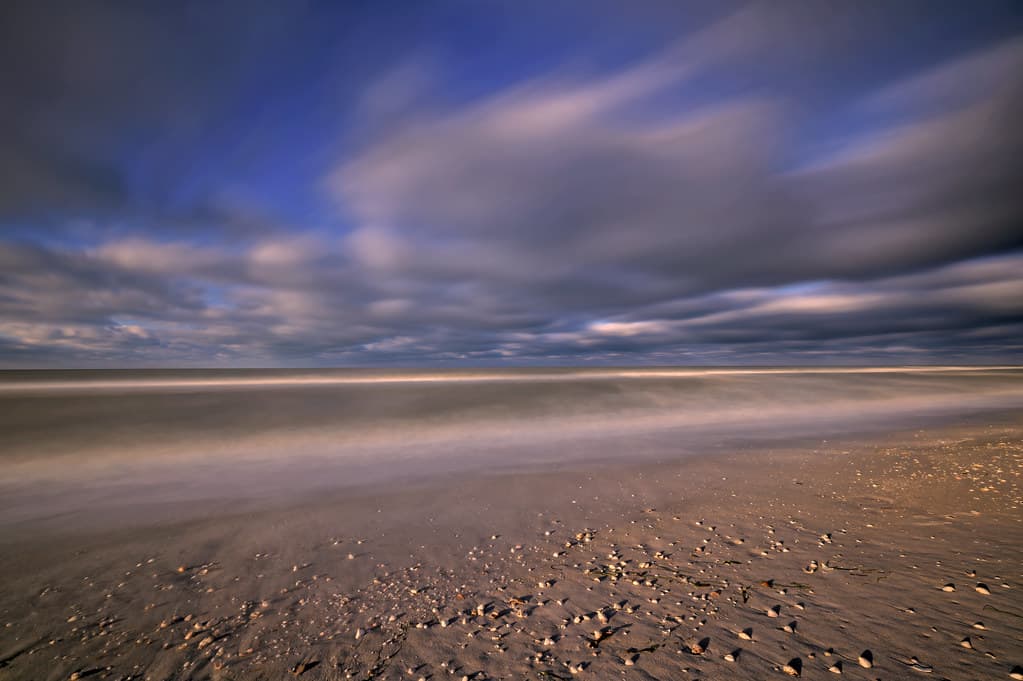
Long exposure of shells in the sand and clouds just after sunrise on Bowmans Beach on Sanibel Island, Florida
The island narrows in places to just a hundred yards between Gulf and bay, and you'll cross over repeatedly, chasing shade under the slash pines or hunting the bayside flats where shells—lightning whelks, sand dollars, scallops—collect in drifts. Bottlenose dolphins patrol the pass at the eastern end, their fins cutting the surface in pairs and trios. By afternoon, the shuttle boats return in waves, but if you time your visit for late morning, you'll have whole stretches to yourself.
Bring everything: there are no facilities, no freshwater, no shade structures. Just sand, sun, and that increasingly rare commodity—a Gulf Coast beach that looks the way it did before anyone thought to build on it.


