
You drive onto a slender causeway that feels more like a coastal isthmus than a road, water lapping at both edges as you roll toward a palm-fringed spit jutting into Tampa Bay. Fred Howard Park Beach unfurls at the terminus: a half-moon of packed sand studded with coquina fragments, where families spread blankets beneath pavilions and wading children scatter hermit crabs back into the shallows. The water here is bathwater-warm most of the year, shallow enough that you can walk a hundred yards out and still feel sand underfoot, the bay floor carpeted in turtle grass that sways with the tide.
“The mile-long causeway transforms your arrival into a miniature voyage, water on both flanks, before depositing you on a protected bay beach that feels like an island.”
 Credit: Flickr
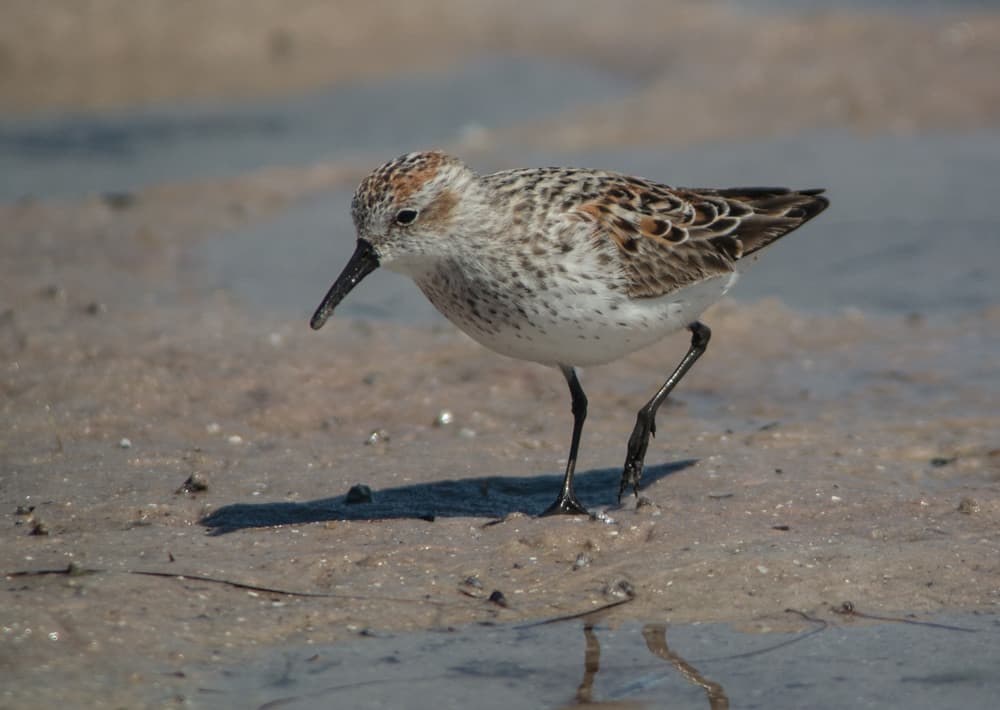
Western Sandpiper - Breeding -3454
Pelicans patrol the shoreline in formation, folding their wings to plunge after mullet, while snowy egrets stalk the wrack line for fiddler crabs. On weekends the grills smoke with grouper and hot dogs, and the playground hums with barefoot kids rinsing sand from their elbows at the outdoor showers. Unlike the open-Gulf beaches to the west, this protected cove stays glassy even when wind chops up the water beyond the mangrove keys.
As the sun drops, the causeway becomes a gallery: couples lean against car hoods, photographers tripod up on the asphalt, and paddleboarders glide back through light that turns the bay to molten copper. You'll leave with salt on your lips and the particular satisfaction of a beach that works—facilities clean, parking ample, and that rare Tampa Bay combination of accessibility and genuine coastal beauty.


