
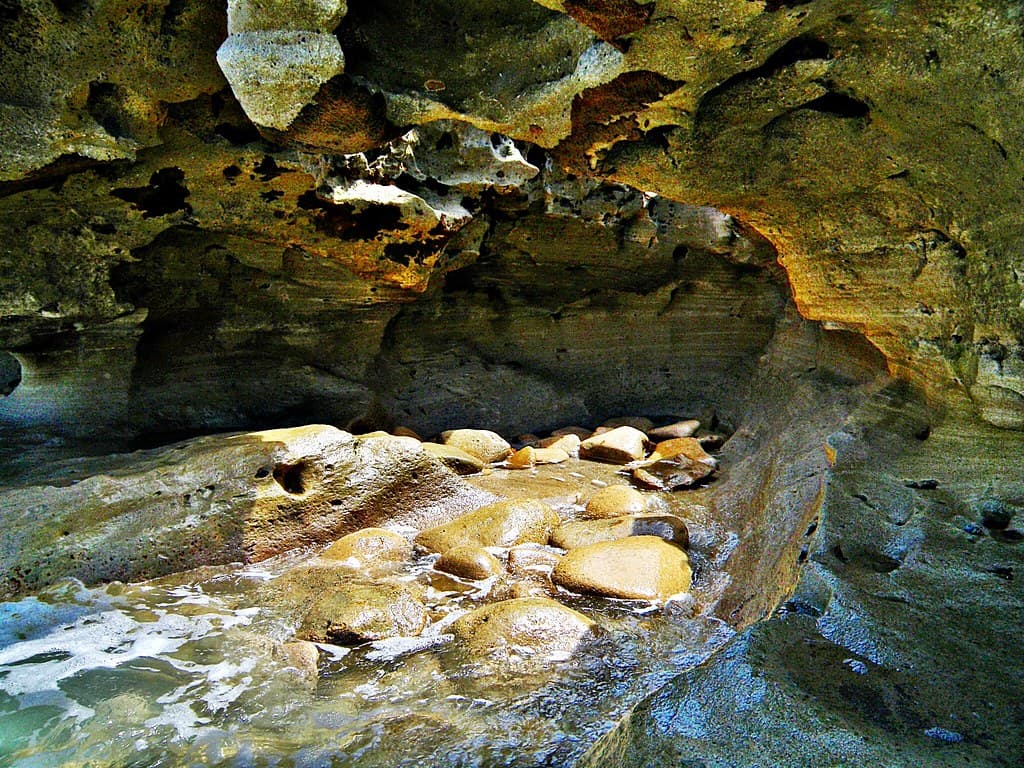
The beach unfolds in two acts. South of the access point, families spread towels on a small crescent of sand where the swimming is easy and the undertow mild. But north is where Coral Cove earns its reputation: a moonscape of pockmarked limestone that channels the surf into foaming bursts and shelters marine life in its crevices. You'll spot parrotfish grazing algae, spiny lobster antennae twitching beneath ledges, and if you time your visit to low tide, entire galaxies of anemones exposed in shallow basins.
“It's the only Palm Beach County beach where Anastasia limestone formations create tide pools and snorkeling habitat instead of the region's signature flat sand.”
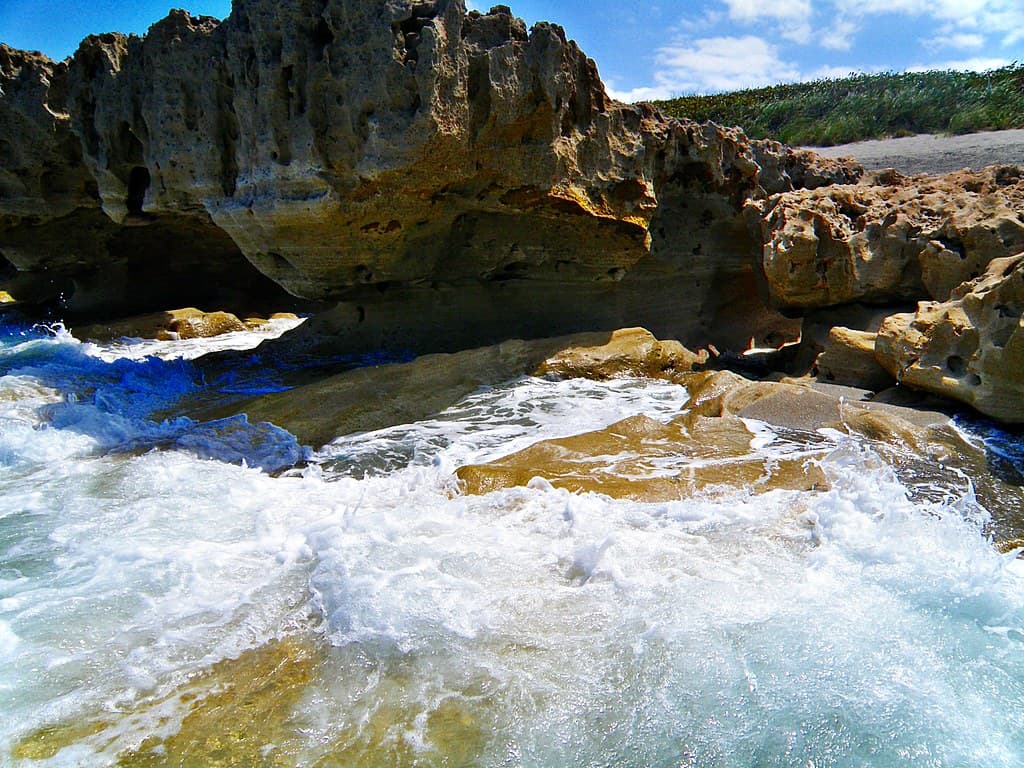 Credit: Flickr
Blowing Rocks Nature Preserve, Jupiter Island Florida
The rock formations also create natural diving platforms—locals leap from the higher shelves while snorkelers hover above gardens of soft coral and sea fans just offshore. Bring water shoes; the limestone is as sharp as it is photogenic. Late afternoon delivers the best light, when the sun angles low and ignites the water to amber, silhouetting the rocks in high contrast.
Tequesta remains refreshingly unpolished compared to its southern neighbors. No beach clubs, no cabana service—just a small parking lot, outdoor showers, and a covered pavilion. The lack of commercial infrastructure means you'll share the cove with local families who've been coming here for decades, and with snorkelers who know these rocks hold more interest than a dozen miles of unbroken sand.


