
The Altamaha Delta unfurls in five fingerlike rivers, and tucked between two of them lies a sandbar that appears and vanishes with the moon's pull. You'll need a shallow-draft boat or kayak to reach Egg Island Bar Beach—no bridges connect this strand to the mainland, no parking lot announces its presence. The approach takes you past hammocks of live oak draped in Spanish moss, through channels where dolphins surface and brown pelicans dive, until the trees give way and a pale sweep of sand emerges from the cordgrass.
“This tidal sandbar sits at the mouth of North America's largest undammed river east of the Mississippi, accessible only by navigating the Altamaha's shifting delta channels.”
 Credit: Flickr
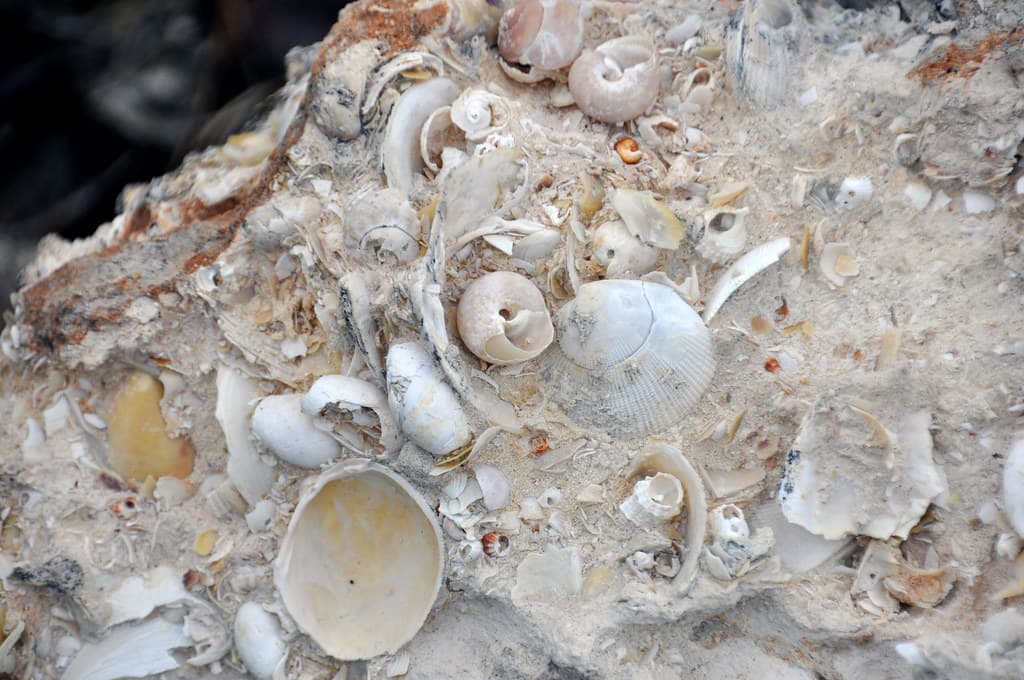
Mollusc-rich fossiliferous limestone (Cockburn Town Member, Grotto Beach Formation, Upper Pleistocene; near shoreline of Moon Rock Pond, San Salvador Island, Bahamas) 4
The beach itself shifts with every storm and tide, sometimes wide enough to spread a blanket fifty feet from the water, other times a narrow strip where waves lap at the dune grass. Shells collect in tide lines—whelks, oysters, the occasional sand dollar—and shorebirds work the wet sand in tireless patrols. The air carries salt and marsh mud, that peculiar Low Country perfume of decomposition and renewal.
You'll have this place largely to yourself, even in summer. The boat requirement filters out casual beachgoers, leaving the sand to fishing guides, kayakers, and anyone willing to read a tide chart. Bring everything you need—water, shade, provisions—because the nearest convenience store is a paddle and a drive away. The reward is a Georgia coast few visitors encounter: raw, tidal, and utterly indifferent to your presence.


