
Clam Creek Beach sits on Jekyll Island's northern shoulder, where the island tapers and the Clam Creek estuary empties into the Atlantic. You'll notice the difference immediately: weathered driftwood logs rest in sculptural tangles along the strand, left by storm tides and never cleared. The sand here is firmer underfoot, packed by twice-daily tides, and scattered with tiny coquina shells that shift underfoot like gravel. Salt marsh borders the beach to the west, releasing the loamy scent of spartina and pluff mud when the wind turns.
“The only Jekyll Island beach where undisturbed driftwood fields and tidal marsh flank your swim.”
 Credit: Flickr
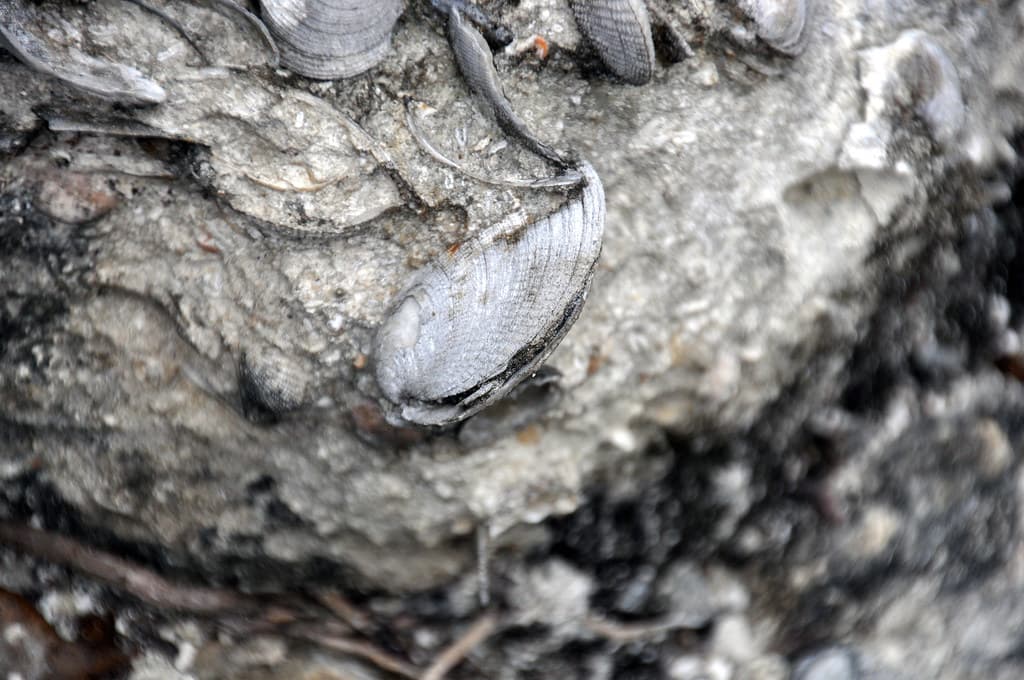
Codakia-rich fossiliferous limestone (Cockburn Town Member, Grotto Beach Formation, Upper Pleistocene; west of Pain Pond, San Salvador Island, Bahamas) 10
The beach attracts families who prefer elbow room over amenities. You'll find no lifeguard stands or rental kiosks—just a small parking area, a boardwalk ramp across the dunes, and wide-open shore. Children spend hours exploring tidal pools left in the wrack line, flipping horseshoe crab shells and racing hermit crabs. The shallow gradient makes wading safe for toddlers, though the occasional sting of jellyfish tentacles keeps everyone alert in summer months.
Bring your own umbrella and provisions; the nearest snack bar sits two miles south at the beach village. That distance keeps the crowds thin even on holiday weekends. Late afternoon brings the best light, when westward sun turns the marsh grasses bronze and throws long shadows from the driftwood. You'll share the beach with brown pelicans folding into dives offshore and sanderlings chasing the tide's edge on matchstick legs.


