
The approach to St. Andrews feels like driving into a nature documentary. Maritime forest gives way to low dunes stitched together with sea oats, and suddenly you're parking on hard-packed sand mere steps from the tideline. This is Jekyll Island's wildest stretch, a three-mile ribbon where the Clam Creek tidal estuary meets open Atlantic, creating brackish shallows that draw rays, crabs, and hunting dolphins so close you can hear them exhale.
“Dolphins hunt within arm's reach of wading beachgoers, drawn by the tidal mixing zone where Clam Creek meets the Atlantic.”
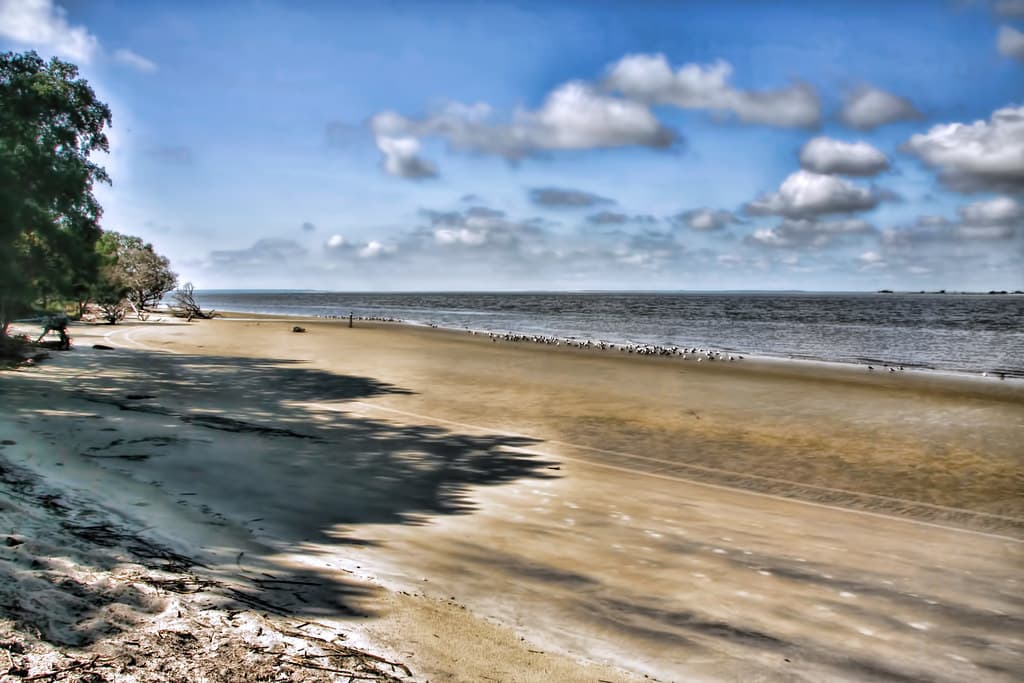 Credit: Flickr
St. Andrews Beach, Jekyll Island, Georgia, USA.
Between May and August, loggerhead turtles haul themselves ashore after dark to nest above the high-tide line, their tracks swept clean by morning. You'll spot the taped-off nests marked by conservation volunteers, gentle reminders that this beach still belongs to its original tenants. The driftwood—gnarled live oak and pine sculpted silver by salt and time—piles highest near the northern point, creating natural benches that face the Sidney Lanier Bridge in the distance.
The sand here is gray-brown, fine enough to squeak underfoot but firm enough to bike on at low tide. Shorebirds work the wrack line in quick, methodical bursts: sanderlings, willets, the occasional reddish egret stalking the shallows. Come at sunrise and you'll have the entire expanse to yourself, save for the dolphins working the drop-off and the pelicans diving headfirst into the soup.


