
The sand here isn't white. It's the color of wet cardboard left in summer sun, flecked with shell hash and the occasional tire track from a beach patrol ATV. You'll walk it for miles without seeing another soul if you time it right, the surf a low rumble rather than a roar, the Atlantic unusually docile this far into the Georgia Bight. Live oaks draped in Spanish moss lean in from the island's interior, their gnarled roots holding fast against nor'easters that reshape this coastline every few decades.
“One of the few remaining privately-owned beaches in Georgia where a century of careful stewardship has preserved both ecology and exclusivity.”
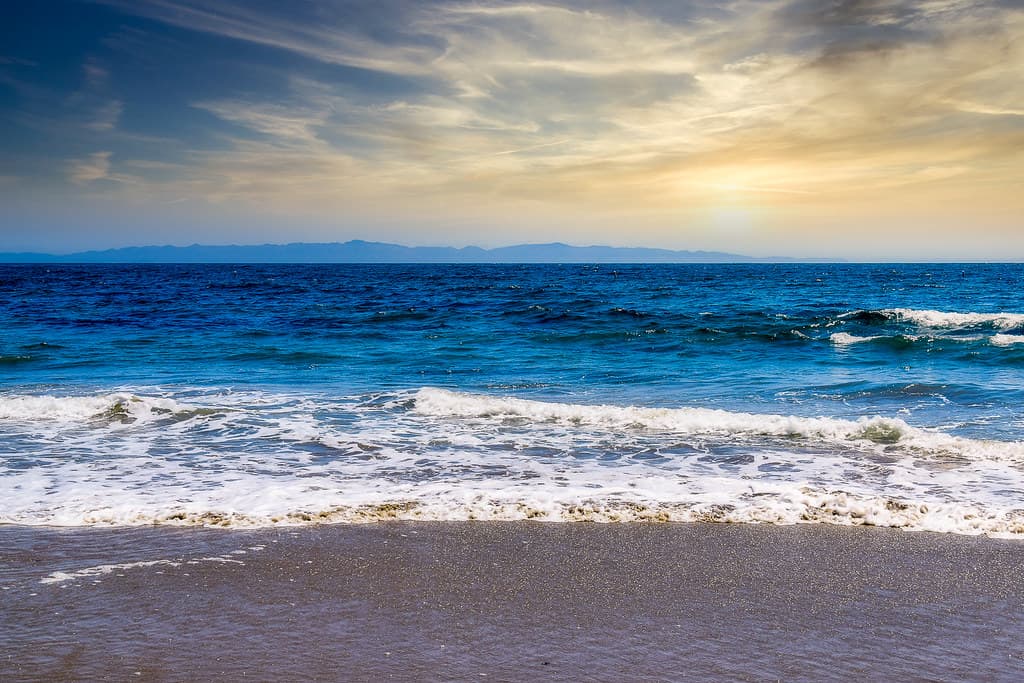 Credit: Flickr
Santa Barbara Coastline and the Santa Catalina Islands
The Cloister has stood sentry here since 1928, its Mediterranean Revival towers visible from the southern stretches of beach. Guests spill out in the mornings wearing monogrammed resort robes, but by afternoon the strand belongs to dedicated shell collectors and the occasional heron stalking the wrack line. The water stays warm well into October, bath-like and tannin-stained from the marshes, visibility measured in inches rather than feet.
You'll find your rhythm in the tides here. Low tide exposes sandbars a hundred yards out, where pelicans dive-bomb mullet schools. High tide brings the ocean to the dune line, narrowing your walking path to a sliver. The beach faces east, so sunrises arrive in shades of persimmon and steel, while sunsets belong to the marsh side—a different spectacle entirely, all gold and violet over the Intracoastal.


