
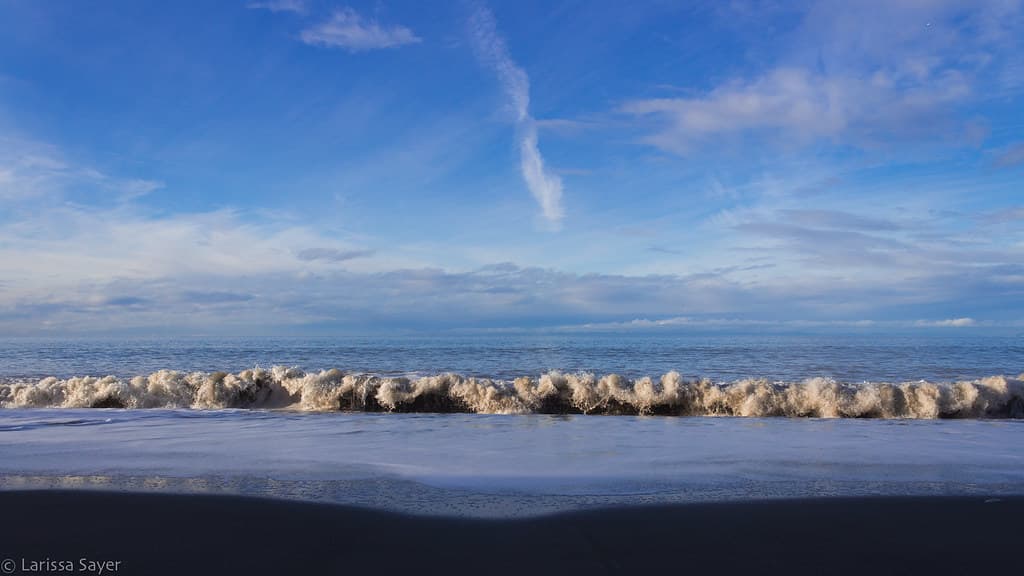
The ferry from St. Marys delivers you to a barrier island frozen somewhere between 1884 and now. Dungeness Beach unfolds south of the dock, a five-mile ribbon of packed sand the color of wet cardboard, edged by water that shifts from jade green to slate depending on the pull of the tide. Behind the dunes, the ruins of Thomas Carnegie's winter estate stand open to the sky—tabby walls blackened by the 1959 fire, chimneys pointing at nothing, staircases climbing toward absent floors. Wild horses descended from Carnegie-era herds nose through the oak hammocks and emerge onto the beach at dusk, unbothered by the handful of hikers shouldering overnight packs toward backcountry campsites.
“One of the few Atlantic beaches where wild horses still wander freely among the ruins of Gilded Age wealth.”
 Credit: Flickr
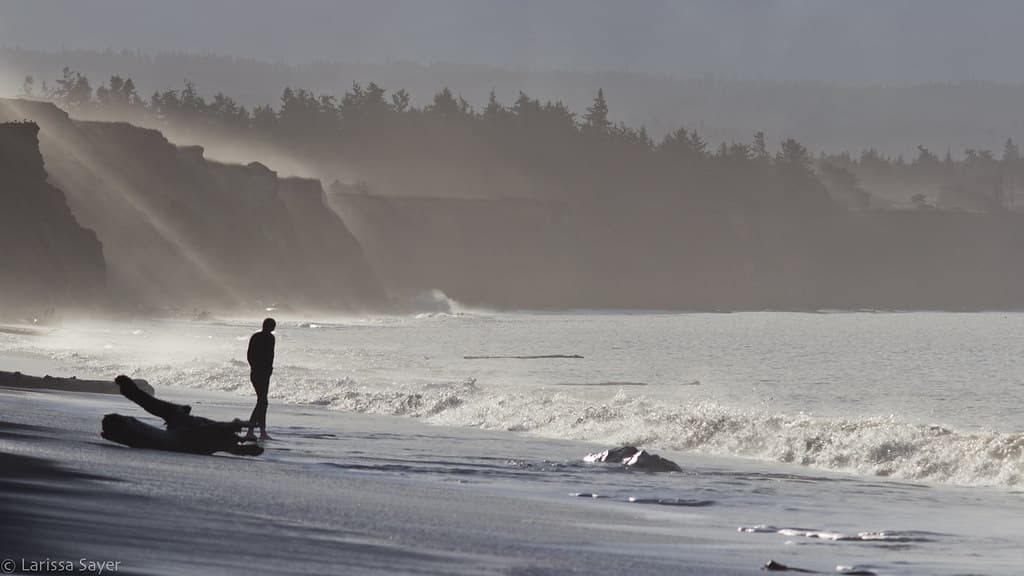
Waves & Mist
The island's remoteness—no cars, no vendors, no lifeguards—means you carry everything in and haul everything out. The Park Service limits daily visitors to three hundred, so even on a Saturday in May you might walk an hour without seeing another footprint. Dolphins surface just beyond the break. Loggerhead turtles nest here May through August, leaving tractor-width drag marks in the morning sand.
You hike back through maritime forest thick with resurrection fern and Spanish moss, past armadillos rooting in the leaf litter, and catch the last ferry as the sun drops behind the mainland pines. The boat's wake spreads gold across St. Marys River, and you understand why the Carnegies chose isolation.


