
The ferry from St. Marys deposits you onto Cumberland Island with no roads, no cars, and only the sound of your boots on sand trails threading through live oak tunnels draped in Spanish moss. Willow Pond Beach reveals itself where freshwater seeps into salt marsh—not the open Atlantic shore most visitors seek, but a sheltered crescent where the pond's tea-colored water mingles with tidal creeks. Driftwood logs bleached bone-white anchor themselves in mud flats, and the air smells of cordgrass and cedar.
“One of the few freshwater pond beaches within a national seashore where wild horses regularly drink alongside wading birds.”
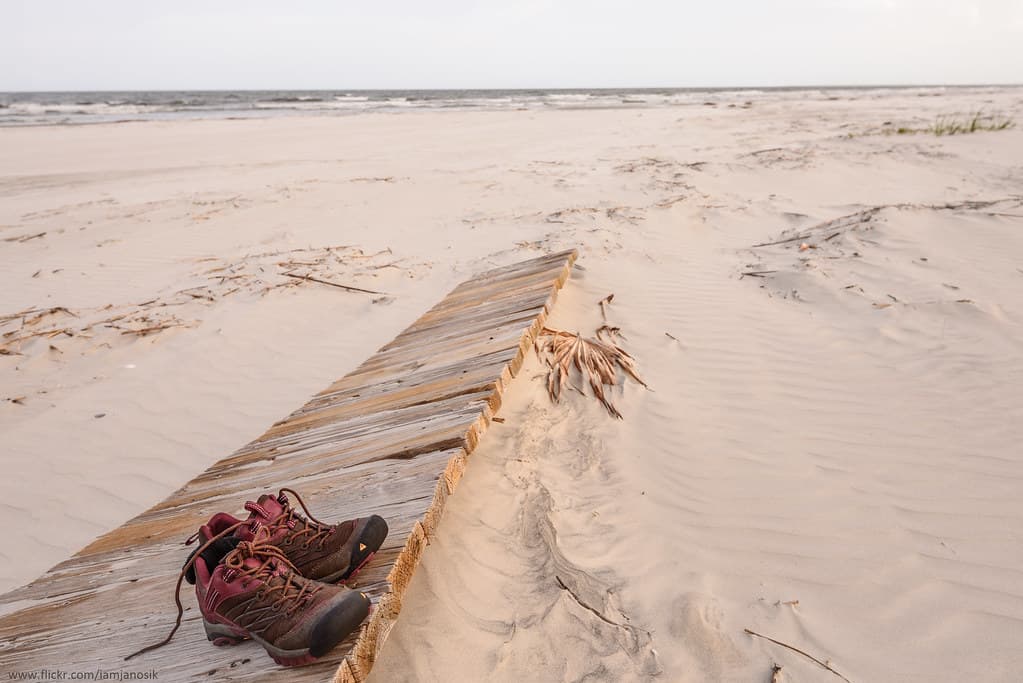 Credit: Flickr
Boots Off, Toes in Sand
You'll likely have this beach to yourself. Most day-trippers head straight for the ocean side, leaving Willow Pond to the armadillos rooting through palmetto scrub and the painted buntings flashing cobalt and lime through the understory. The water here runs shallow and warm, stained amber by tannins from the surrounding forest. At low tide, ribbed sand patterns emerge, etched by currents and studded with periwinkle shells.
Cumberland's wild horses—descendants of Spanish mustangs and ranch stock—treat Willow Pond as their watering hole. You'll spot their hoofprints pressed into the shore, sometimes fresh enough that you know a small herd passed minutes before you arrived. Pack out everything you bring; the island operates on wilderness principles, and the only footprint policy extends even to this hidden pocket where land and water negotiate their ancient boundary.


