
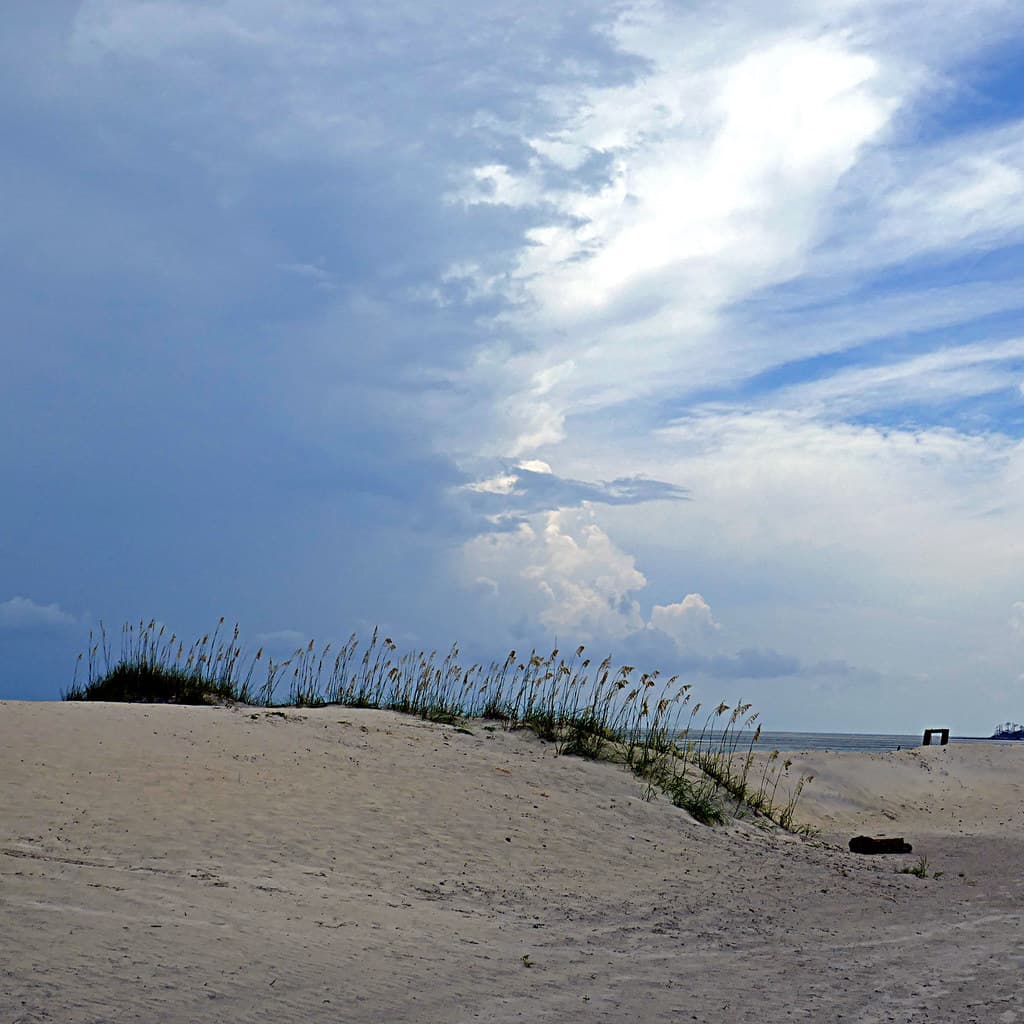
You arrive at North Beach where Butler Avenue dead-ends into a tangle of beach umbrellas, boogie boards, and families claim their territory with coolers the size of steamer trunks. The sand here runs wide and forgiving, packed firm enough for toddlers to chase sandpipers without face-planting, soft enough that you'll shake it from beach bags for weeks. The iconic lighthouse—Georgia's tallest and oldest—looms 145 feet overhead, its beacon sweeping the water every night since 1736 in various incarnations.
“The only Georgia beach where you can bodysurf beneath a functioning nineteenth-century lighthouse while dolphins hunt in the shipping channel.”
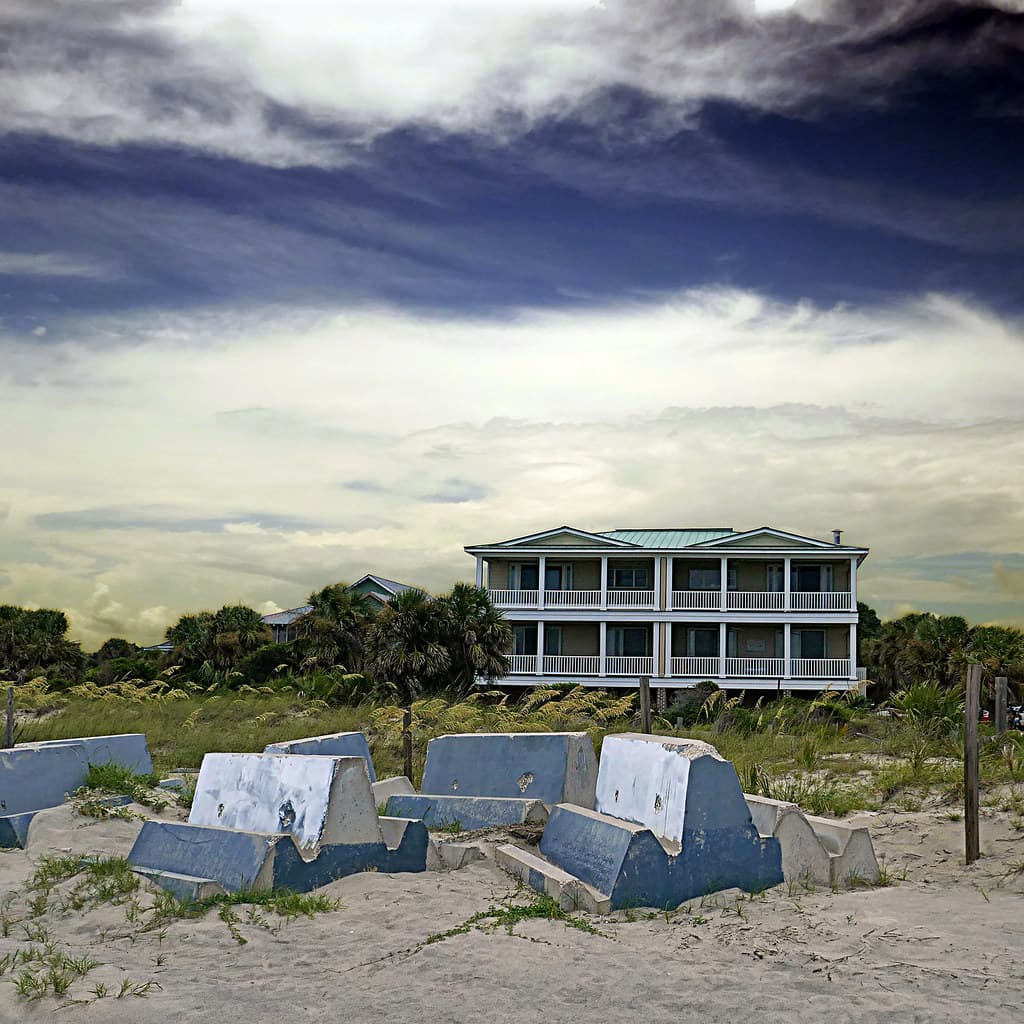 Credit: Flickr
Tybee Island Beach, Georgia, USA
The Atlantic here doesn't seduce with Caribbean turquoise; instead, it offers honest gray-green swells carrying the sediment of barrier-island estuaries. You'll wade into water that feels genuinely wild, temperature hovering in the mid-seventies come July, surprising you with sudden cool pockets where tidal currents converge near the rock jetties. Sandbars materialize at low tide, creating shallow lagoons where children hunt for sand dollars and hermit crabs.
What pulls you back isn't postcard perfection but the unvarnished rhythm of a working beach town. Between swims, you'll walk two blocks to devour boiled peanuts from paper bags, watch charter boats unload their catch at Lazaretto Creek, or climb the lighthouse's 178 iron steps for views that stretch to South Carolina. The beach empties beautifully by evening, leaving just the shorebirds and the lighthouse beam painting gold stripes across the foam.


