
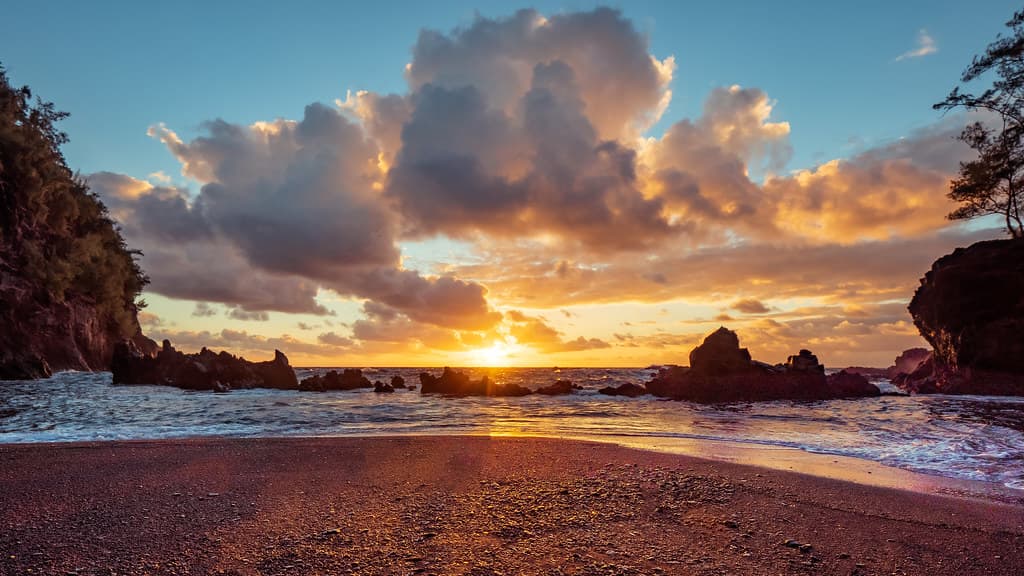
The path to Kaihalulu demands intention. You'll squeeze past the old Japanese cemetery, navigate loose scoria that stains your shoes rust-orange, and grip ironwood roots as the hillside drops away. But the cove itself—a collapse in the Ka'uiki headland's cindercone flank—rewards patience with something approaching solitude. The sand crunches underfoot, each grain a fragment of oxidized basalt, warm even in morning shade. Waves slap the outer reef in rhythmic percussion, sending whitewater across the submerged shelf before gentling into the shallows.
“One of the few red sand beaches on Earth, sculpted entirely from the eroded cinder cone of an ancient volcanic vent.”
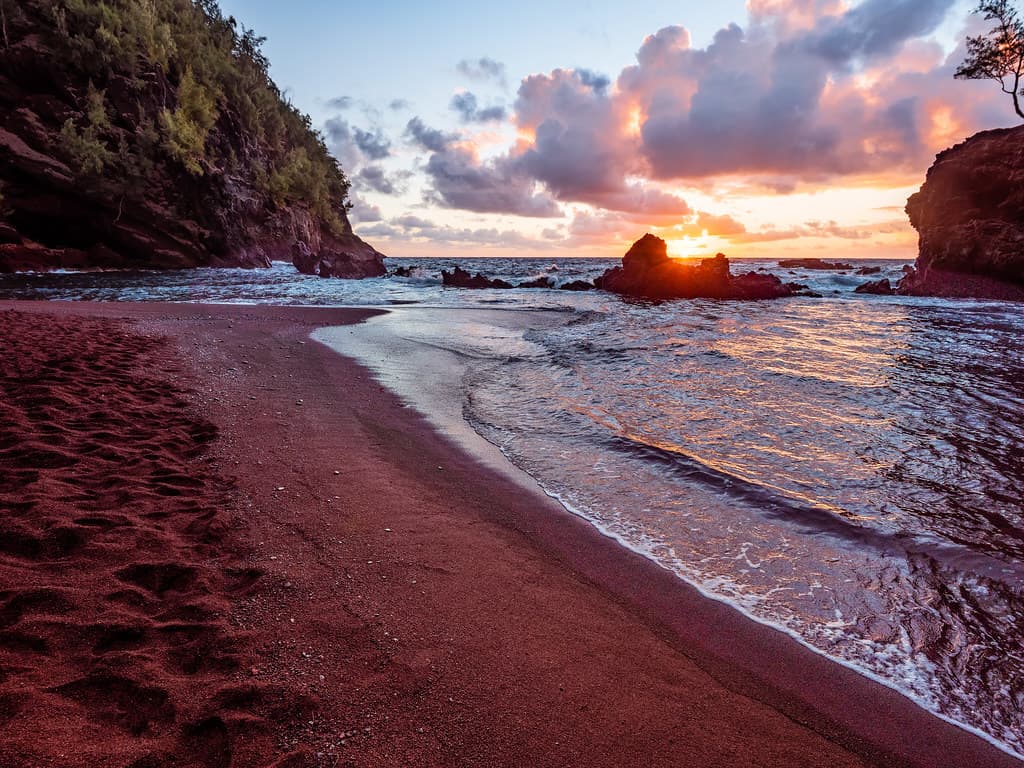 Credit: Flickr
Red Sand Beach Sunrise
Swimming here asks for respect: the shelf is sharp, currents tug at the inlet's mouth, and swells funnel between lava fingers with surprising force. Snorkelers who time the calm between sets find pockets of turquoise where tangs and wrasse drift past fire-colored walls. The beach itself is small—maybe fifty yards across—so midday crowds, when they arrive, compress the experience. Shade appears only beneath the bluff's overhang, and coconut palms lean at improbable angles, roots clawing the slope.
You'll leave with red dust in your bag and salt dried on your skin, the kind of grit that lingers as proof. This isn't a beach for sprawling; it's a place to witness the island's raw architecture, to feel how tenuously beauty clings to these fractured slopes, and to understand why some corners of Maui remain jealously guarded by geography itself.


