
Kalihiwai splits into two beaches separated by the river's mouth, each accessible by its own dead-end road since the 1946 tsunami swept the original connecting bridge out to sea. The eastern crescent draws families who wade into gentle shorebreak and spread blankets beneath the casuarina trees; the western stretch belongs to surfers who time their sessions with the incoming tide, when rights peel along the outer reef. Both halves share the same backdrop: Namahana's pleated cliffs rising inland, their green flanks striped darker where waterfalls trace the stone after Hanalei's frequent rains.
“A tsunami-severed bridge left two beaches where one used to be, each now a quiet pocket unknown to most North Shore itineraries.”
 Credit: Flickr
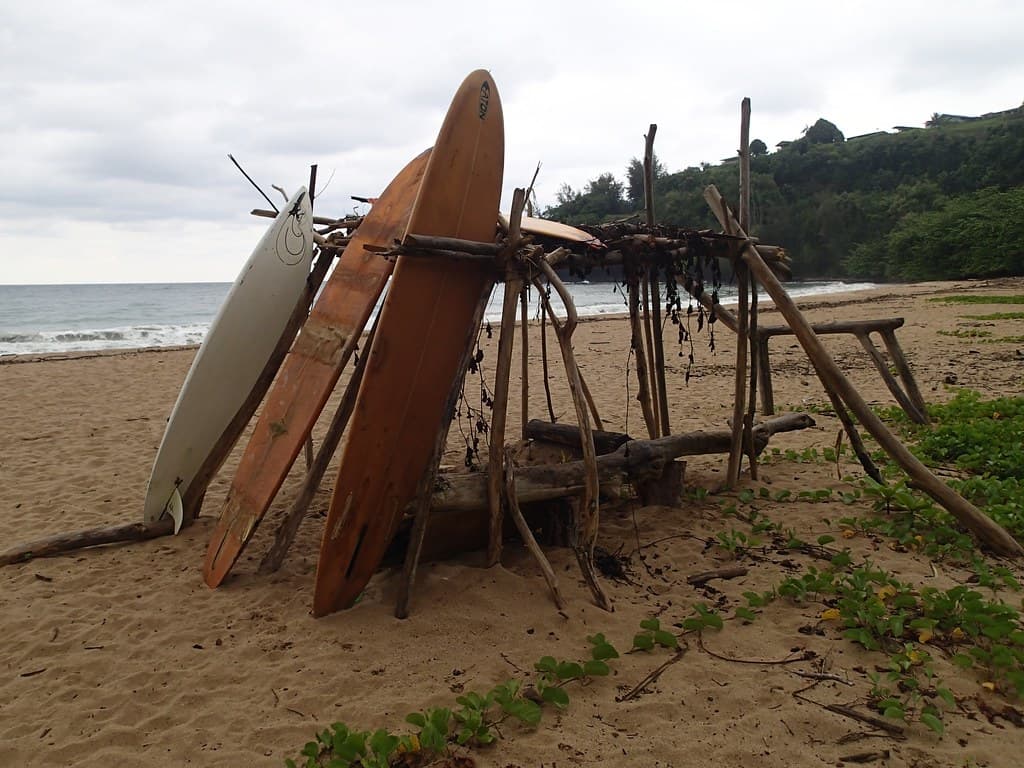
Surfboard Leanto
You'll find no lifeguard tower, no snack bar, no rental kiosk—just a narrow strip of coarse golden sand, driftwood logs silvered by salt, and a lineup that rarely holds more than a dozen boards. Local surfers paddle out before work; by midmorning the sets flatten under offshore winds. The river itself runs cool enough for a rinse, wide enough to kayak upstream between banks of hala and hau trees, their roots tangled in red mud.
Come during winter and the north swells stack head-high, turning the break into a testing ground best left to confident intermediates. Summer flattens the ocean into long, rolling lines that beginners can ride all the way to the sand. Either season, you'll leave with salt drying on your shoulders and the memory of watching frigatebirds coast the thermals above a beach that never quite made it onto the tour-bus circuit.


