Counting the waves…
Counting the waves…
A refined fusion of water purity, environmental stability, and communal vibrancy for Waikiki Beach.
View MethodologyAnalyzed via live sensors and environmental data.
Wave height, wind, and atmospheric stability.
Live footfall and crowd balance metrics.
Community reviews and curated sentiment.
“You'll smell plumeria and sunscreen before your toes hit the warm beige sand. Outrigger canoes slice through shoulder-high turquoise rollers while joggers trace the shoreline beneath swaying coconut palms. This is where…”
Limited recent visitor reports — live OBI telemetry is your best guide for current conditions.
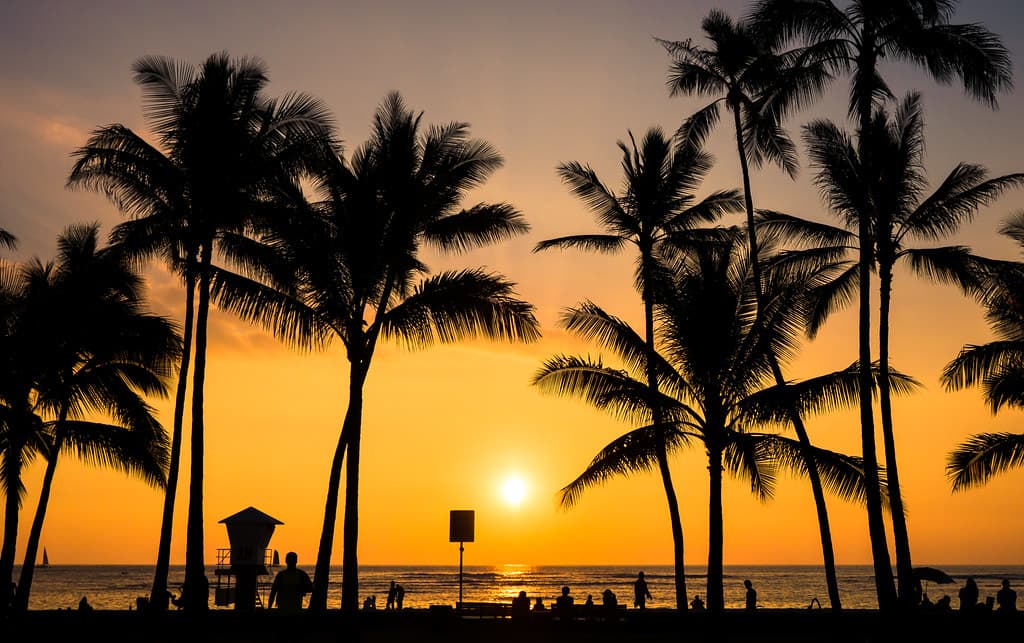
Waikīkī stretches from the Hilton lagoon to the volcanic tuff of Diamond Head, a crescent of compacted coral sand that has hosted royalty, surfers, and sunbathers since King Kalākaua's day. You'll wade into bathwater shallows where the ocean floor slopes gently, perfect for first-time paddlers and families. The horizon is punctuated by catamarans tilting in the trade winds and a steady parade of boogie-boarders catching waist-high waves near the seawall.
The beach operates on two rhythms. Mornings bring local swimmers doing laps along buoy lines, outrigger clubs launching sleek canoes, and elderly Japanese tourists photographing pigeons on the Duke Kahanamoku statue. By afternoon, the sand transforms into a patchwork of striped umbrellas, surfboard rentals, and visitors wading into the shore break while clutching waterproof phone cases. Behind you, Kalākaua Avenue pulses with ABC Store bags, shave ice vendors, and the faint bass of poolside DJs.
White cliffs over a desert beach
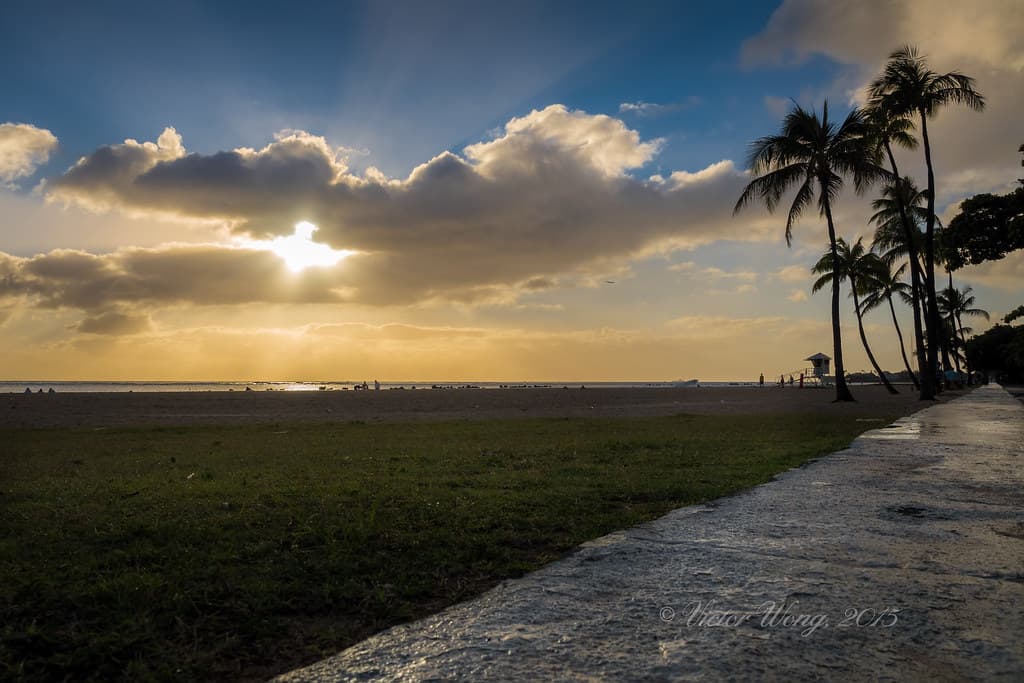
Sunset reflecting on wet sand
Gentle rollers, perfect for beginners
Beach boys launch near Moana
Golden light, fewer tourists early
Where it is
Waikiki Beach
Honolulu, Hawaii, USA
21.276700°, -157.827500°
Weather
Loading…
Swell
—
Temp
Warm · Restorative
UV Index
Moderate
Wind
—
Tidal State
Last known
Max Sunlight
—
Ideal Shade
—
Jan - Dec (Peak)
May - Nov (Off-season)
Historical data suggests peak visibility and stable sea temperatures occur during the prime visitation window.
Select a category to load nearby places.
Unlock restaurants, luxury stays and curated maritime experiences within 2km
Waikiki Beach is generally safe for swimming year-round, with lifeguards stationed at multiple points along the shore. The beach features a protective reef that creates calmer waters ideal for beginners and families. However, always check posted warning flags and heed lifeguard instructions. Occasional high surf during winter months (November-March) can create stronger currents. The sandy bottom and gradual slope make it suitable for most swimmers. Be aware of the reef edges when venturing further out, and avoid swimming near the channel areas where currents are stronger.
Waikiki Beach enjoys pleasant weather year-round with temperatures between 75-85°F, making any time suitable for visiting. April through October offers calmer ocean conditions and less rain, ideal for swimming and water sports. Winter months (December-March) bring larger waves preferred by surfers but occasional rain showers. For fewer crowds, visit during shoulder seasons (April-May, September-November). Early mornings provide the best light for photos and smaller crowds. Peak tourist seasons are summer (June-August) and winter holidays when beaches are most crowded and accommodation prices peak.
Parking near Waikiki Beach is limited and expensive. The Waikiki Beach Walk parking garage and Honolulu Zoo parking lot charge approximately $3-4 per hour. Hotel parking typically costs $35-50 daily. Street parking is scarce with metered spaces ($1.50/hour) offering 3-hour maximums. Many visitors opt for public transportation: TheBus routes 8, 19, 20, and 23 serve Waikiki from various Honolulu areas ($3 one-way). The Waikiki Trolley offers hop-on-hop-off service. If staying in Waikiki, walking is easiest as most hotels are within blocks of the beach.
Waikiki offers abundant dining and accommodation options for every budget. Beachfront hotels range from luxury properties like The Royal Hawaiian and Moana Surfrider to mid-range options like Outrigger Waikiki Beach Resort. Kalakaua Avenue, the main strip, features numerous restaurants including Duke's Waikiki for casual oceanfront dining, Marukame Udon for budget-friendly Japanese noodles, and high-end options like Azure at The Royal Hawaiian. ABC Stores dot every block for snacks and supplies. Food trucks and casual cafés offer quick meals. Most establishments are within a 5-10 minute walk from any beach access point.
Waikiki Beach is ideal for beginner surfing lessons, with multiple surf schools operating directly on the beach. Gentle, consistent waves and sandy bottom make it perfect for first-timers. Group lessons typically cost $50-80 per person for 1.5-2 hours, while private lessons run $100-150. Reputable schools include Hans Hedemann Surf School and Hawaiian Fire. Most provide boards, rash guards, and instruction. Lessons available year-round, though summer months offer smaller, more manageable waves. No reservation needed for most beach vendors, but booking ahead through established schools guarantees availability and often better instruction quality.
Photos