
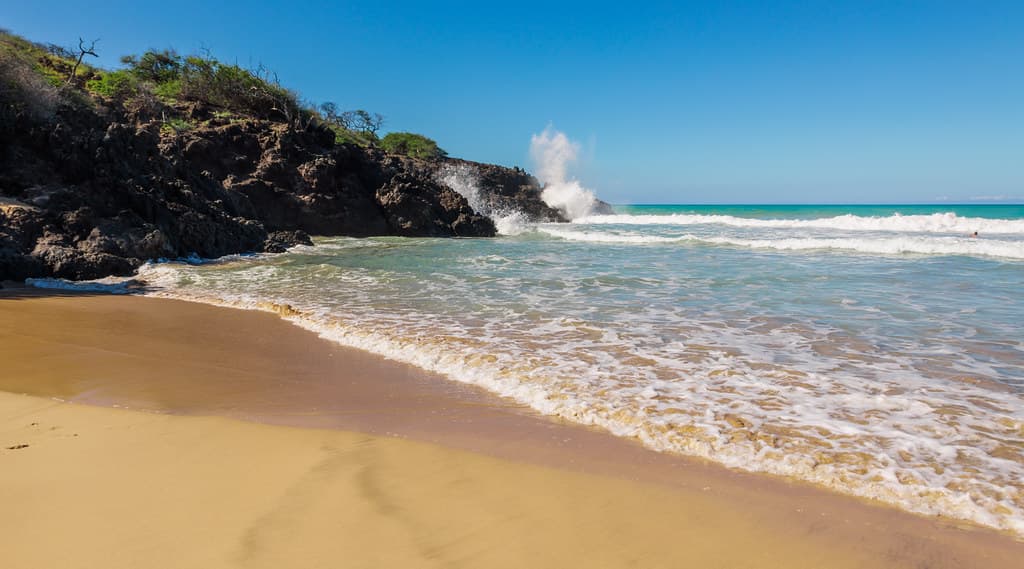
Hapuna Beach unfurls along the Kohala Coast like a rare interruption in the island's otherwise volcanic shoreline. The sand here is uncommonly soft—ground coral and shell, not basalt—and it slopes gently into water that shifts from pale jade at the tideline to deep cobalt beyond the break. On calm summer mornings, you can wade out fifty feet and still touch bottom; by winter, swells roll in from the northwest, stacking into rideable waves that draw bodysurfers and boogie boarders into the shorebreak.
“It's the Big Island's largest white-sand beach, a geological rarity on an island built almost entirely from black lava.”
 Credit: Flickr
Big Wave Action
The beach is broad enough that even on busy weekends you can claim a patch of sand without feeling crowded. Kiawe trees provide dappled shade along the backshore, though most visitors bring pop-up tents or umbrellas. Lifeguards patrol year-round, and the facilities—showers, restrooms, picnic pavilions—are well-maintained. The water stays warm, hovering around seventy-five degrees, and visibility on windless days stretches thirty feet or more.
Beyond the swim zone, the coastline turns rugged again: black lava fingers jut into the sea at both ends of the beach, and the Mauna Kea resort rises to the north. But here, for this brief, generous curve of sand, the Big Island softens. You'll taste salt on your lips, feel the undertow tug at your shins, and understand why locals and visitors alike return season after season.


