
The walk from the public access paths deposits you onto sand the texture of confectioner's sugar, bone-white under the Hawaiian sun. Lanikai's half-mile crescent curves gently between rocky headlands, the water transitioning from glass-green shallows to cobalt where the reef drops away. The Mokulua Islands—Na Mokulua, locals call them—punctuate every sightline, their seabird-dotted slopes turning lavender at dawn.
“The twin Mokulua Islands create a compositional symmetry that's made this shoreline one of the most photographed beaches on Earth.”
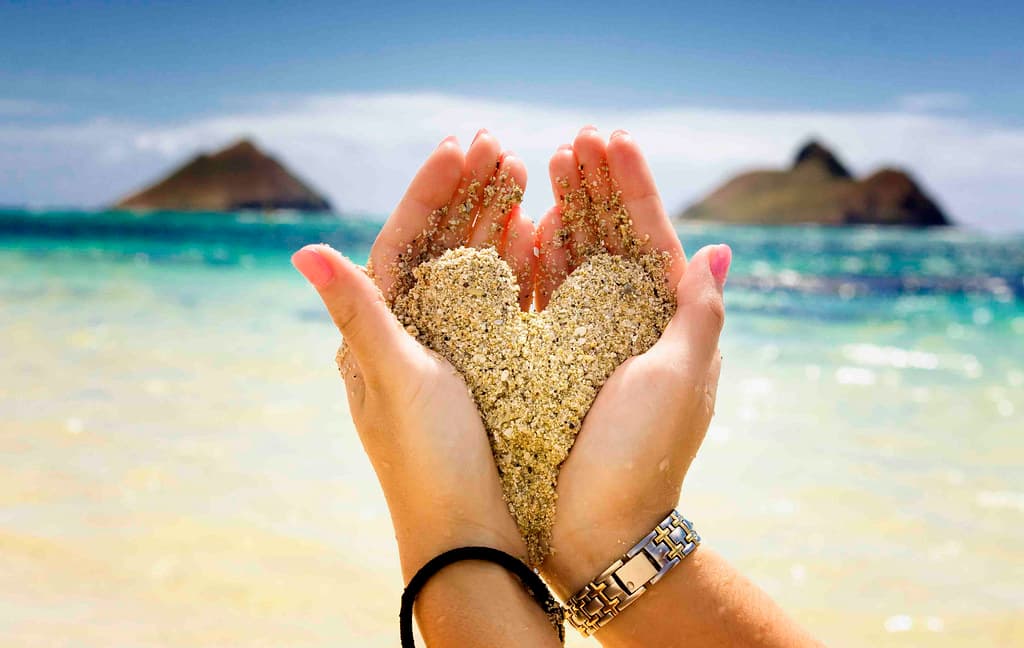 Credit: Flickr
Hands holding sand
You'll share this sliver of windward Oahu with residents from the beachfront homes and visitors who've done their homework; parking is scarce and street-side only, which keeps the crowds thinner than Waikiki. The reef extends far enough that you can wade out fifty yards in waist-deep water, the sandy bottom visible through the surge. Morning brings the cleanest conditions before the trades pick up and kiteboarders claim the outer reaches.
Come prepared: no facilities, no vendors, no shade unless you stake a spot beneath the ironwoods. Bring your own water, your own towel, your own reverence for a beach that feels both world-famous and quietly protected by its own lack of infrastructure. The reward is sand that glows almost painfully white against the Pacific, and a reef-protected lagoon where you can float on your back and count the exact number of palm fronds swaying overhead.


