
Halawa Beach Park sits at the terminus of Highway 450, where Moloka'i's inhabited world simply ends. The beach curves in a tight arc beneath the youngest valley in the island chain, its black-pepper sand evidence of the island's volcanic bones. Ironwood trees lean over picnic tables, their needles carpeting the grass, and a freshwater stream cuts across the beach before vanishing into the surf.
“This is the only black-sand beach on Moloka'i accessible by car, bookending the island's quietest coastal road.”
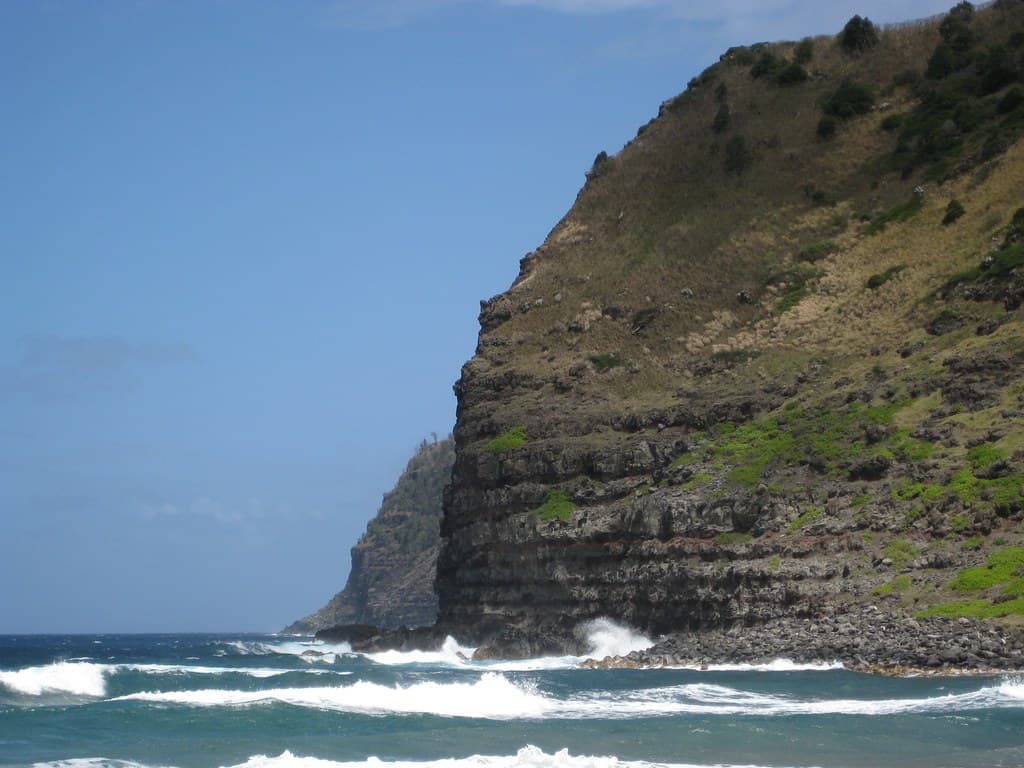 Credit: Flickr
Halawa Beach Park, Moloka'i: Cliffs
The swimming here demands respect. Winter swells funnel directly into the bay, creating shore break that slams against the steep drop-off. Summer calms the water enough for wading, though the current never fully surrenders. Local families claim the shaded tables on weekends, grilling under the ironwoods while kids splash in the stream mouth. You'll see maybe a dozen other people on a busy afternoon.
The real draw is the valley itself—ancient taro terraces climbing toward twin waterfalls, stone platforms marking centuries of habitation. You'll need a guide to hike beyond the beach (landowners enforce this strictly), but the view from the sand tells the story: steep pali walls, dense jungle, and the sense that Moloka'i keeps this corner intentionally distant from the rest of the world.


