
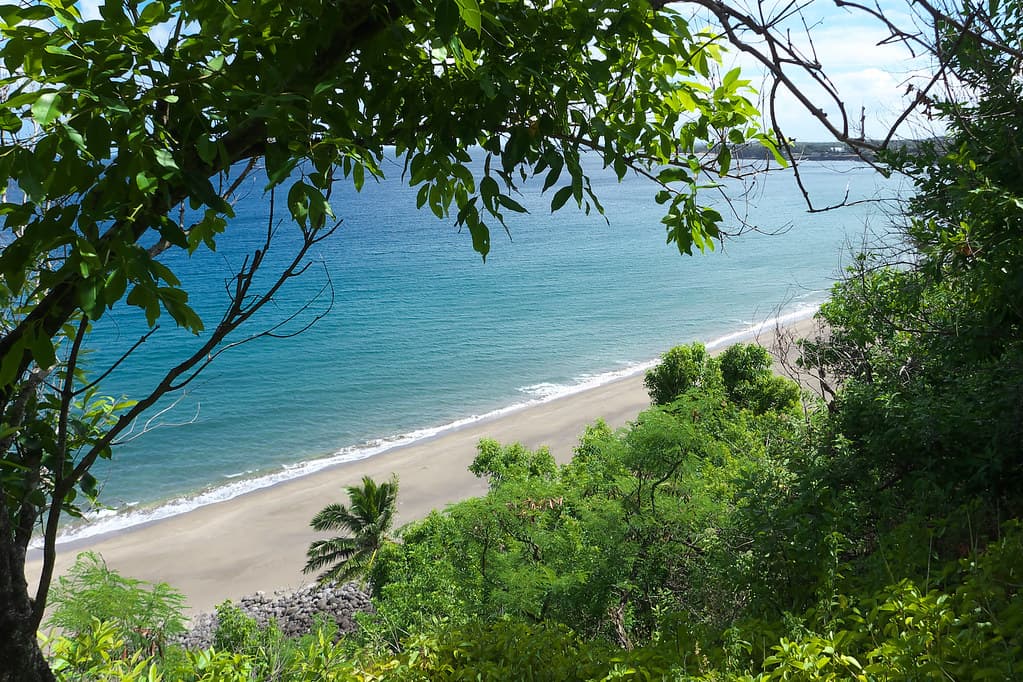
The trail down to Kalaupapa unfolds like a descent through time itself. Twenty-six switchbacks carved into the pali deliver you from Molokaʻi's uplands to a flat thumb of land jutting into the sea, where waves hammer black-sand beaches and lava shelves. This is the peninsula where more than 8,000 people diagnosed with Hansen's disease were exiled beginning in 1866, forbidden to leave, their stories woven into every weathered plank and stone wall that remains.
“This is the only beach in Hawaii where access requires a permit to honor the living history of a leprosy settlement still home to its survivors.”
 Credit: Flickr
Molokai Shoreline
You'll need a permit and a guide to visit—Kalaupapa is still home to a handful of patient-residents who choose to stay in the only place they've known as sanctuary. Your guide, often a resident themselves, will walk you past St. Philomena Church where Father Damien ministered until his death in 1889, and along shores where patients fished for sustenance and solace. The wind never stops here; it carries the scent of naupaka blossoms and the mist of breaking waves across grassy fields once filled with makeshift homes.
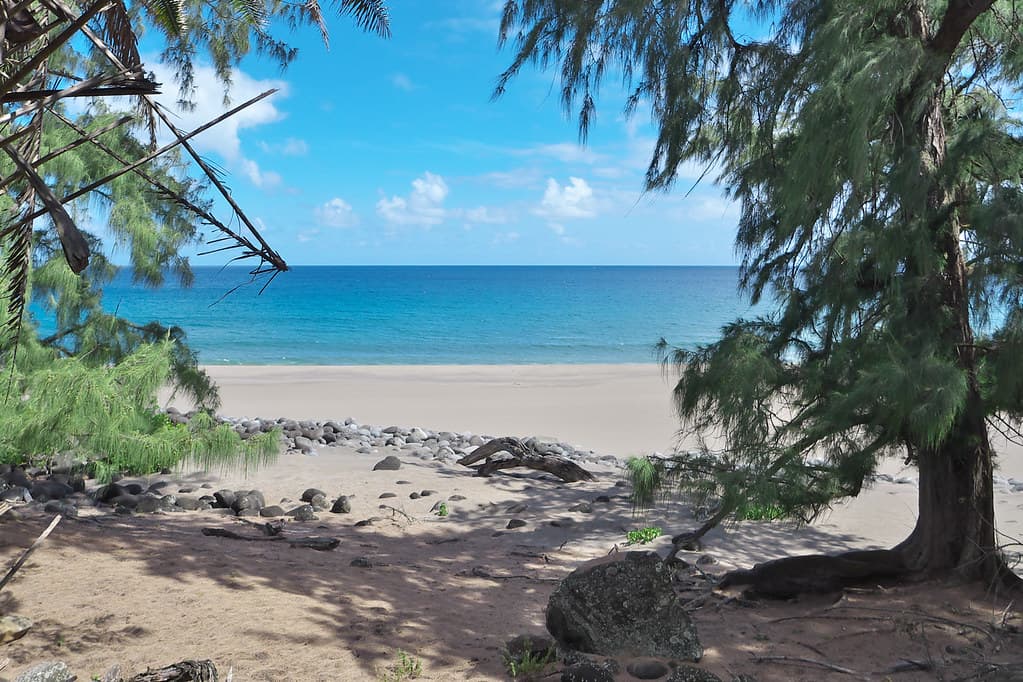
The beach itself curves along the northern edge, a ribbon of dark sand and polished stone where monk seals haul out and humpback whales breach offshore in winter. You won't swim here—respect for the residents and the power of the shore break keep visitors on land—but the view across whitecaps to the empty horizon offers something rarer than a dip: perspective on how landscape shapes lives, and how lives reshape history.


