
The beach unfurls in a generous crescent below Honokahua Point, sheltered by ironwood groves that drop needles onto honey-colored sand. Unlike the postcard coves farther south, Fleming answers directly to northwest swells that march unobstructed across the Pacific. You'll hear the waves before you see them—a rhythmic percussion that shifts from playful to pounding depending on the season and swell direction.
“Fleming delivers Maui's most dynamic shorebreak, where even summer days carry the ocean's full weight and winter swells sculpt rideable reef walls.”
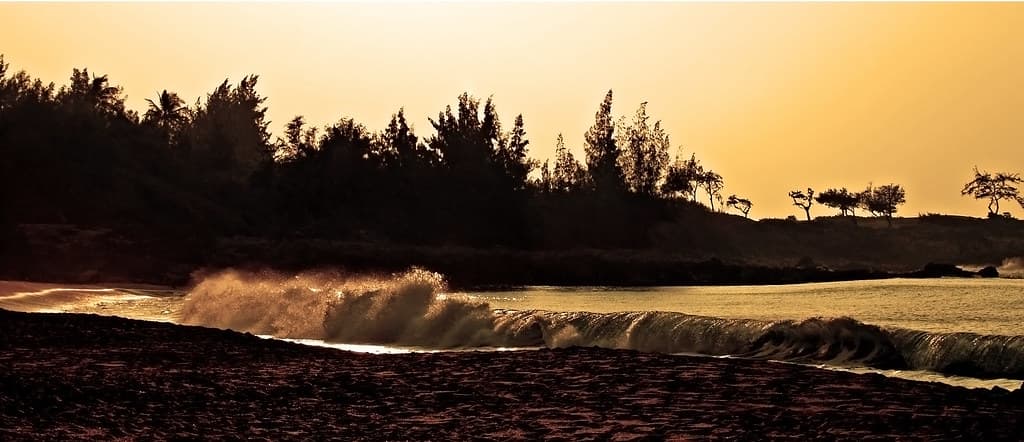 Credit: Flickr
West Maui Waves
Winter brings six- to ten-foot faces that draw capable surfers to the outer reef, where rights peel with enough shoulder to carve three or four turns before the channel swallows the energy. The shorebreak, meanwhile, becomes a tumbling demonstration in hydraulic force; bodysurfers time their entries with surgical precision. Summer mellows the mood but never entirely—Fleming remains watchful, the kind of beach that rewards attention and punishes distraction.
Ironwoods cast dappled shade across picnic tables where families claim morning real estate, coolers wedged into sand still cool from the night. Snorkelers work the rocky north end when conditions allow, finning over coral heads where green sea turtles browse. By late afternoon, the light slants golden through the trees, and the beach empties to a handful of walkers tracing the tideline, footprints erased by the next set.


