Counting the waves…
Counting the waves…
A refined fusion of water purity, environmental stability, and communal vibrancy for Punalu?u Black Sand Beach.
View MethodologyAnalyzed via live sensors and environmental data.
Wave height, wind, and atmospheric stability.
Live footfall and crowd balance metrics.
Community reviews and curated sentiment.
“Your first step onto Punalu'u sends a chill through your soles—not from cold, but from the heat-absorbing magnetite and basalt grains that build this obsidian strand. Between the rustle of coconut palms and the slap of…”
Limited recent visitor reports — live OBI telemetry is your best guide for current conditions.
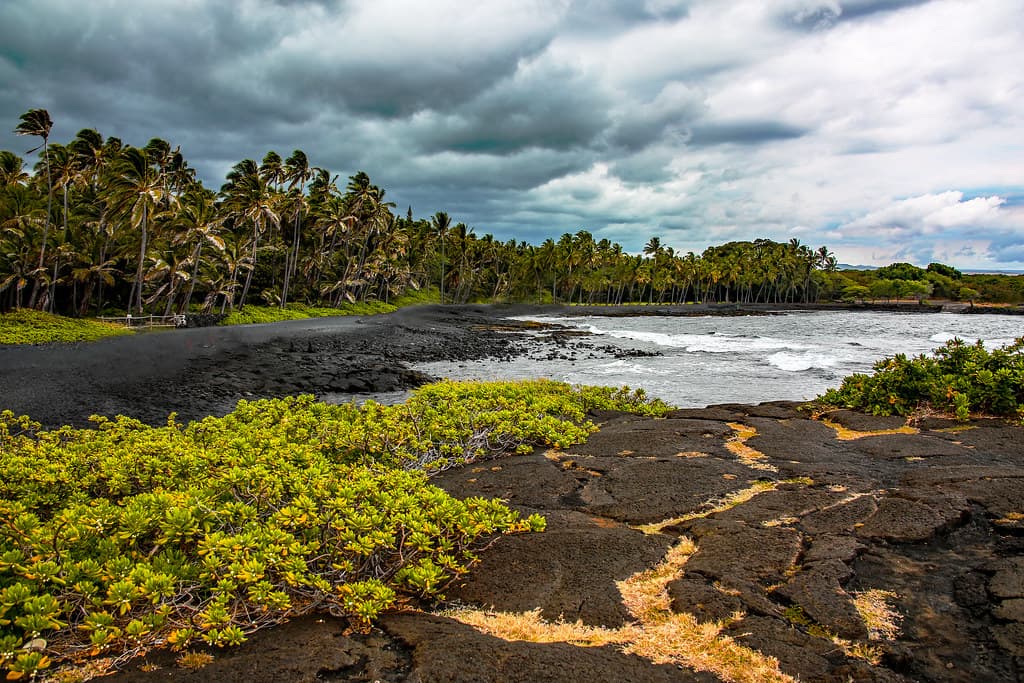
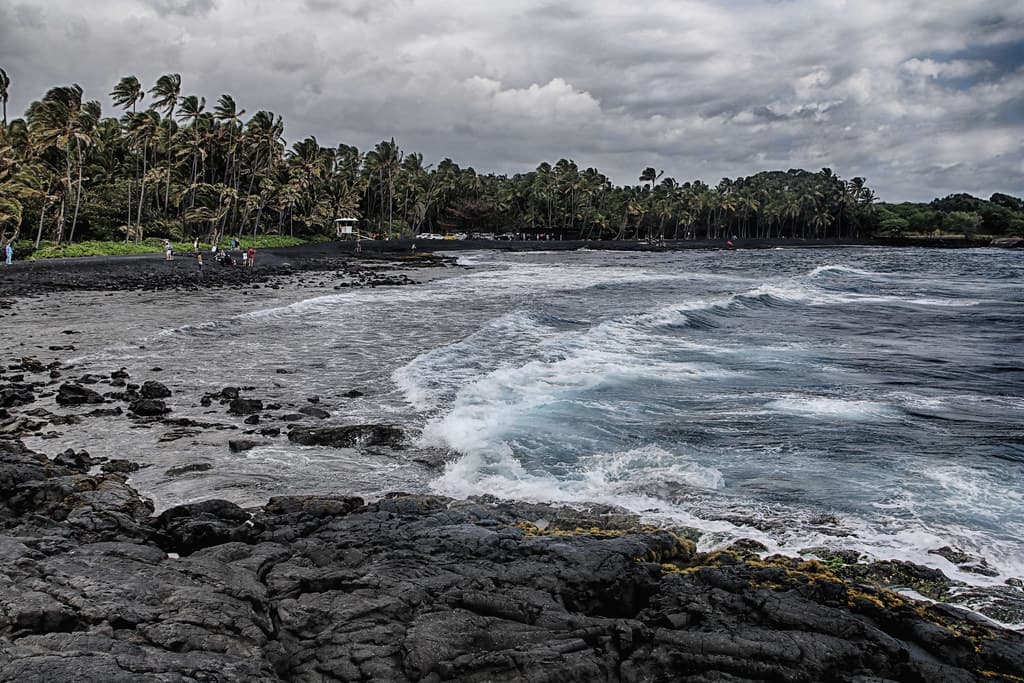
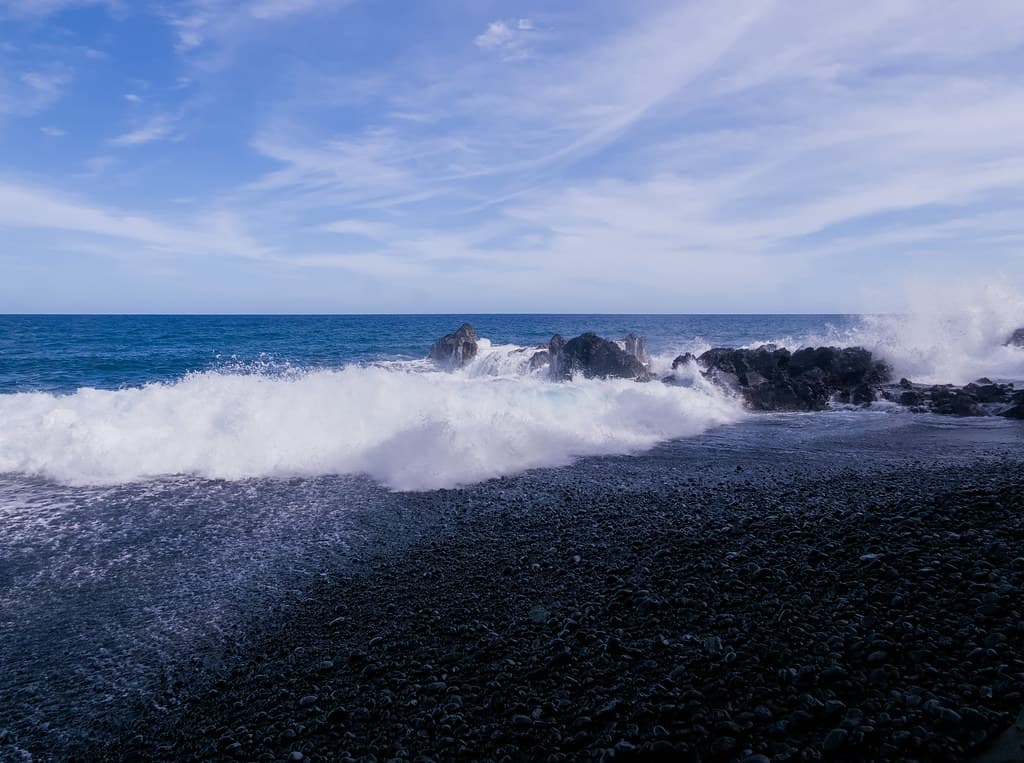
The beach stretches in a crescent of volcanic sand so dark it drinks the sunlight, warming quickly beneath your feet as you walk the tide line. Coconut groves planted generations ago lean over the northern edge, their fronds clicking in the trade winds, while the southern end opens to a rocky shelf where waves explode in white contrast against the black stone. This is the most accessible black-sand beach on the Big Island, a consequence of lava meeting ocean over millennia, each flow shattering into obsidian fragments that currents swept into this cove.
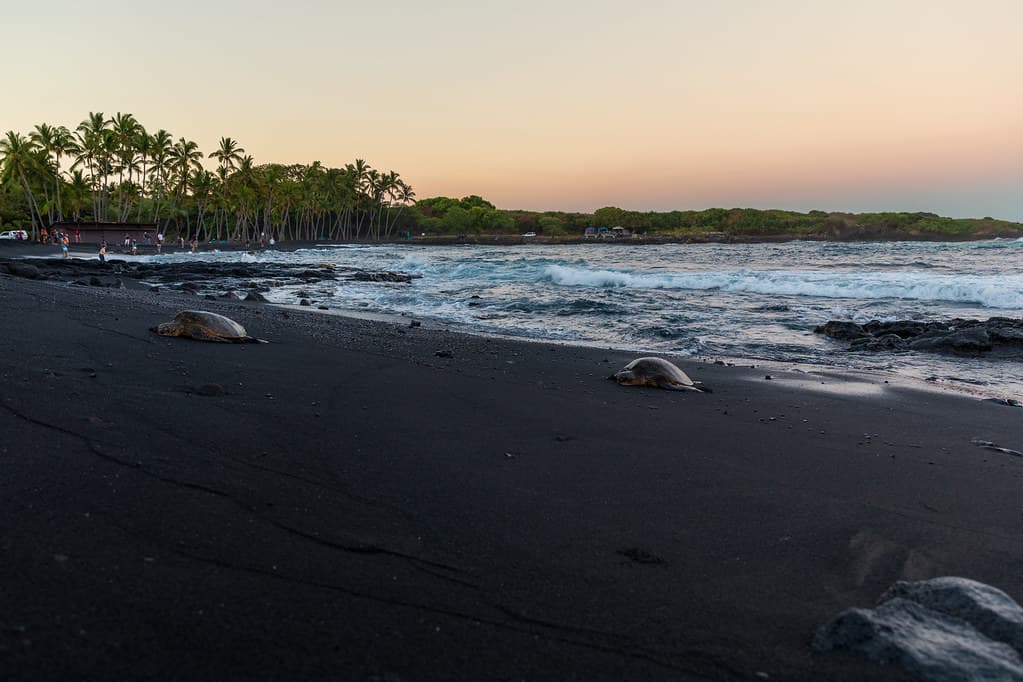
Green sea turtles—honu in Hawaiian—haul out here with remarkable regularity, sometimes a half-dozen at once, resting on the warm sand between feeding runs. You'll need to keep ten feet back; federal law protects them, and volunteers in bright vests gently enforce the boundary. The turtles seem unbothered by the clicks of smartphone cameras, their prehistoric calm a strange counterpoint to the excitement they generate.
Credit: FlickrPhotograph Honu
Credit: FlickrWade Southwest Corner
Stay ten feet from turtles
Calmer water near boat ramp
Historic palms shelter picnic tables
Where it is
Punalu?u Black Sand Beach
Naalehu, Hawaii, USA
19.136600°, -155.504000°
Weather
Loading…
Swell
—
Temp
Warm · Restorative
UV Index
Moderate
Wind
—
Tidal State
Last known
Max Sunlight
—
Ideal Shade
—
Jan - Dec (Peak)
May - Nov (Off-season)
Historical data suggests peak visibility and stable sea temperatures occur during the prime visitation window.
Select a category to load nearby places.
Unlock restaurants, luxury stays and curated maritime experiences within 2km
Swimming conditions at Punalu'u are generally challenging and not recommended for most visitors. The beach often has strong currents, powerful shore breaks, and unpredictable waves that make entering the water dangerous. There are no lifeguards on duty. The beach is better suited for viewing wildlife, particularly the Hawaiian green sea turtles that frequently bask on the black sand. If you do enter the water, stay close to shore, never turn your back on the ocean, and exercise extreme caution.
Punalu'u can be visited year-round, as Hawaii's Big Island maintains warm temperatures throughout the year. Morning visits typically offer calmer conditions and better chances to see sea turtles basking on the shore before crowds arrive. The beach can get busiest between 10am-2pm when tour buses stop by. Weather-wise, summer months (May-September) generally have calmer ocean conditions, though winter offers dramatic wave action for photography. Rain showers can occur anytime but are usually brief and shouldn't deter your visit.
Punalu'u Black Sand Beach is located off Highway 11 between mile markers 55 and 56, about 65 miles south of Hilo and 30 miles north of Kona. A clearly marked access road leads directly to the beach from the highway. There's a free paved parking lot with space for approximately 20-30 vehicles, though it can fill up during peak hours, especially when tour groups arrive. The walk from the parking area to the beach is very short and accessible, taking less than two minutes.
Amenities at Punalu'u are basic but adequate. The beach has public restrooms, outdoor showers for rinsing off sand, and covered picnic pavilions with tables. There's no food service directly at the beach, so bring your own snacks and drinks. The small town of Naalehu, about 7 miles south, has a few restaurants, food trucks, and a general store for supplies. Pahala, roughly 10 miles north, also offers limited dining options. Plan accordingly as this remote area has few services nearby.
The striking black sand at Punalu'u is created from basalt, formed when hot lava from Hawaii's active volcanoes flows into the ocean and cools rapidly. The thermal shock causes the lava to shatter and fragment into tiny particles, which waves and time grind into fine black sand. This process has occurred over countless volcanic eruptions throughout Hawaii's history. The sand can be quite hot underfoot during sunny days, so water shoes or sandals are recommended. Remember, it's illegal to remove black sand from the beach.
Photos