Counting the waves…
Counting the waves…
A refined fusion of water purity, environmental stability, and communal vibrancy for Isaac Hale Beach Park (Pohoiki).
View MethodologyAnalyzed via live sensors and environmental data.
Wave height, wind, and atmospheric stability.
Live footfall and crowd balance metrics.
Community reviews and curated sentiment.
“You'll drive past papaya groves and cracked asphalt to reach this volcanic marvel, reborn after Kīlauea's eruption filled the bay and sculpted a new lagoon. Steam vents hiss near the shoreline, surfers paddle into…”
Limited recent visitor reports — live OBI telemetry is your best guide for current conditions.
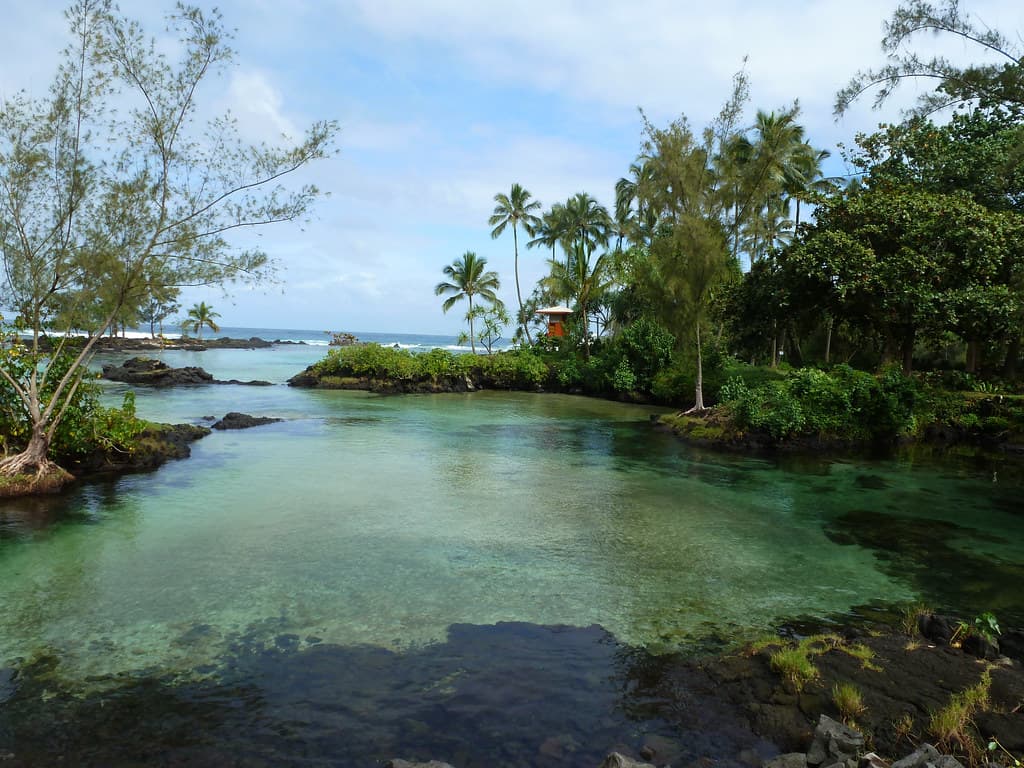
The road to Pohoiki feels like a pilgrimage through recent history. Lava flows from 2018 buried entire neighborhoods in Puna, yet somehow spared this beach park, even gifting it a shallow thermal pond where rainwater meets geothermal heat. You'll park beneath ironwood trees and walk past the boat ramp—widened by molten rock—to find black pebbles and coarse sand underfoot, still warm in spots where underground magma lingers close.
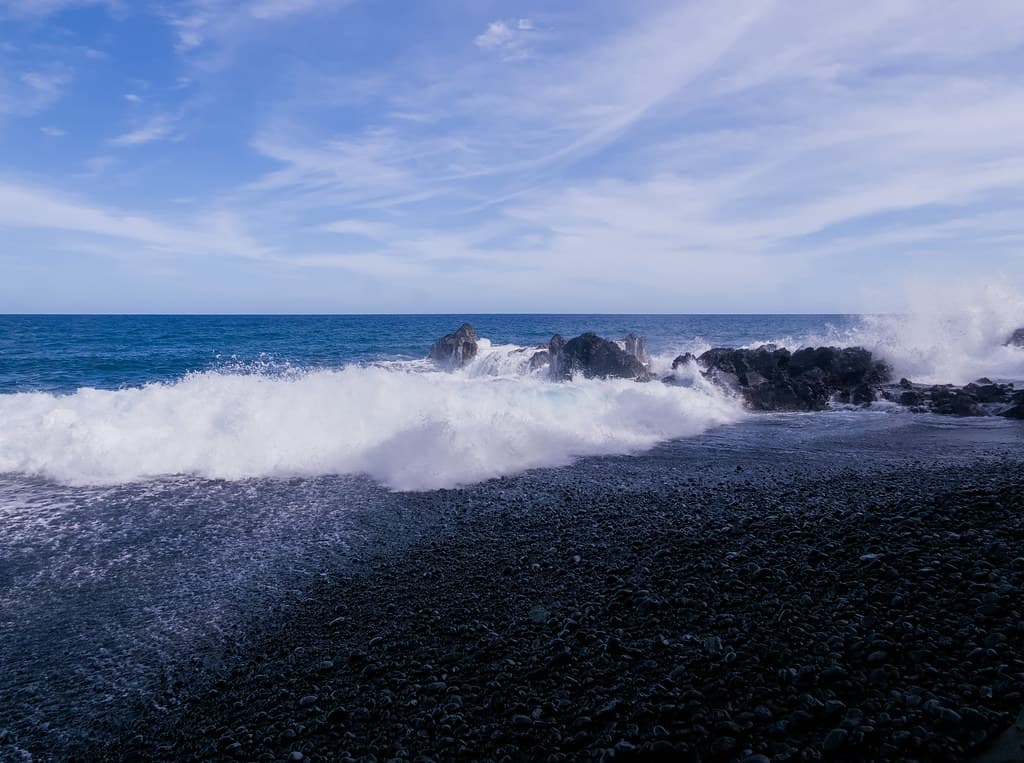
Surfers own the lineup here. The offshore break delivers consistent rights and lefts, especially when northern swells wrap around the point. Between sets, watch local fishermen cast nets from the new lava shelves, their silhouettes framed against the cobalt horizon. The water runs deep just beyond the shallows, a sudden drop-off that keeps the waves clean and the current honest.
Crystal lagoon with rocky outcrop
White cliffs over a desert beach
Consistent swells off lava point
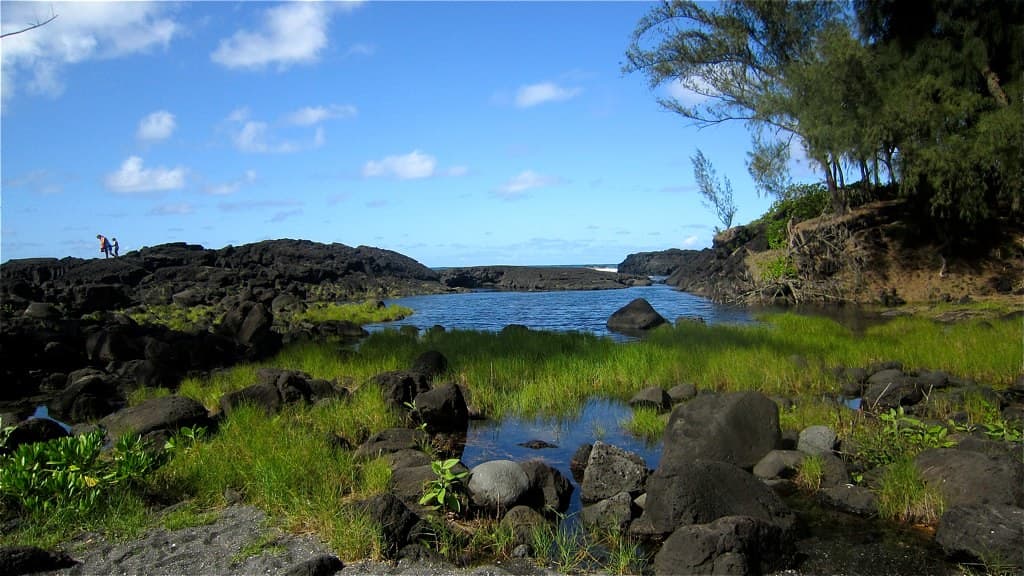
Geothermally heated tidal pool
Black cliffs meet turquoise water
Where it is
Isaac Hale Beach Park (Pohoiki)
P?hoa, Hawaii, USA
19.499200°, -154.850700°
Weather
Loading…
Swell
—
Temp
Warm · Restorative
UV Index
Moderate
Wind
—
Tidal State
Last known
Max Sunlight
—
Ideal Shade
—
Jan - Dec (Peak)
May - Nov (Off-season)
Historical data suggests peak visibility and stable sea temperatures occur during the prime visitation window.
Select a category to load nearby places.
Unlock restaurants, luxury stays and curated maritime experiences within 2km
Swimming conditions at Isaac Hale Beach Park are generally challenging and not recommended for most visitors. The area features strong currents, waves, and rocky shoreline that make it better suited for experienced surfers than swimmers. The 2018 volcanic eruption dramatically altered the coastline, creating new black sand and changing underwater conditions. Always check current conditions with locals before entering the water. The park is more popular for surfing, fishing, and scenic viewing than swimming. If you're looking for calm swimming, consider other Big Island beaches with protected bays.
Isaac Hale Beach Park can be visited year-round, as the Big Island's Puna district maintains warm temperatures throughout the year. For surfing, winter months (November through March) typically bring larger swells. Early mornings offer the calmest conditions and best lighting for photography of the black sand beach. Weekdays tend to be less crowded than weekends when locals gather. Keep in mind that the area receives significant rainfall, especially in winter, so check weather forecasts before visiting. The park was rebuilt after the 2018 lava flow and offers year-round access to this unique volcanic landscape.
Isaac Hale Beach Park is located in Pohoiki, about 20 miles southeast of Hilo via Highway 132 and Highway 137 (Red Road). From Pāhoa town, follow Highway 132 toward the coast, then turn onto Highway 137. The park has a parking lot that was rebuilt after the 2018 eruption. Parking is free but can fill up on weekends and when surf conditions are good. The roads are paved but winding, so allow extra travel time. There's no public transportation to the area, so you'll need a rental car or tour.
Isaac Hale Beach Park has basic amenities including restrooms, showers, and picnic pavilions that were reconstructed after the 2018 lava event. There are no food vendors or restaurants at the beach itself. The nearest food options are in Pāhoa town, about 15-20 minutes away, where you'll find restaurants, grocery stores, and cafes. Bring your own food, water, and snacks if you plan to spend the day. There are no hotels or lodging directly at the beach; accommodations can be found in Pāhoa or along the Puna coast, including vacation rentals and small inns.
During the 2018 Kilauea volcanic eruption, lava flows dramatically transformed Isaac Hale Beach Park and the Pohoiki area. Lava entered the ocean nearby, creating new black sand beach and adding approximately 700 feet of new land to the coastline. Remarkably, the boat ramp and most of the park survived, though they were partially buried and had to be excavated. The park was rebuilt and reopened, now featuring a unique landscape where you can see the fresh volcanic rock meeting the ocean. This makes Pohoiki one of Hawaii's newest beaches and a striking example of the island's ongoing geological transformation.
Photos