
The trail descends through kiawe scrub, and suddenly you're standing above a cove where the Pacific has spent millennia carving alcoves into the sedimentary bluff. The beach takes its name from a long-lost wooden vessel, though no wreckage remains—only the memory and the relentless surf that likely caused its demise. On the eastern edge, tide pools trapped in the lava bench warm to bathtub temperature by midday, their surfaces dimpling with hermit crabs and juvenile wrasse.
“The only beach on Kaua'i where fossilized sand dunes tower directly over a world-class surf break.”
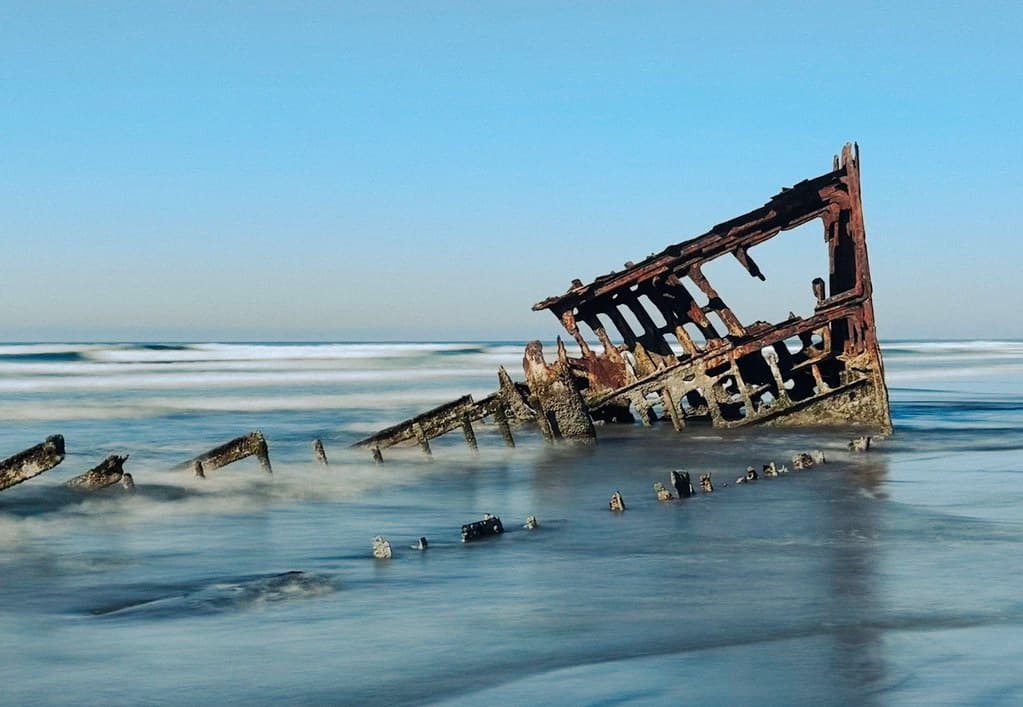 Credit: Flickr
Smooth waves washing against the Wreck of the Peter Iredale - Hammond, Oregon
Winter brings the real theater: northwest swells that march across the channel and unload onto the outer reef in walls of white. You'll watch from the sand or the cliff trail as local surfers paddle into overhead barrels, their boards barely visible against the sapphire backdrop. Between sets, the shorebreak pounds close enough that salt spray reaches your beach towel.
Even on flat summer days, the cliff face commands your attention. Its strata—compressed dunes from an ancient coastline—glow amber in the late afternoon, and pockets of shade beneath the overhang offer respite when the sun climbs high. You won't find lifeguards or concession stands here, just raw coastline and the trades combing through ironwood branches overhead.


