
Pelican Beach unfolds along a fragile ribbon of sand where Cameron Parish meets the Gulf of Mexico, buffered by cheniers—those wooded ridges that rise from coastal marsh like ancient levees. The sand here carries a gray-blonde hue, packed firm from tidal churn, and the water runs warm and tea-stained with sediment from the Calcasieu Ship Channel. Offshore rigs punctuate the skyline, reminders that this is an industrial coast as much as a natural one.
“This is one of the few Gulf beaches where you witness both Louisiana's wetland ecology and its petroleum-driven maritime economy in a single view.”
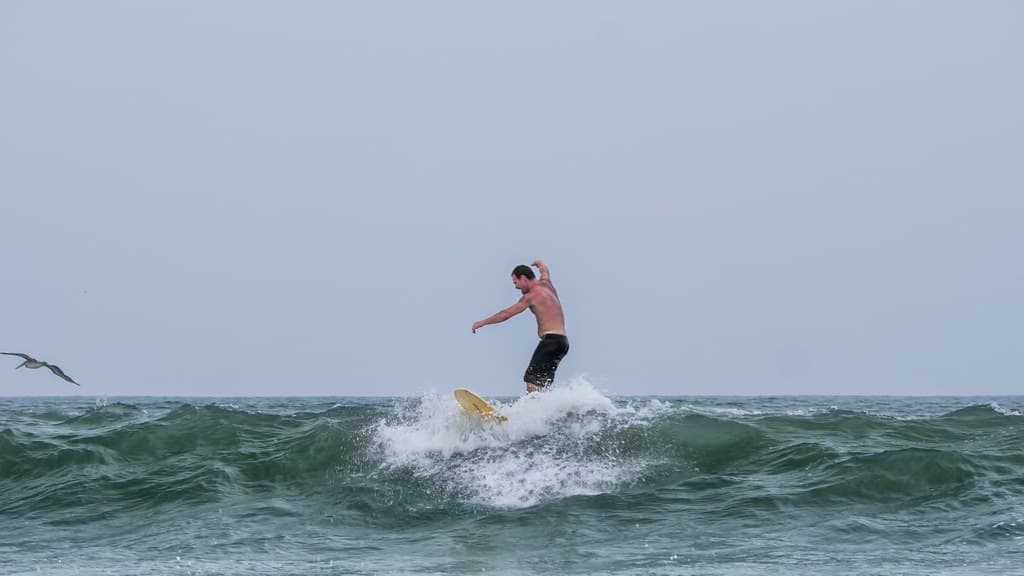 Credit: Flickr
Crescent Beach surfers
You'll spot working shrimp boats passing at dawn, their outriggers spread wide, and brown pelicans diving in tight formations near the jetties. The beach empties out quickly beyond the access points, giving you long stretches for shell collecting—lightning whelks, Atlantic cockles, and the occasional sand dollar worn smooth by current. Tide pools form in the runnels, trapping blue crabs and hermits.
Sunset here is the main event: the sky bleeds orange and rose over the marsh, silhouetting the skeletal derricks and the distant Texas coastline across Sabine Pass. The breeze carries salt and the faint diesel tang of boat traffic. It's raw, unpolished, and deeply tied to the rhythm of the Gulf's working waterfront—a beach that asks nothing of you but presence.


