
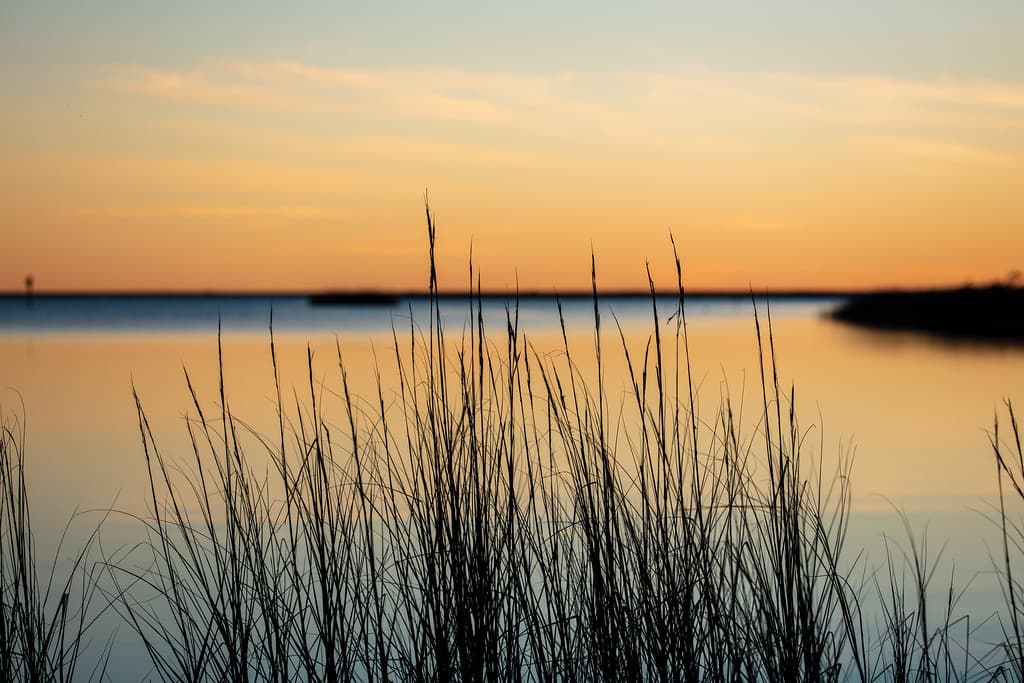
The engine cuts and your boat nudges onto a beach that feels salvaged from the edge of the continent. Marsh Island's Gulf face stretches in a ragged crescent, backed not by dunes but by acres of black needlerush and wiregrass that hiss in the onshore wind. The sand is coarse, shell-flecked, littered with bleached crab carapaces and the occasional rusted drum buoy. This is coastal Louisiana stripped to its bones—no lifeguard towers, no beach bars, just the Gulf of Mexico lapping at one of the state's last uninhabited barrier systems.
“The only Gulf-facing beach in Iberia Parish accessible solely by boat, where Louisiana's working coast meets open water.”
 Credit: Flickr
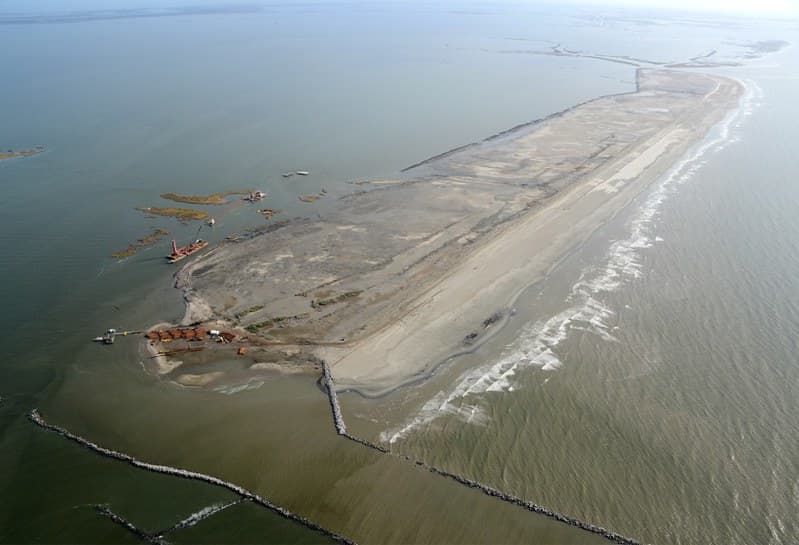
10 Years Later: Rebuilding Barrier Islands
You share the strand with brown pelicans, laughing gulls, and the occasional shrimper checking trotlines offshore. The water runs murky green, stirred by tidal currents that flush Atchafalaya sediment into the Gulf. At dusk, the sky ignites in shades of persimmon and gunmetal, the sun sinking behind a horizon unbroken by condos or piers. The air smells of brine, decomposing marsh wrack, and the faint diesel exhaust from your idling outboard.
This is not a beach for sunbathing tourists. It's for birders, anglers, and those who find beauty in erosion and resilience—a place where the land is still negotiating its terms with the sea, and you're invited to witness the conversation.


