
Great Wass Island unfolds at the frayed edge of Downeast Maine, accessible only by a narrow causeway that feels like crossing into another century. The Nature Conservancy trail winds two miles through a rare jack pine forest—stunted, wind-carved trees clinging to peat—before delivering you to a cobble beach strewn with wave-polished stones the size of your fist. Granite headlands bracket the cove, their surfaces painted orange and gray with lichen that's been growing since before the Revolutionary War.
“One of the few remaining coastal jack pine barrens in North America meets the open Atlantic here, creating an ecosystem found almost nowhere else on Earth.”
 Credit: Flickr
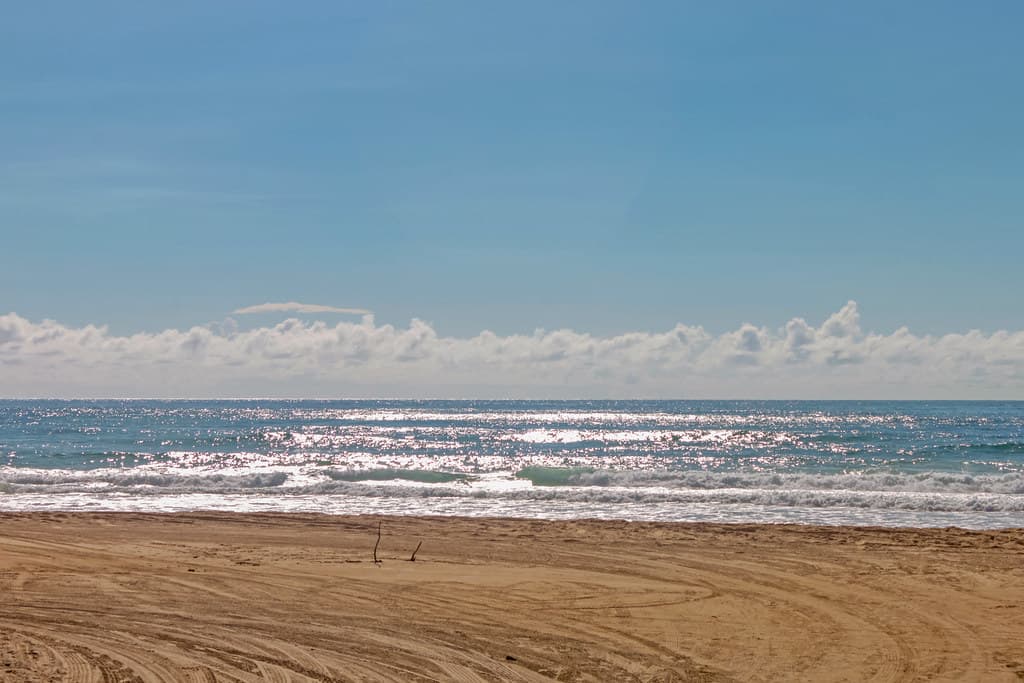
Strand am Eurong Beach Resort
You'll hear the beach before you see it: that distinctive rattle of stones tumbling in the surge, a sound like marbles in a wooden box. Harbor seals bob in the kelp beds just offshore, their dog-like heads tracking your movement with mild curiosity. The tideline is a naturalist's cabinet—periwinkles, blue mussels, rockweed heavy with salt water, the occasional lobster buoy torn free in a nor'easter.
Come in September when the blueberries have turned crimson and the tourist traffic has ebbed back to Portland. The water temperature hovers in the low fifties, better suited to seals than swimmers, but the air smells of balsam fir and the only footprints in the seaweed will be yours and the gulls'. This is Maine as it was before the cruise ships found Bar Harbor—unpolished, uncompromising, and utterly itself.


