
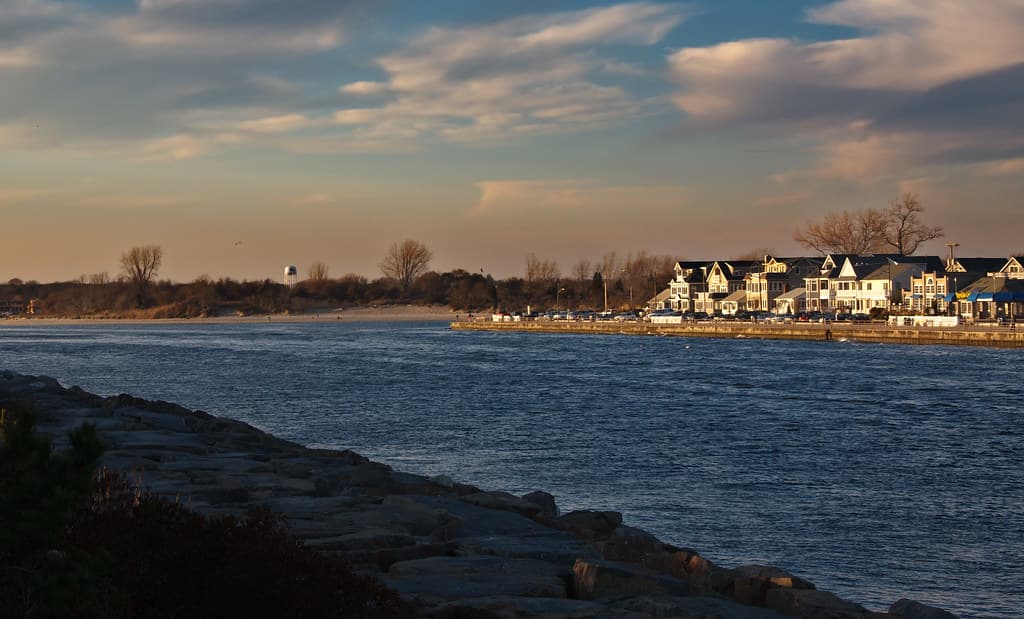
The beach unfolds along a pebbled curve where the Passamaquoddy Bay meets the Atlantic, and the first thing you notice isn't the view—it's the sound. Waves roll and click over smooth stones, a rhythm older than the clapboard houses that dot the reservation behind you. Bald eagles perch in the spruce above the tideline, scanning for herring. When the tide ebbs, it leaves tidal pools strewn with rockweed and periwinkles, and the mudflats extend so far you could walk toward Eastport and feel like you're crossing into another country.
“You're standing on Passamaquoddy tribal land, where the world's highest tides reveal a shoreline that transforms completely every six hours.”
 Credit: Flickr
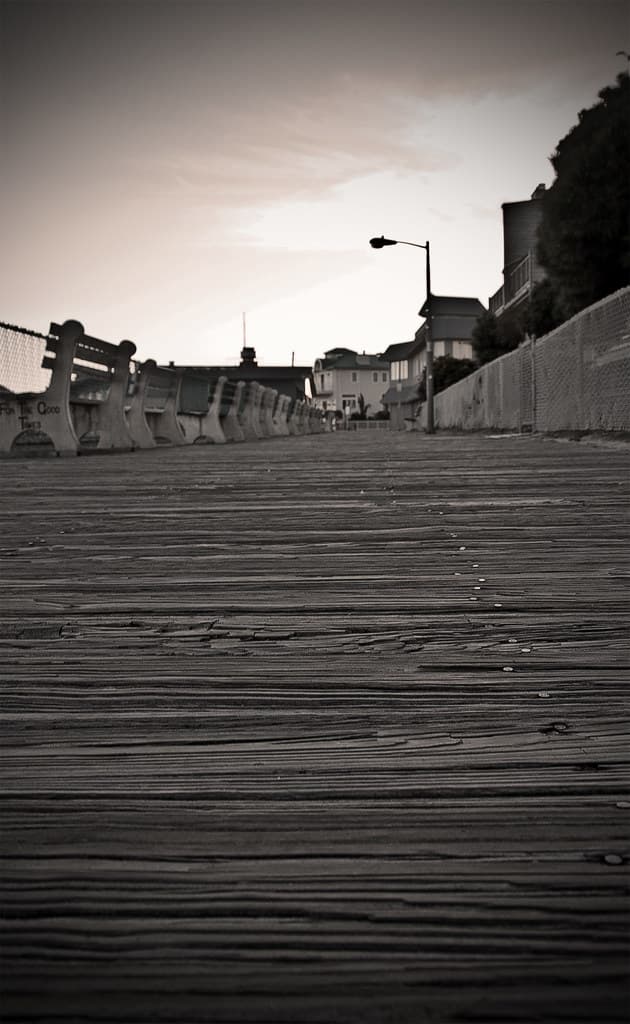
Empire Boardwalk
This is Sipayik, the Passamaquoddy community that has called this point home for thousands of years. The beach carries none of the groomed polish of resort towns farther south. Instead, you get driftwood logs whitened by salt, gulls wheeling overhead, and a wind that smells of kelp and fir resin. In winter, ice floes jostle against the shore; in summer, the water hovers in the high fifties, bracing enough to keep your visit brief and memorable.
Come at low tide and you'll see the bones of the bay—granite shelves, barnacle-crusted pilings, and the skeletal remains of old weirs. The light here is silver and unforgiving, the kind that makes every photograph look like a maritime postcard from 1952. Bring a jacket. The wind never stops.


