
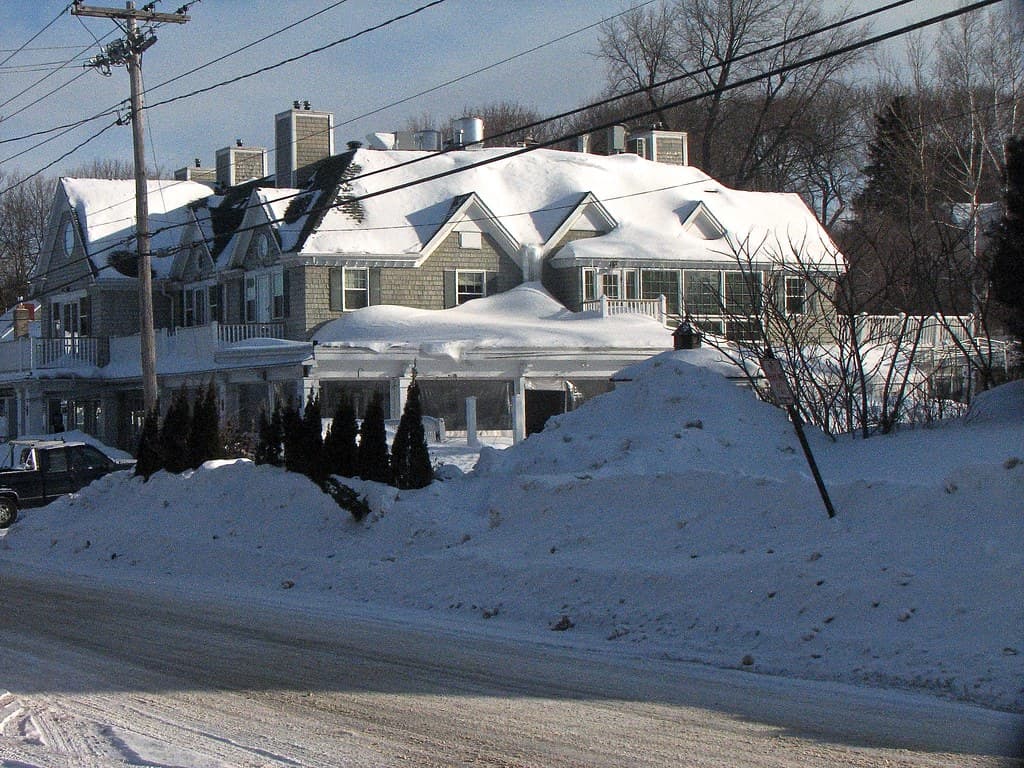
Drift Inn Beach earns its name from the adjacent no-frills inn, a relic from the days when Midcoast Maine catered to working-class summer visitors rather than glossy resort crowds. The beach itself stretches barely a hundred yards along the Saint George River's tidal mouth, hemmed in by scrubby shore pines and granite ledges worn smooth by ten thousand winters. At high tide, the water creeps within feet of the gravel parking area; at low, it exposes tide pools studded with periwinkles and green crabs scuttling between strands of rockweed.
“This working waterfront beach offers a front-row seat to Maine's lobstering industry, unfiltered and unromantic, where tide pools share space with trap lines and diesel fumes.”
 Credit: Flickr
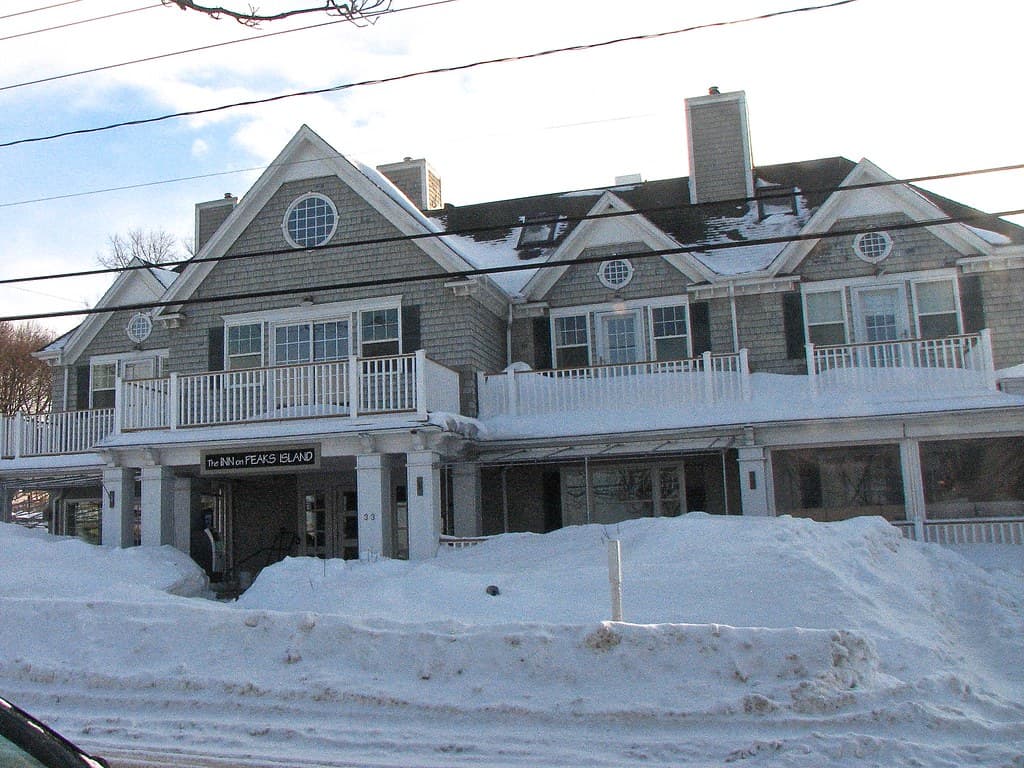
peaks.island • snowed.-Inn
This is emphatically not a place for spreading out your beach towel. The shoreline consists mostly of baseball-sized cobbles that shift and clack underfoot, interspersed with patches of coarse gray sand. What draws you here is the unvarnished view across the working waterfront—lobster boats tied to weather-beaten docks, wooden traps stacked in haphazard towers, buoys bobbing in primary colors against the slate-blue water. In late afternoon, the light turns everything golden: the weathered shingles, the granite outcrops, even the beer cans locals nurse while casting for mackerel off the rocks.
The water stays bracingly cold even in August, hovering in the mid-fifties, though that doesn't stop the occasional hardy soul from wading in past their knees. Most visitors settle for walking the cobble beach at different tides, watching the shoreline reveal and conceal itself in six-hour cycles, the way it's done for centuries before the inn, before the road, before anyone thought to call this stretch of rocks a beach at all.


