
Sand Beach reveals itself at the end of a quiet lane in Stonington, where the granite backbone of Deer Isle meets the Atlantic. The sand here isn't powdery—it's gritty with shell fragments and stone, darkened by seaweed that collects in the tide line. Lobster boats motor past offshore, their engines rumbling across the water, while cormorants dry their wings on exposed rocks that emerge at low tide.
“A working-waterfront beach where you watch lobstermen haul traps while your toes touch sand, rare along Maine's increasingly gentrified coast.”
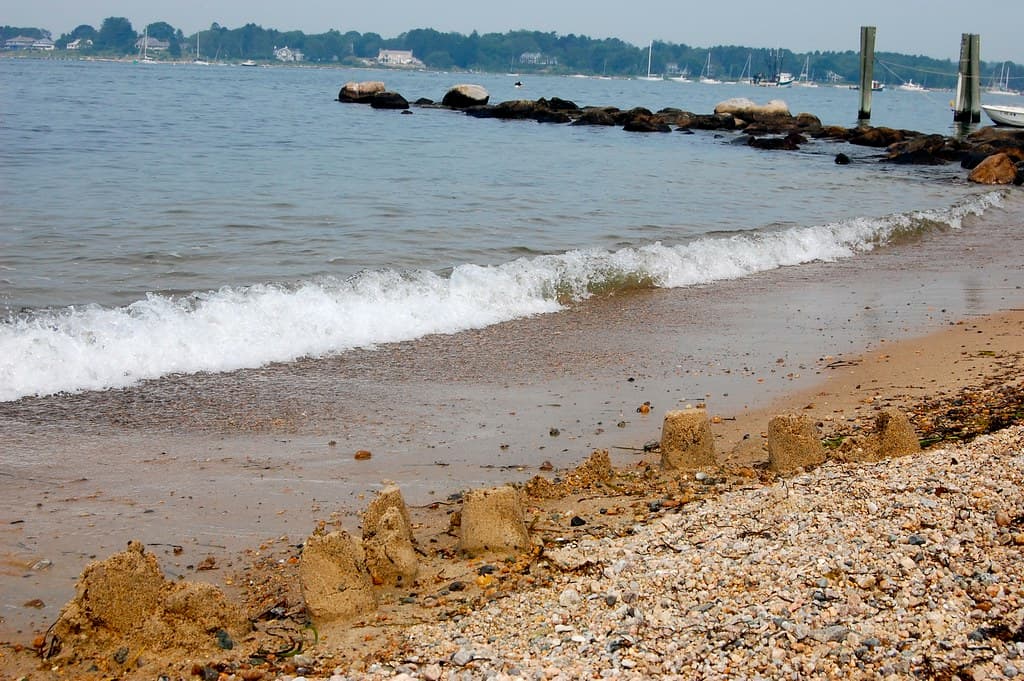 Credit: Flickr
Sandcastles
The beach stretches barely a hundred yards, hemmed in by rounded boulders and scrub pine that lean away from prevailing winds. At high tide, the strand narrows to a ribbon; at low, tide pools appear among the rocks, holding periwinkles and green crabs. The water stays bracingly cold even in August, hovering in the mid-fifties, though that doesn't stop locals from wading in after a morning's work.
This is a place shaped by the rhythms of a fishing village rather than tourism. You'll share the sand with beachcombers collecting sea glass, painters setting up easels to capture the light on the outer islands, and the occasional kayaker launching into the bay. The view stretches across Isle au Haut and the Camden Hills, a layered panorama of blue ridges and darker spruce-covered islands that shift from pewter to violet as weather moves through.


