
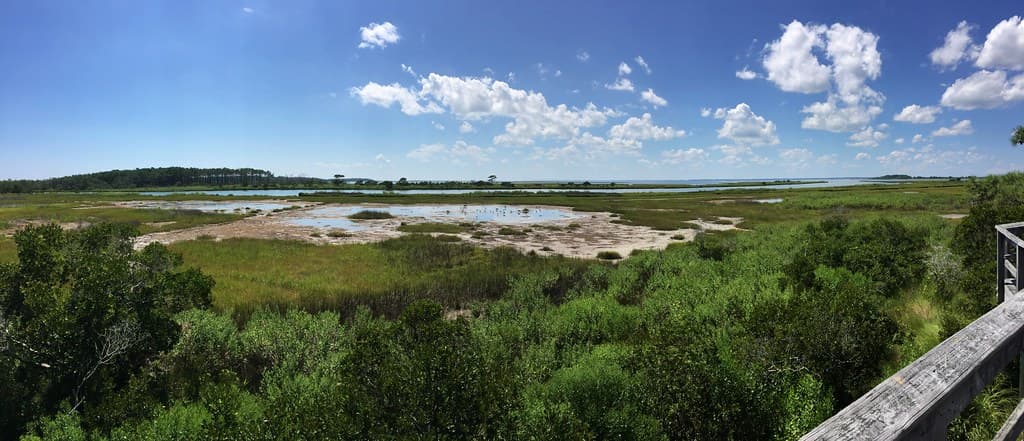
You pull off Route 611 into a gravel lot where most drivers continue straight to the ocean side, missing this entirely. The bayside shoreline unfolds in tawny marsh grass and tidal creeks, the kind of landscape that asks you to slow down and notice the fiddler crabs shuttling across mud flats at low tide. Assateague's famous wild horses appear without fanfare—a chestnut mare knee-deep in cordgrass, a foal nuzzling dune sedge—closer here than on the windswept Atlantic beaches a mile east.
“Wild horses appear at arm's length in marsh habitat rather than across dune barriers, and the bay's stillness inverts every expectation of a barrier-island beach.”
 Credit: Flickr
Assateague Island National Seashore Camping Vacation 2016
The water itself barely qualifies as waves. Sinepuxent Bay spreads glassy and shallow, warm enough in summer that you wade fifty yards out and still touch sand. Kayakers slip between loblolly pine islands. Great blue herons stand motionless in the shallows. The fetch is so short that even September northeasters produce nothing more than nervous ripples.
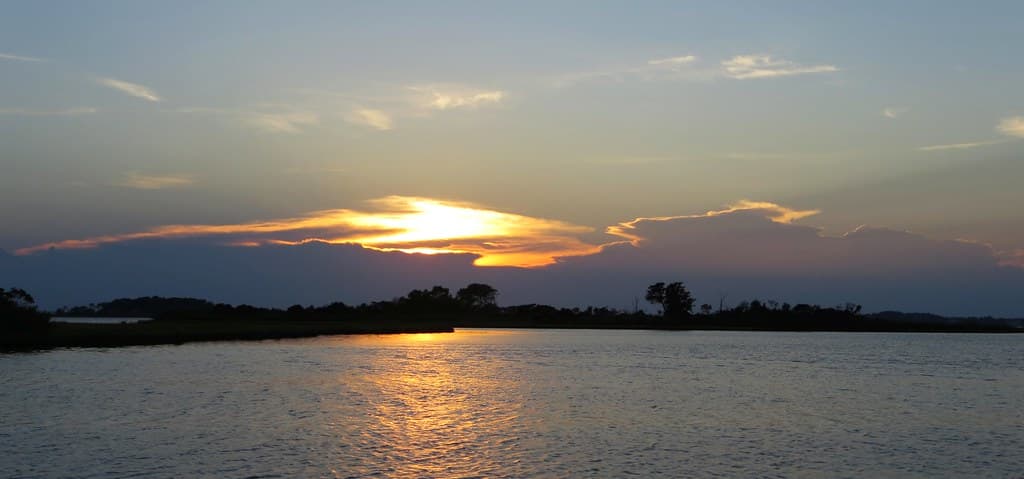
Come at the seam of day: dawn, when the ponies drink and the marsh hawks hunt low over phragmites, or dusk, when the setting sun turns the cordgrass bronze and the no-see-ums finally relent. You won't find cabana service or volleyball nets. What you will find is a beach that belongs more to the terns and the tides than to you, and that refusal to perform feels like the point.


