
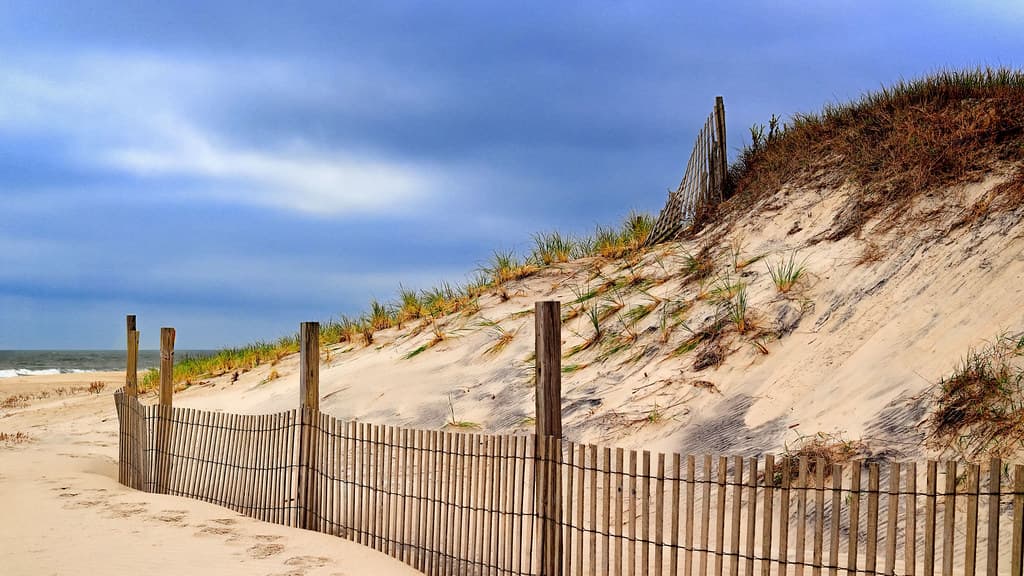
The ponies own this place. They wander between beach plum thickets and the high-tide line, unbothered by your camera or the cold Atlantic spray. Descend from the modest parking area and you'll find hoofprints pressed into sand the color of wet stone, stretching toward a horizon unbroken by boardwalks or cabanas. The shoreline here feels Paleolithic—no lifeguard towers, no music, just oystercatchers wheeling overhead and the steady percussion of waves.
“One of the only beaches in North America where feral horses roam freely along the Atlantic shoreline.”
 Credit: Flickr
Atlantic Dune
Your visit begins with a warning: these ponies bite and kick. Keep your distance—the island's most iconic residents are federally protected and thoroughly feral. Walk north and you'll leave most day-trippers behind within twenty minutes. The beach widens at low tide, revealing sandbars where piping plovers feed. In summer, greenhead flies descend with biblical vengeance; autumn brings relief and spectacular light that turns the dune grass copper.
The island divides into Maryland and Virginia jurisdictions, but the beach you're on—the Maryland side—requires a national park entry fee and offers developed camping at oceanside and bayside sites. Pitch your tent within earshot of the surf and you'll wake to ponies silhouetted against dawn, moving like ghosts through the mist that rises off Sinepuxent Bay. This is the Mid-Atlantic at its most elemental: salt, sand, and something older than roads.


