
The mailboat cuts its engine at Ewell's dock, and you step into a place where golf carts replace sedans and weathered skipjacks bob at moorings older than most mainland marinas. Smith Island Beach isn't a sunbathing strand—it's a working waterfront where marsh meets bay in a shifting line of cordgrass, mudflats, and shallow coves. The shoreline smells of brine and sun-warmed mud, punctuated by the diesel tang from crab boats heading out at dawn.
“This is the only inhabited offshore island in the Chesapeake accessible solely by water, where the beach exists as a working waterman's edge rather than a recreational amenity.”
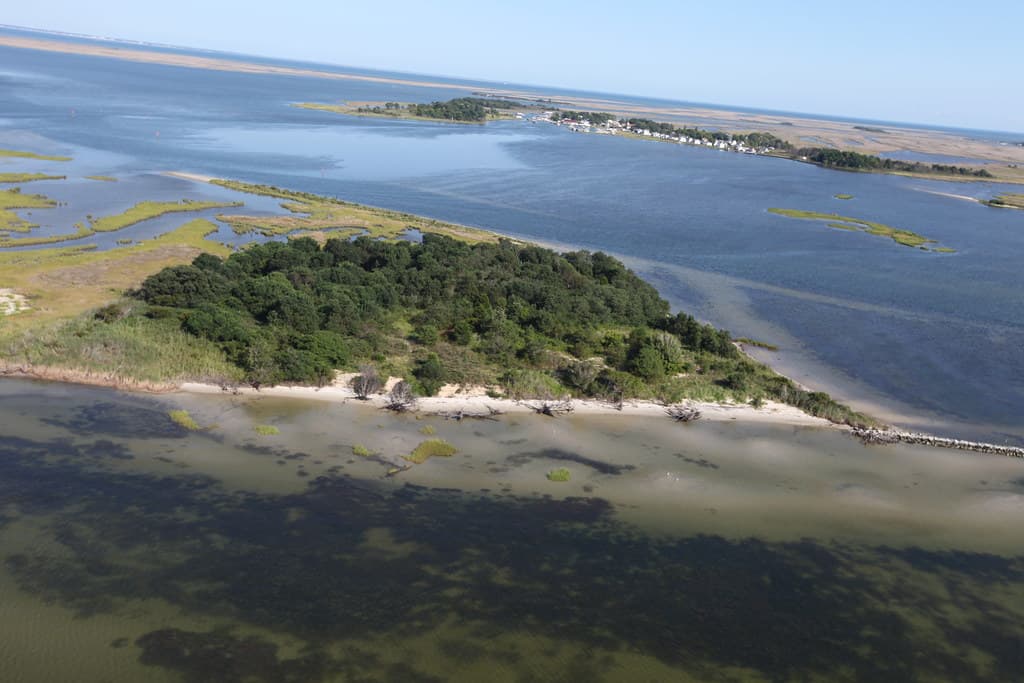 Credit: Flickr
Smith Island Beach — photo by U. S. Fish and Wildlife Service - Northeast Region
You'll walk shell-scattered lanes past white clapboard houses tilting gently toward the water, their porches hung with crab pots and hand-painted signs advertising ten-layer Smith Island cake. The beach itself curves along the island's western edge, a place to wade ankle-deep in tepid water while ospreys circle overhead and the setting sun turns the Chesapeake to hammered bronze.
Timing matters little here—summer brings warm swimming and thick humidity, autumn delivers migrating waterfowl, winter wraps the island in stillness, and spring coaxes rockfish back into the shallows. The island's three villages house fewer than 200 year-round residents, most descended from Cornish settlers who arrived in the 1600s. You'll hear their Elizabethan-tinged accent over pound cake at Ruke's general store, a dialect preserved by the same isolation that keeps this beach unmarred by boardwalks or lifeguard stands.


