
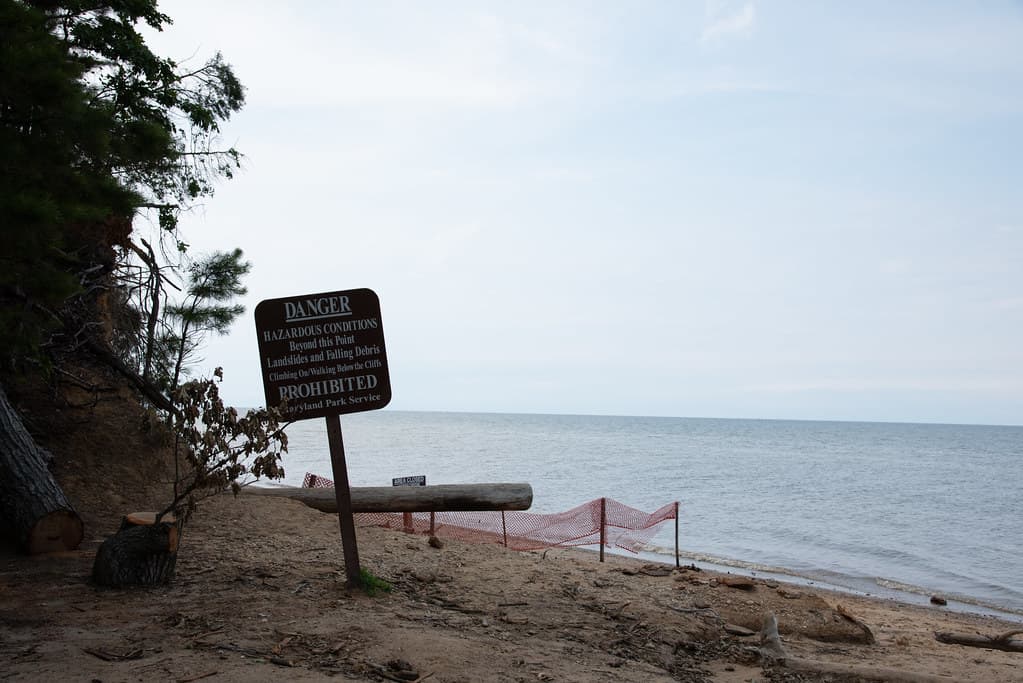
The hike in gives you time to recalibrate. Two miles through humid Maryland woodland, the air thick with pine resin and the distant mineral smell of the Chesapeake, before the forest breaks and you're standing at the base of ochre-and-rust cliffs that have been spilling their fifteen-million-year-old secrets since the last ice age. The beach itself runs narrow and pebbly, more utilitarian than luxurious, with driftwood bleached silver and small waves that slap rather than crash.
“One of the Atlantic coast's most accessible Miocene fossil beds, where prehistoric shark teeth wash ashore daily from actively eroding coastal bluffs.”
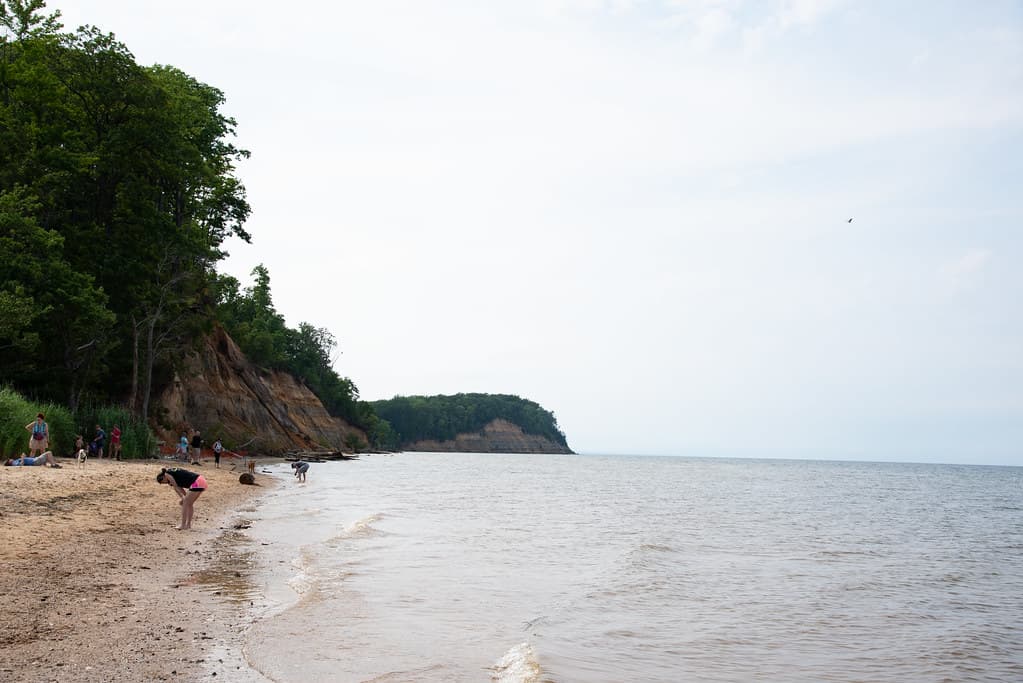 Credit: Flickr
Calvert Cliffs State Park in Calvert County, Md.
You'll spend your first hour head-down, scanning the wrack line where the cliffs meet sand. That triangular black shape might be a Carcharocles tooth the length of your thumb. The knobbed disc could be a crocodile scute. Every storm resets the inventory, and every visitor becomes an amateur paleontologist, pockets weighted with fragments of ancient seabeds.
The bay stretches slate-gray or honey-gold depending on the light, sailboats tilting along the horizon. Families spread blankets between fossil runs; a great blue heron fishes the shallows undisturbed. There's no boardwalk, no concession stand—just the rhythm of search and discovery, the cliffs slouching slowly into memory, and the strange thrill of holding a predator's tooth that's older than the Appalachian peaks you drove through to get here.


