
The walk from the parking lot winds through half a mile of coastal hardwood before you catch your first glimpse of the Chesapeake through the trees. When the beach opens before you, it's all tawny sand and bone-white cliffs—striations of rust, gray, and cream marking epochs when this shoreline lay beneath a shallow sea. Children crouch at the waterline, sifting for fossilized shells and prehistoric rays' teeth that tumble from the eroding bluffs.
“One of the few accessible beaches where you can legally collect Miocene-era fossils eroding directly from active cliffs.”
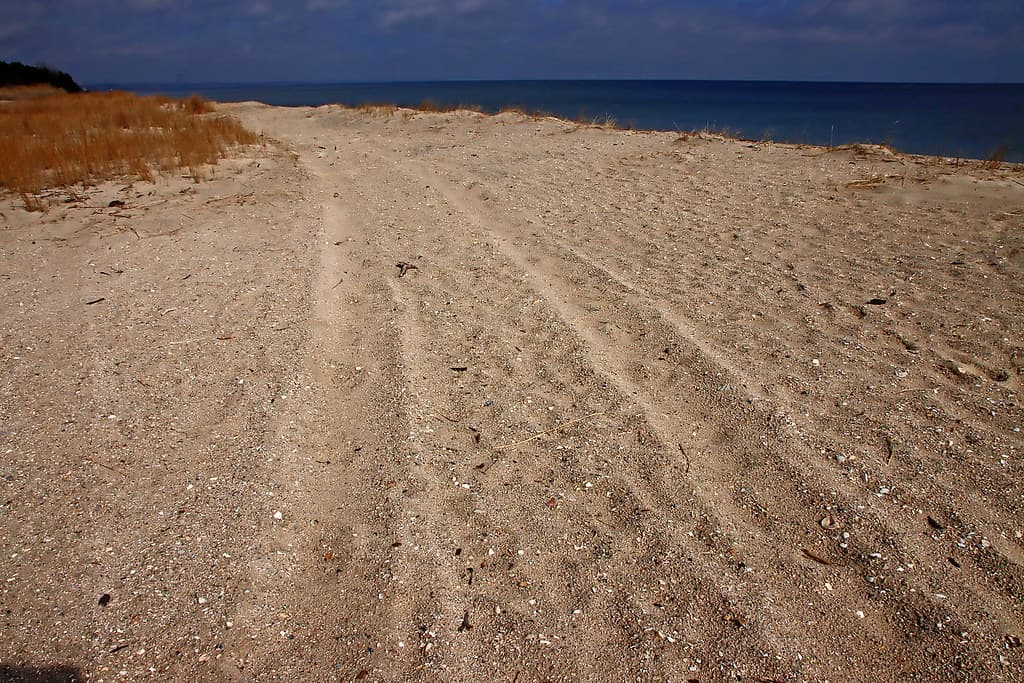 Credit: Flickr
tracks in the sand
The bay itself surprises visitors expecting oceanic drama. Water the color of weak tea stretches toward the far shore, calm enough that toddlers wade without worry. Horseshoe crabs trace hieroglyphs in the shallows during summer months. Great blue herons work the marsh grass behind the dunes, patient as sculpture.
Pack a cooler and claim a stretch of sand beneath the cliffs' shadow. The park closes before sunset, so midday becomes your golden hour—that particular quality of light filtering through humidity, turning the Chesapeake hazy and soft. You'll leave with pockets heavier than when you arrived, weighted with small treasures that predate human footprints by fifteen million years.


