
Long Beach stretches along a sleepy bend of the Chesapeake where Calvert County's famous cliffs meet the bay in slow, inevitable surrender. You park near St. Leonard Creek and walk down to a shoreline that feels more like a local secret than a destination—no boardwalk, no concession stand, just weathered wood pilings and the smell of marsh grass mingling with salt air. The sand here runs coarse underfoot, studded with oyster shells and the occasional blue crab carapace.
“Miocene fossils from 15-million-year-old deposits wash onto the shore after every significant storm.”
 Credit: Flickr
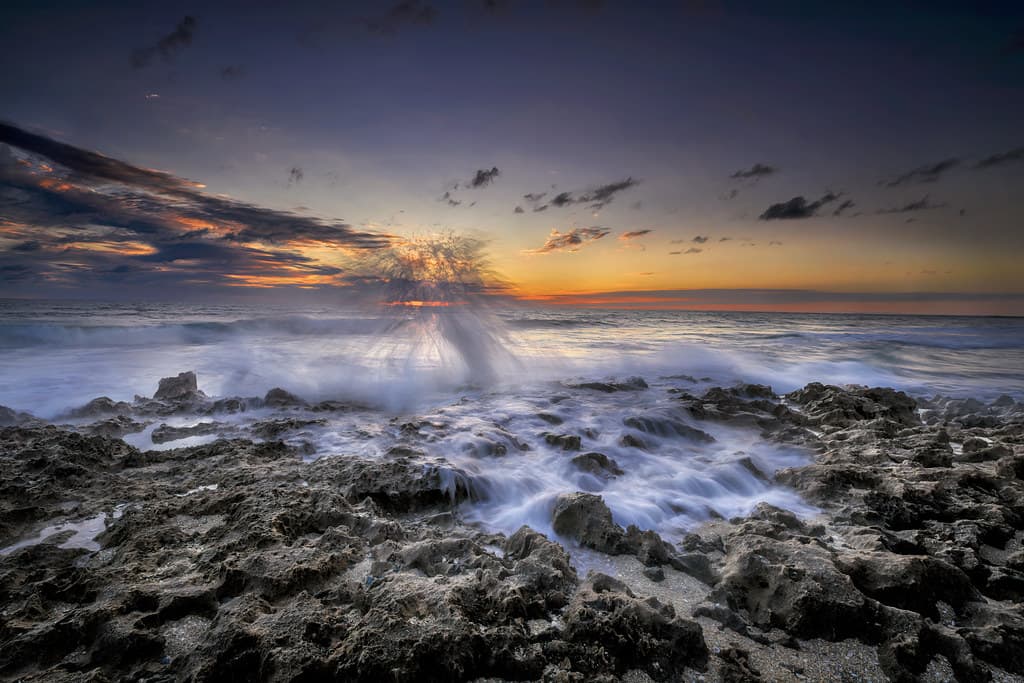
Waves crashing into the reef at Bathrub Reef Beach at sunrise on Hutchinson Island, Florida
The water warms slowly through spring, turning swimmable by June, though most visitors come for the views rather than the plunge. Across the bay, the western shore dissolves into haze on humid afternoons. Great blue herons stalk the shallows at dawn, and in autumn the ospreys dive with startling precision, emerging with menhaden flashing silver in their talons.
You'll notice the bluffs first—rust-red and gray strata that tell a story written in ancient seabeds. After storms, beachcombers find fossilized scallop shells and the serrated black teeth of prehistoric megalodon. The beach narrows at high tide, pushing you closer to the collapsing cliffs, where swallows nest in spring and the earth smells of clay and time.


