
Tilghman Island Beach stretches along the eastern shore of this five-mile sliver of land, where the rhythm of Chesapeake Bay life hasn't changed much in a century. You'll find yourself on a ribbon of sand and pebble shoreline where the water laps gently against weathered bulkheads and the occasional crab pot floats offshore. The beach here isn't about white sand or crashing surf—it's about the low-slung sky, the call of terns, and the silhouette of workboats heading out before dawn.
“This is one of the last beaches where you can watch a working skipjack fleet sail past while you stand ankle-deep in the Chesapeake.”
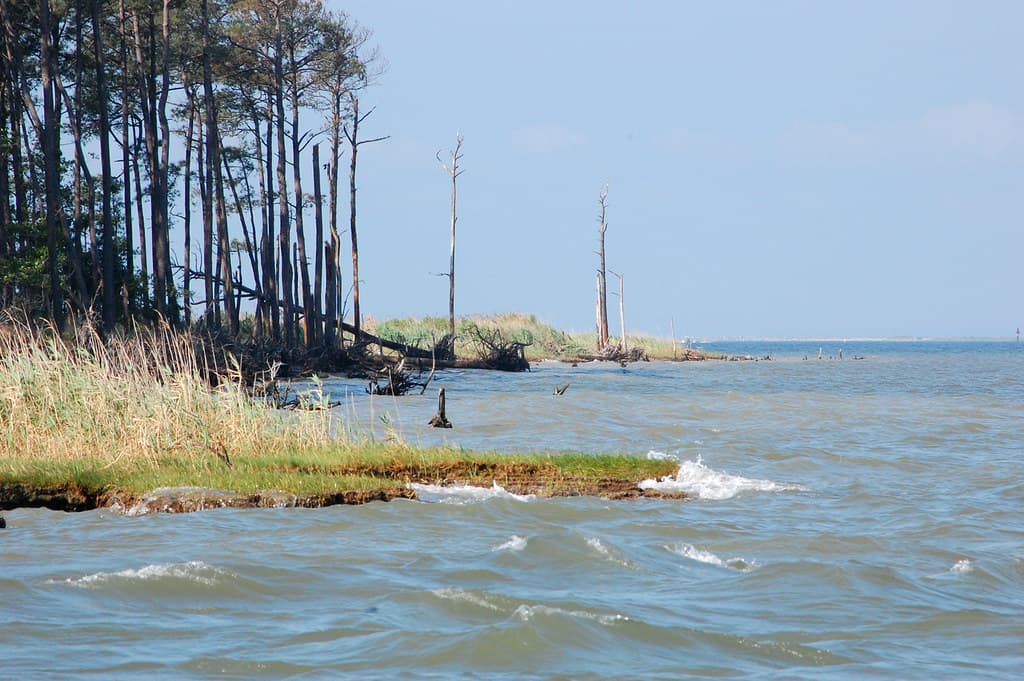 Credit: Flickr
Tilghman Island Beach — photo by chesbayprogram
The shoreline offers long views across Eastern Bay toward the Delmarva Peninsula, particularly stunning when autumn light turns the water to hammered copper. You'll share the beach with locals launching kayaks and visiting families wading in the shallows, the bottom soft with silt and eelgrass. Neighboring Dogwood Harbor and Black Walnut Point anchor the island's maritime character, where you can watch skipjacks—the last working sailboats in North America—returning with their oyster harvest.
The appeal here is authenticity. Tilghman Island remains a genuine watermen's community, where Harrison's Chesapeake House has served rockfish and crab cakes since 1953, and where the pace is dictated by tides rather than tourist seasons. The beach itself becomes a front-row seat to an ecosystem and culture that refuses to hurry.


