
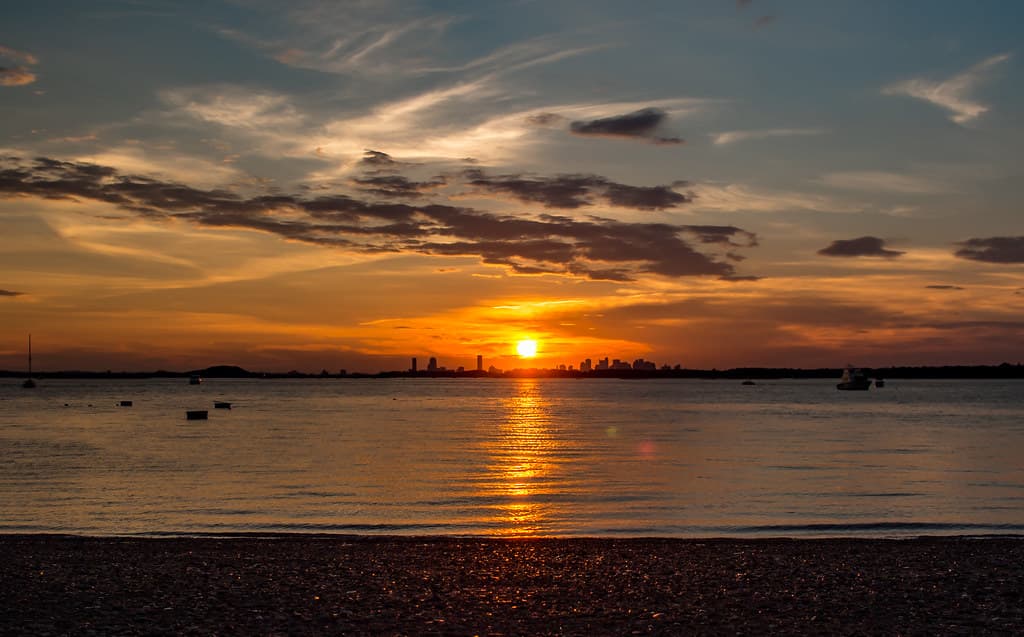
The ferry churns past yachts and container ships, then deposits you on a wooden dock where the city skyline shimmers in the distance but feels worlds away. You walk gravel paths through knee-high beach grass toward the shore, where smooth stones click beneath your feet and harbor seals bob just offshore, their dark heads disappearing between swells. Fort Andrews looms behind you—a sprawling complex of brick barracks and gun emplacements from 1904, now softened by decades of weather and sprawling sumac.
“This is the largest publicly accessible island in Boston Harbor, yet it remains blissfully overlooked by tourists who never venture past the Inner Harbor.”
 Credit: Flickr
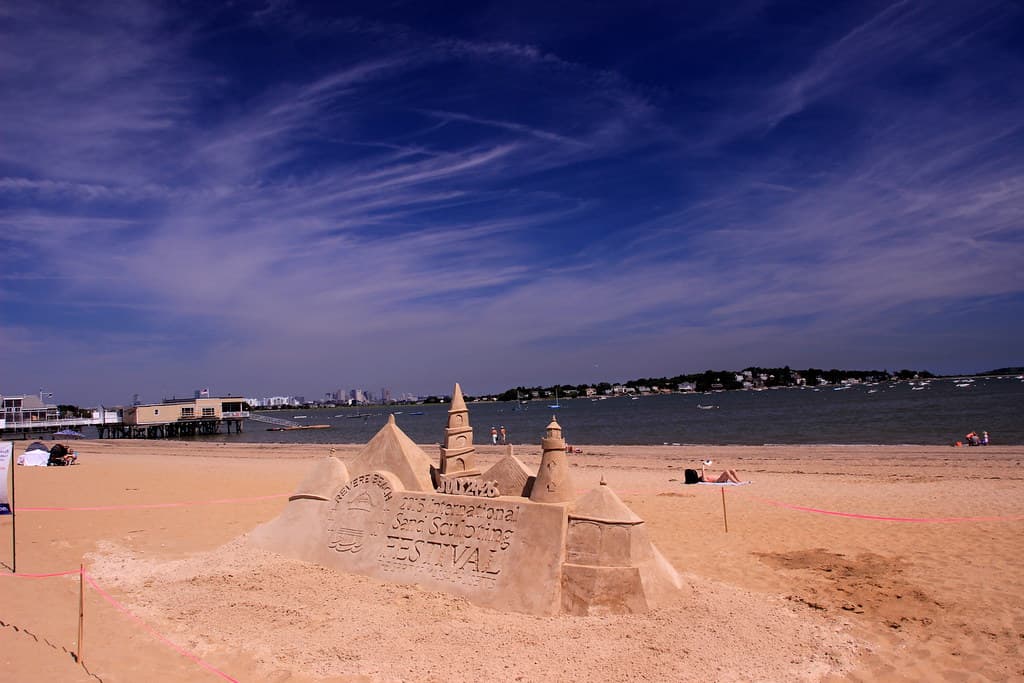
Sand Sculpture, Wollaston Beach, Quincy, MA, July 17, 2015
The beach itself runs along the island's southern and eastern edges, a mix of cobble coves and wider stretches where driftwood tangles with kelp at the high-tide line. The water stays cold even in August, but wading in shallows warmed by afternoon sun feels like a secret reward. Ospreys nest in dead trees along the bluffs, and at low tide you can walk almost to neighboring Grape Island across exposed mudflats dotted with horseshoe crab shells.
Bring everything you need—water, snacks, sun protection—because there are no concessions, no lifeguards, no crowds jostling for towel space. Just you, the rhythmic lap of waves against stone, and the occasional sailboat tacking across the outer harbor. When the last ferry departs at five, the island empties completely, save for the handful of campers who've claimed one of the primitive sites tucked into the woods.


